

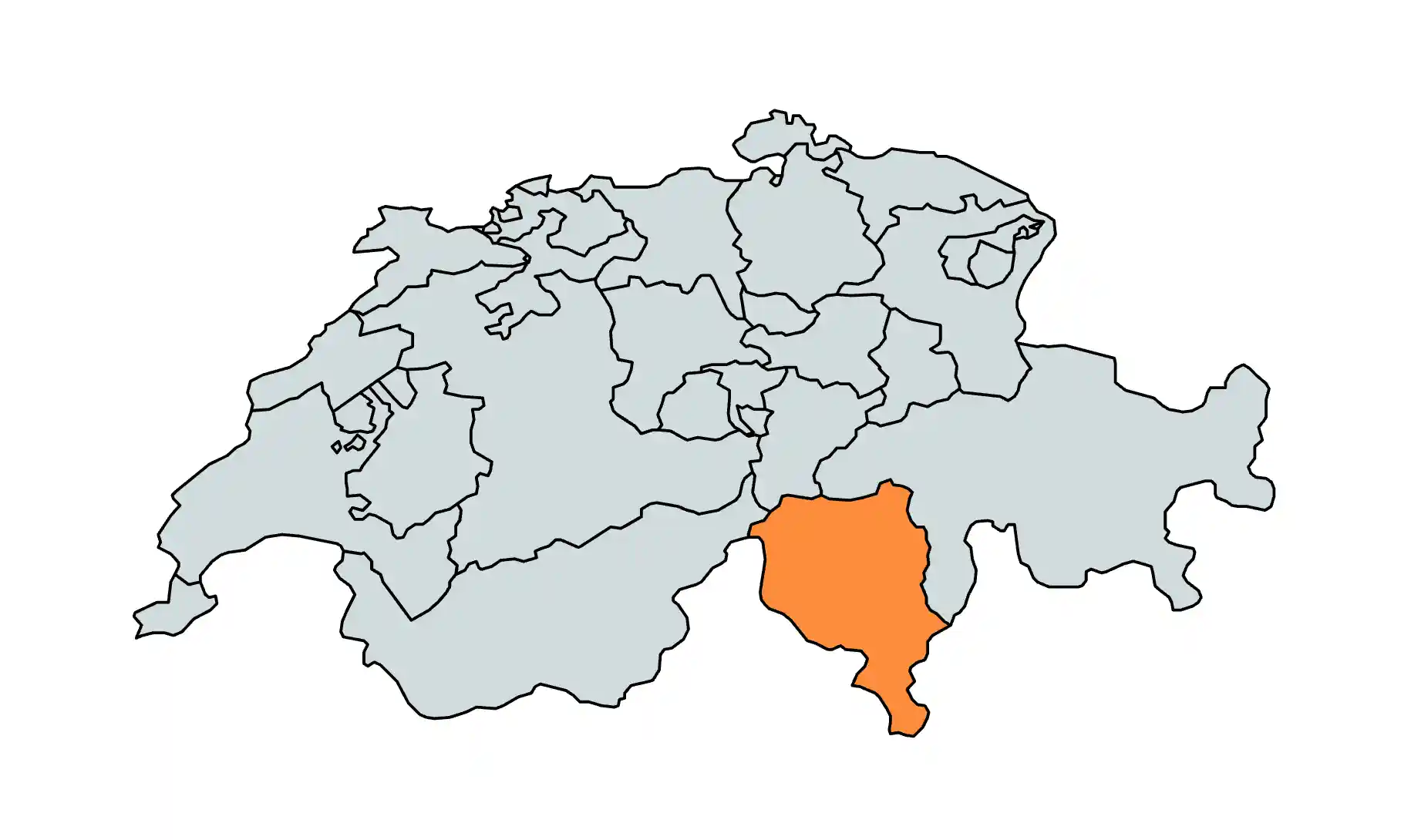
Mountains drop away to reveal palm trees and piazzas in this vibrant canton called Ticino. You find yourself in a world of Italian flair where the language and the architecture have moved across the Alps. The landscape is a mix of glitzy lake resorts like Ascona and wild stone valleys. It feels Mediterranean and warm.
Roads lead deep into the Verzasca valley, where water has carved smooth white rocks and the famous Ponte dei Salti bridge. You find yourself in villages made entirely of grey stone like Sonogno where the church towers rise above the chestnut forests. The history of the region is seen in the three Castles of Bellinzona, guarding the path to the high passes.
This is a region for those who love the heat and the water. Watch people eating in outdoor Grottoes and swimming in the clear mountain streams. The vibe is lively and colorful with a focus on the good life and the beauty of the south. Ticino is a sunny world of its own that offers a passionate journey through a landscape of palms and peaks.
Ticino (canton) highlights
- Verzasca Valley Bridge Photograph the iconic stone arches of the Ponte dei Salti over emerald green water. The valley is famous for its smooth white rocks and deep swimming holes.
- Castles of Bellinzona Explore the three massive medieval fortresses that once blocked the entire valley to control the alpine passes. You can walk along the high stone walls.
- Valle Maggia Waterfalls Follow the river deep into the mountains to find the massive Cascata del Salto. The stone villages here are built entirely of grey granite from the cliffs.
- Brissago Islands Take a boat to these islands in Lake Maggiore to see a botanic garden with over 1700 plant species. The unique microclimate allows tropical palms to thrive.
- Monte Generoso Rack Railway Ride to the summit on the border with Italy for a view that covers the lakes and the high Alps. The flower shaped building at the top is a modern landmark.
- Gandria Fishing Village Park outside and walk into this car free village clinging to the steep slopes of Lake Lugano. The narrow stone alleys and hidden terraces are full of charm.
- Bavona Valley Discover a valley where the villages have no electricity and the houses are built under giant boulders. It is one of the most rugged and traditional spots in the south.
- San Salvatore Lookout Take the funicular for a view that looks like a postcard of Rio de Janeiro. The 360 degree vista shows the winding arms of Lake Lugano and the peaks.
- Grotto Dining in Mendrisiotto Stop at a traditional grotto carved into the rock to eat local cheese and polenta. These cool outdoor restaurants are a staple of Ticino road trip culture.
- Ritom Funicular and Lakes Ride one of the steepest railways in the world to reach a high altitude valley filled with blue lakes. It is a paradise for hikers looking for alpine silence.
The local Four
History of Ticino (canton)
Ticino is the result of a centuries long tug of war between the Swiss and the Italians. Originally part of the Duchy of Milan the strategic valleys leading to the Gotthard Pass were conquered by Swiss soldiers in the 1500s. For nearly 300 years the region was ruled as a subject territory by the northern cantons who built the massive three castles of Bellinzona to block Italian attempts to retake the land. This created a culture where the language is Italian but the heart is Swiss.
The history of the south is also a story of survival in the granite valleys. In the Valle Maggia and Val Verzasca people lived for eons in homes built entirely of local stone carved directly into the mountain side. Because the land was so rugged many men from the region were forced to emigrate to the Americas as laborers sending money back to build the grand churches and piazzas that give the region its Mediterranean flair today.
In the 20th century the arrival of the railway and the opening of the Gotthard Tunnel changed everything. Ticino transformed from an isolated mountain frontier into a world playground. Artists writers and rebels flocked to Monte Verita in Ascona to start utopian communities attracted by the light and the freedom. The history of the Ticino canton is a story of a people who mastered the art of the good life in a landscape of harsh granite.