

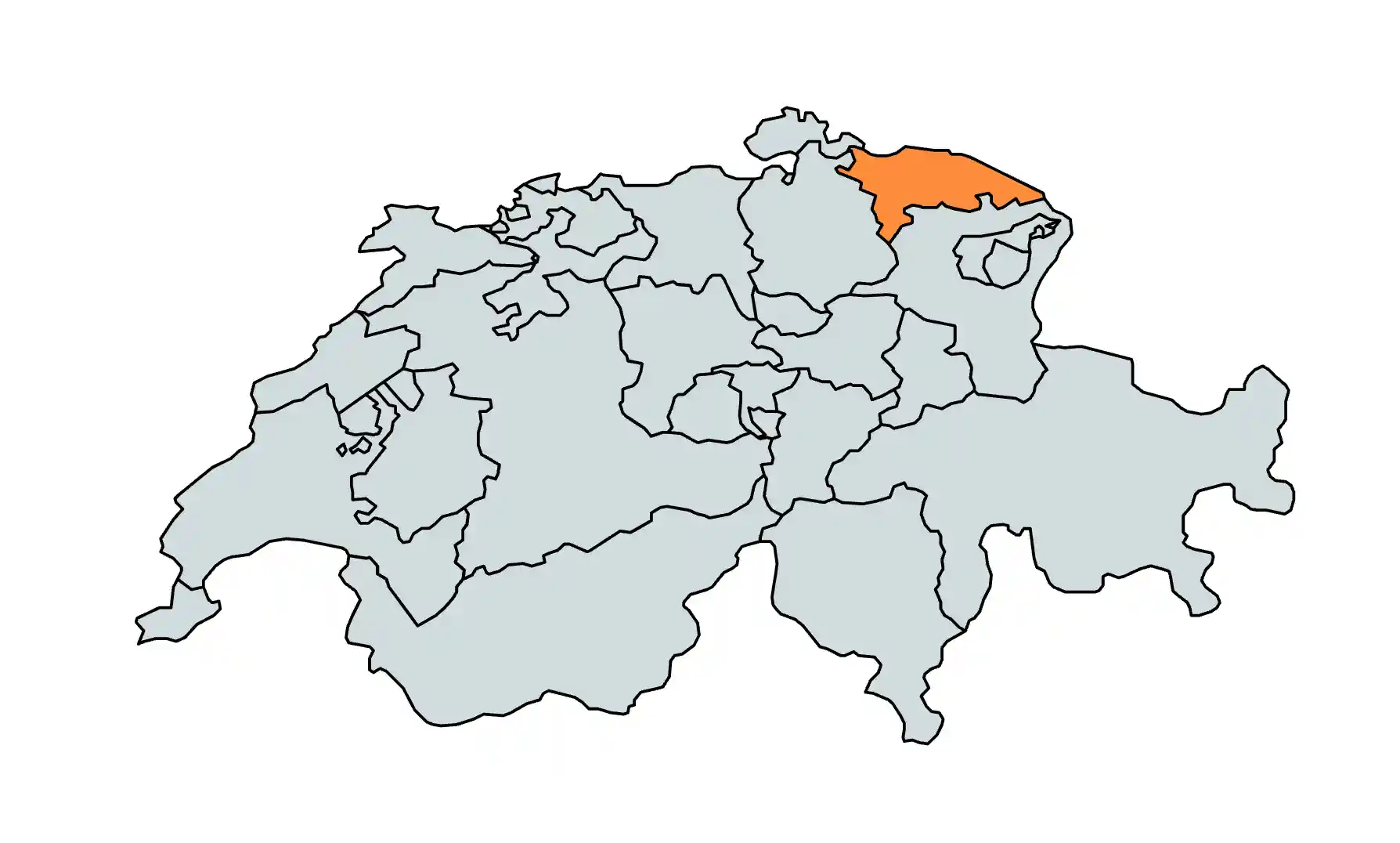
Soft green hills and an endless sea of fruit trees define the Thurgau canton. You are in the land of cider and apples where the landscape slopes down to meet the wide blue expanse of Lake Constance. Roads wind through half timbered villages and past grand castles like Arenenberg, once home to Napoleon III.
The shoreline is a mix of quiet beaches and historic harbors like Romanshorn where ships sail toward Germany. You find yourself in a region of vast fields and quiet farm lanes perfect for a long bike ride or a scenic drive. The history of the area is seen in the Pile Dwelling sites and the medieval monasteries like Ittingen Charterhouse.
The atmosphere is relaxed and friendly. Local farm stalls sell fresh juice and berries along the roadside. The vibe is one of simple pleasures and natural abundance. Thurgau is the garden of the north and is a peaceful escape into a landscape of blossoms and water.
Thurgau (canton) highlights
- Napoleon Museum Arenenberg Visit the former home of Queen Hortense and her son Louis Napoleon on a hill over the lake. The gardens and interior remain exactly as they were in the 1800s.
- Ittingen Charterhouse Explore this massive former monastery which now houses art museums and a local farm shop. The silent gardens and cloisters offer a peaceful retreat.
- Romanshorn Harbor Watch the massive car ferries depart for Germany from the largest port on Lake Constance. The lakeside park is perfect for a scenic stroll or a picnic.
- Altnau Apple Trail Walk or cycle through the orchards that produce the famous local cider and fruit. Educational signs explain the different varieties of apples grown in the region.
- Steckborn Drive through this lakeside village to see the iconic Turmhof castle and the ornate wooden architecture. It represents the classic style of the northern border.
- Gottlieben Waterfront Stop in this tiny village known for its romantic atmosphere and famous dragon skin wafers. The view across the water to the nature reserve is spectacular.
- Bischofszell Baroque Town Explore the eight arched stone bridge and the colorful gardens of this historic town. It is known as the rose city of the north for its public displays.
- Pfyn Roman Ruins Discover the remains of a 3rd century frontier fort that once guarded the road to the Rhine. The village still follows the layout of the original Roman camp.
- Seerücken High Ridge Drive the elevated road between the lakes for a view that stretches into Germany and toward the Alps. The plateau is filled with quiet woods and farms.
- Kartause Ittingen Labyrinth Navigate the hidden hedge maze in the monastery gardens designed for meditation. It is one of many hidden corners in this massive historic estate.
The local Four
History of Thurgau (canton)
The history of this northern canton began as a frontier for the Roman Empire. The town of Pfyn was once a vital Roman fort designed to guard the river routes against Germanic tribes. When the Romans left the fertile rolling hills were taken over by the Counts of Kyburg and later the Habsburgs who recognized the agricultural potential of the land. For centuries the region was the pantry of the north providing grain and fruit.
In the 19th century the landscape underwent a sweet transformation. The introduction of large scale apple and pear orchards turned the green hills into a sea of blossoms. This led to a boom in cider production and fruit processing earning the province the nickname Mostindien. This agricultural wealth funded the construction of grand villages and the preservation of lake shore castles like Arenenberg which became the final home of the French Emperor Napoleon III mother.
The modern history of the region is defined by its relationship with the water. As a borderland along Lake Constance the canton has always been a bridge between the Swiss German and Austrian worlds. It was here that early pioneers developed some of the first lakeside steamships and railway connections that linked the heart of Europe.