

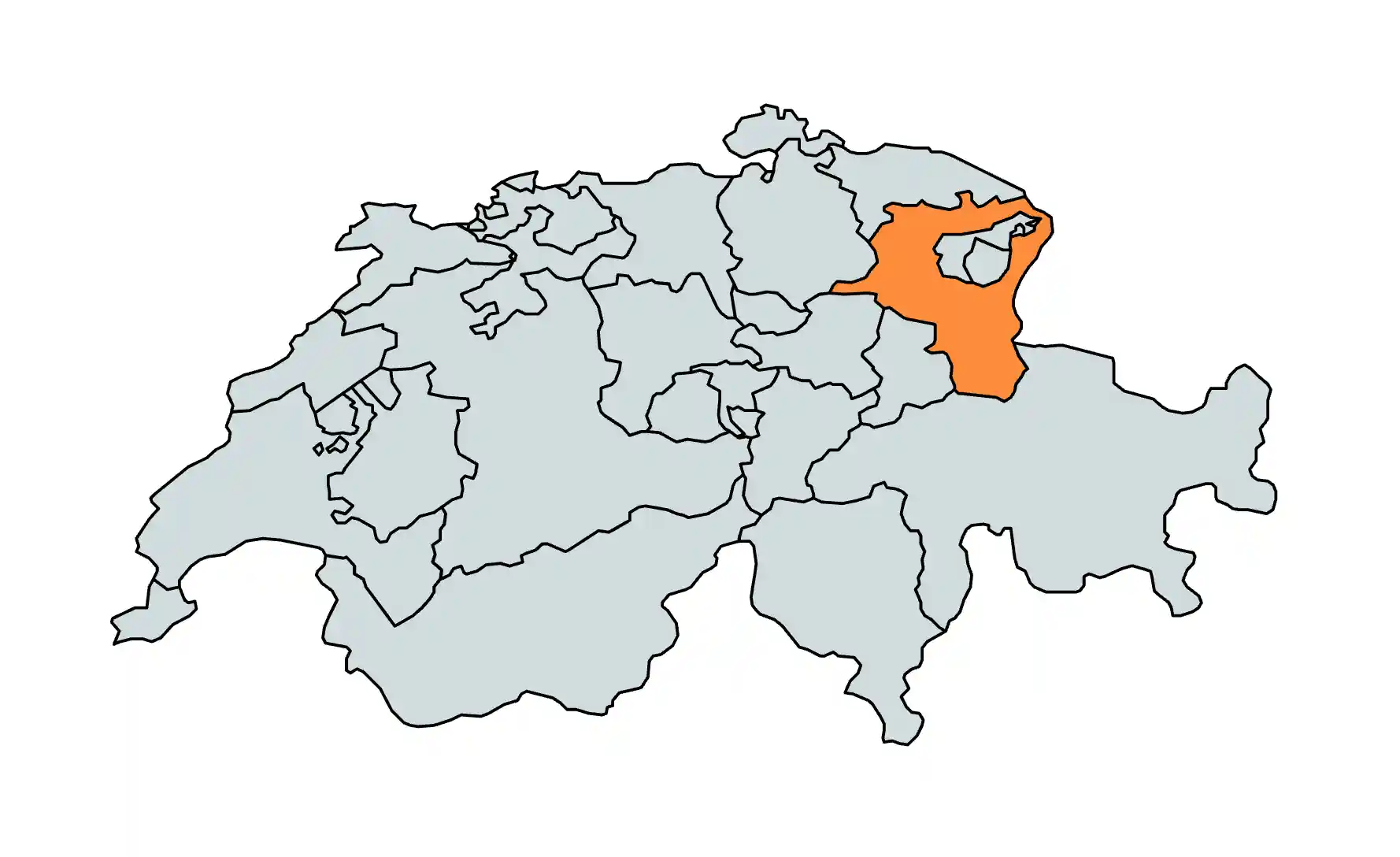
The story of St. Gallen moves from the shores of Lake Constance to the peaks of the high Alps. You start in a region of rolling hills and apple orchards before the ground rises into the spectacular Alpstein range. The landscape is a mix of high culture and raw nature. It feels vast and diverse offering a different experience at every elevation from the Rhine valley to the Toggenburg.
The road carries you toward the peaks of the Säntis where the views reach across six different countries. You find yourself in a land of high altitude dairies and narrow ridge walks like the Lisengrat. Down in the valleys the villages are known for their textile history and the fine lace that once dressed the royalty of Europe. The Abbey District remains the cultural anchor with its world famous library.
You see the massive limestone towers of the Churfirsten mountains rising like a wall above the blue Walensee. The St. Gallen canton is a place of contrast where the silence of a baroque library meets the roar of a mountain wind.
St. Gallen (canton) highlights
- Churfirsten Mountain Wall Drive along the Walensee to see seven massive limestone peaks rising vertically from the water. The scale of these cliffs is unlike anything else in eastern Switzerland.
- Säntis Peak Ascend to the highest summit in the Alpstein range for views that reach into six countries. The weather station at the top is a legendary spot for high altitude storms.
- Seealpsee Reflection Hike to this iconic mountain lake where the peaks are perfectly mirrored in the still water. It is a classic alpine scene with traditional dairy huts nearby.
- Bad Ragaz Tamina Gorge Follow the path into a deep dark canyon where thermal water gushes from the rock at 37 degrees. The historic bath house nearby tells the story of early spa culture.
- Toggenburg Sound Trail Explore the high meadows of the Toggenburg valley where interactive stations let you play music with nature. The backdrop is the jagged ridge of the Churfirsten.
- Quinten Car Free Village Take a boat across the Walensee to this tiny Mediterranean microclimate at the foot of the cliffs. Figs and grapes grow here in the shadow of the giant mountains.
- Rapperswil Rose Gardens Walk through thousands of blooming roses in the shadow of a massive medieval castle on the lake. The wooden bridge crossing the water is the longest of its kind.
- Alpstein Dairy Huts Visit the high pastures to see how Appenzeller cheese is made using ancient copper vats. The farmers often wear traditional yellow trousers during the summer months.
- Sargans Castle Stop at this fortress perched on a hill at the junction of two major valleys. It houses a museum about the local mining history and the iron wealth of the region.
- Amden High Terrace Drive the steep road to this sunny village overlooking the Walensee for a spectacular bird’s eye view. It is a hub for easy ridge walks and winter sports.
The local Four
History of St. Gallen (canton)
The story of St. Gallen is built upon the ruins of a wandering Irish monk named Gallus who fell into a briar bush in 612 AD and decided it was a sign from God to stay. This humble hermitage grew into one of the most powerful and influential Benedictine abbeys in Europe. By the Middle Ages the Abbey of St. Gallen was a City of Scholars possessing a library so vast it became the intellectual center of the Western world.
In the 15th century the townspeople grew tired of monastic rule and fought for their own independence leading to a unique era where the city and the abbey lived side by side as rivals. This tension fueled an industrial boom in textiles. The region became world famous for its white gold which was fine linen and intricate lace. By the 1800s the St. Gallen embroidery industry was so massive that it accounted for a significant portion of all Swiss exports funding the grand ornate buildings that still line the streets today.
While the valleys were getting rich on lace the people in the Alpstein mountains were perfecting the art of the high altitude dairy. The history of the canton is a tale of two worlds including the sophisticated scholars of the abbey and the tough mountain farmers of the Toggenburg. This diversity created a land where you could go from a gold leaf baroque library to a rugged mountain hut in a single afternoon. It is a story of how faith knowledge and fine craft transformed a wild forest.