

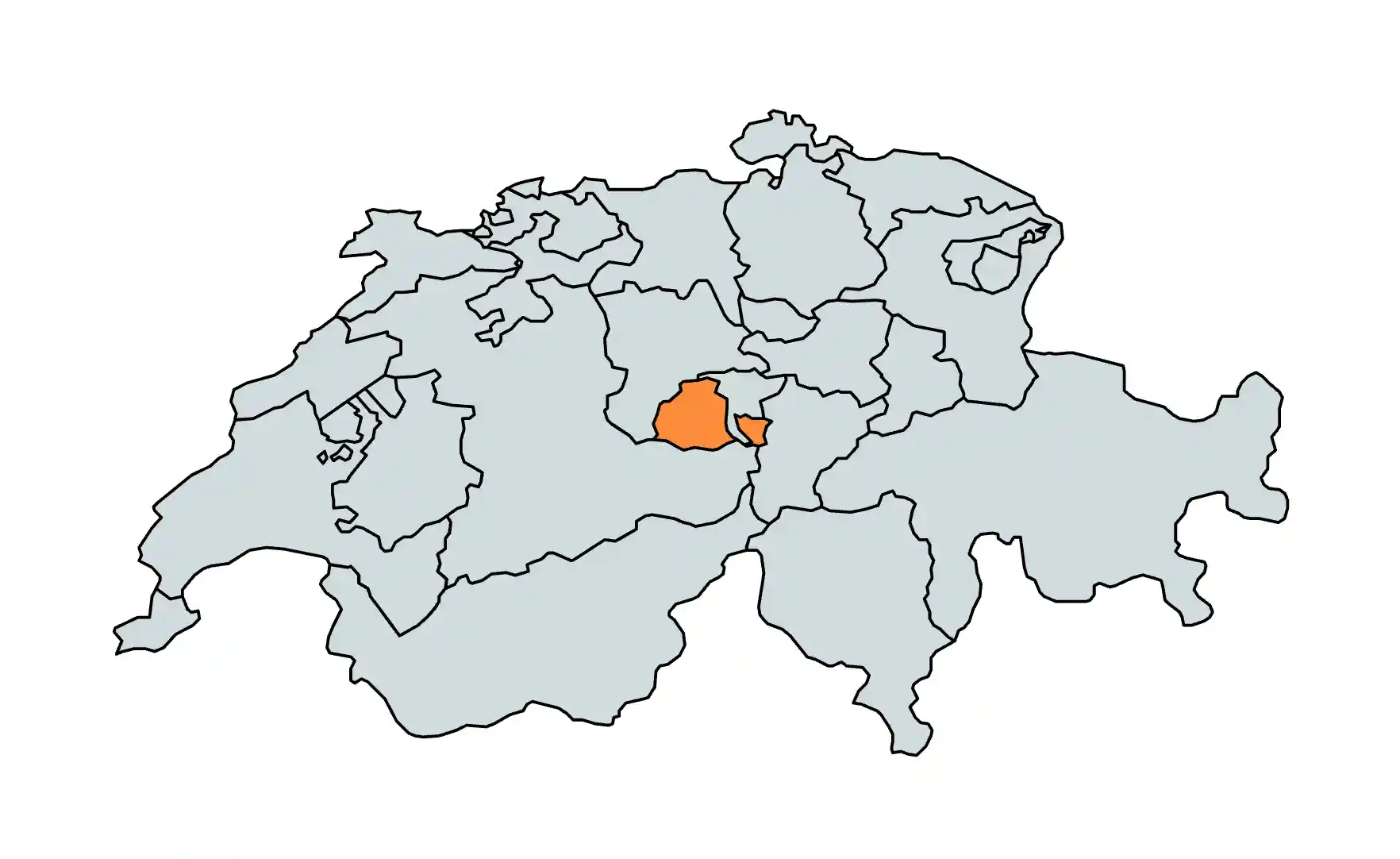
Obwalden is the literal center of the nation marked by the stone at Älggi Alp. This canton is a peaceful sanctuary of emerald lakes like the Sarnersee and the Lungerersee, which is famous for its turquoise color. The landscape is dominated by the massive presence of the Titlis glacier which towers over the valley like a frozen king. It feels spiritual and calm as you move toward the Brünig Pass.
Roads lead you to the historic village of Sachseln, where the nation’s patron saint Brother Klaus lived and worked. You find yourself in a land of hidden chapels and old hermitages tucked into the forest. High meadows are dotted with rustic huts that serve Älplermagronen, a traditional alpine macaroni dish, to travelers passing through toward Hasliberg.
This is a region for those who love the quiet side of the Alps. You see ancient wooden architecture that has survived for hundreds of years. The vibe is humble and authentic with a focus on the natural world and inner peace.The Obwalden canton is the green heart of the country where the mountains feel protective rather than intimidating.
Obwalden (canton) highlights
- Geographic Center of Switzerland Go to the Älggi Alp to stand at the literal midpoint of the country. This high plateau is surrounded by a ring of mountains and features a symbolic stone marker.
- Lungerersee Admire the brilliant color of this lake which is often cited as the most beautiful in the region. The road along the shore is lined with waterfalls and picnic spots.
- Melchsee Frutt High Plateau Reach this car free sunny terrace at 2000 meters for world class alpine scenery. Two deep blue lakes sit in the center of a wide valley ringed by peaks.
- Brother Klaus Hermitage Visit the quiet valley of Flüeli Ranft where the patron saint of Switzerland lived as a hermit. The wooden chapels and the silent gorge feel like a step back in time.
- Pilatus Tomlishorn Path Access the highest peak of the Pilatus massif from the Obwalden side for a more rugged experience. The narrow path is carved into the rock and offers massive views.
- Glaubenbielen Pass Drive this winding mountain road that connects the Sarneraa valley with the Entlebuch region. The pass offers dramatic views of the peaks and lush high pastures.
- Sarnen Old Town Hall Explore the village center to see the building where the famous White Book of Sarnen is kept. This document contains the oldest written stories of Swiss independence.
- Giswilerstock Cliffs Look up at the massive limestone walls that guard the entry to the higher valleys. The area is famous for its unique geology and challenging hiking routes.
- Mörlialp Winter Wonderland In the colder months this area becomes a quiet hub for skiing and snowshoeing away from crowds. In summer it offers peaceful walks through high altitude forests.
- Landenberg Fortress Site Visit the grassy hilltop where a powerful medieval castle once stood overlooking the valley. Today it serves as a peaceful park with views of the Sarnersee.
The local Four
History of Obwalden (canton)
The Obwalden canton is the quiet spiritual heart of Switzerland defined by the life of one man named Nicholas of Flue. In the 15th century this local farmer turned hermit became a diplomat and mystic whose advice prevented a civil war between the Swiss cantons. Known affectionately as Brother Klaus his legacy of peace and neutrality became the foundational philosophy of the entire nation. Today the quiet gorge of Flueli Ranft where he lived remains a place of pilgrimage and a symbol of the region calm protective spirit.
Long before the saints arrived the landscape was a prehistoric crossroads. Evidence of ancient pile dwellings shows that people were living on the shores of the Sarnersee over 3,000 years ago. These early inhabitants navigated the mountain gaps to trade salt and livestock establishing the routes that would later become vital transit passes. The geography of the region with its emerald lakes and the massive Titlis glacier created a natural sanctuary that was difficult for invaders to penetrate.
In 1898 the province made history by building the first electric rack railway in the country climbing the steep slopes toward the glaciers. This move signaled a shift toward alpine tourism but unlike other regions it stayed humble and focused on nature. The Upper Forest has always been a place of retreat. Whether it was a medieval hermit in a cave or a modern traveler looking for silence in the high meadows the history of the canton is a story of finding peace in the center of the storm.