

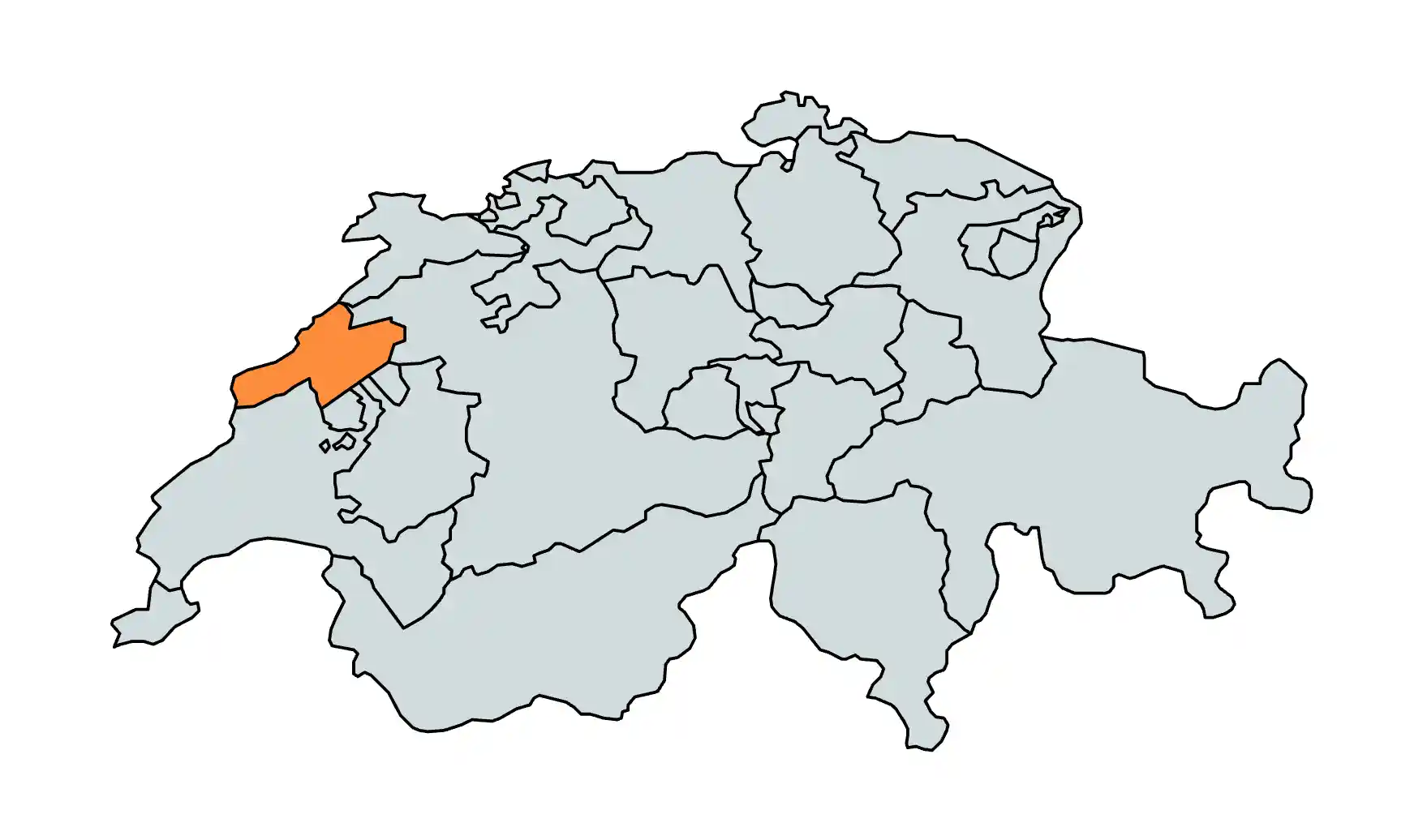
The light in the Neuchâtel canton has a special golden quality as it hits the yellow stone buildings of the shoreline. You are in the land of precision where the French language meets the Jura mountains. Hills are covered in vineyards that produce Oeil de Perdrix, a unique local rosé wine. It feels elegant and sophisticated yet remains surprisingly quiet and off the beaten path compared to the bigger cities.
The road climbs away from the lake into the Val de Travers, a deep valley famous as the birthplace of Absinthe. This region is a global hub for master watchmaking, housing legendary workshops like Cartier and Parmigiani Fleurier. You find yourself on limestone plateaus where the silence is only broken by the ticking of gears. The Creux du Van, a natural rock amphitheater over 1,000 meters wide, has views stretching across the Swiss plateau.
Move between the glitzy harbor and the rugged forest hideaways where secret recipes for herbal spirits are still guarded. The history of the watch industry is everywhere from the humble Eplatures farmhouses to the high tech labs. Neuchâtel gives you a refined journey through a landscape that values time and beauty above all else.
Neuchâtel (canton) highlights
- **Creux du Van ** Stand at the edge of a natural rock amphitheater over a kilometer wide with sheer drops. This massive limestone cirque is a prime spot to see wild ibex and chamois.
- Val de Travers Absinthe Trail Discover the secret history of the green fairy in the valley where this herbal spirit was born. Small distilleries offer tastings and explain the long era of prohibition.
- Areuse Gorge Follow the stone bridges through a narrow canyon carved by rushing green water. The path features dramatic cliffs and hidden waterfalls deep in the forest.
- Chateau de Vaumarcus Visit this historic castle overlooking the lake which now serves as a cultural hub and café. The surrounding vineyards produce some of the best Pinot Noir in the region.
- La Brévine Valley Experience the cold beauty of the Siberia of Switzerland in this high altitude basin. The unique microclimate creates stunning frost patterns and a silence rarely found elsewhere.
- Chaumont Panoramic Tower A funicular or a winding forest road leads to this lookout point above the lake. On clear days you can see the entire chain of the Alps from Mont Blanc to the Eiger.
- Watchmaking Farmhouses of Le Locle Drive past the traditional houses designed with massive windows to catch every bit of light. These rural buildings served as the first workshops for the world most famous brands.
- Saut du Doubs Navigate the border with France to find this impressive waterfall on the Doubs river. The water spills into a canyon surrounded by thick woods and mossy rocks.
- Auvernier Vineyards Walk through the stone walled terraces that slope gently toward the turquoise water. This area is famous for the Oeil de Perdrix, a local rosé wine perfect for summer.
- Laténium Archeology Park Explore the park grounds outside the museum to see recreated pile dwellings on the lake shore. It provides a fascinating look at how people lived here over three thousand years ago.
The local Four
History of Neuchâtel (canton)
The Neuchâtel canton spent much of its history as a unique political anomaly as a Swiss canton that was actually a principality ruled by the King of Prussia. This strange arrangement lasted until 1848 when local revolutionaries marched through the mountains to the castle to declare a republic. This peaceful transition allowed the area to maintain its French elegance while adopting Swiss democratic values. The yellow stone architecture that defines the shoreline today is a silent reminder of this era of aristocratic history.
While the politicians argued the people in the high mountain valleys were busy perfecting the art of time. During the long snow locked winters of the 1700s farmers in the Val de Travers and Le Locle began assembling intricate clock movements to pass the hours. This peasant industry exploded into a global phenomenon turning remote forest villages into the most advanced manufacturing centers on earth. Names like Abraham Louis Breguet revolutionized science here making the province the brain center of global precision.
The darker side of local history is found in the hidden distilleries of the Jura. In the late 19th century the region became the global capital of Absinthe the Green Fairy that inspired artists and poets across Europe. When the drink was banned in 1910 the industry did not disappear but went underground into secret cellars and forest caves for nearly a century.