

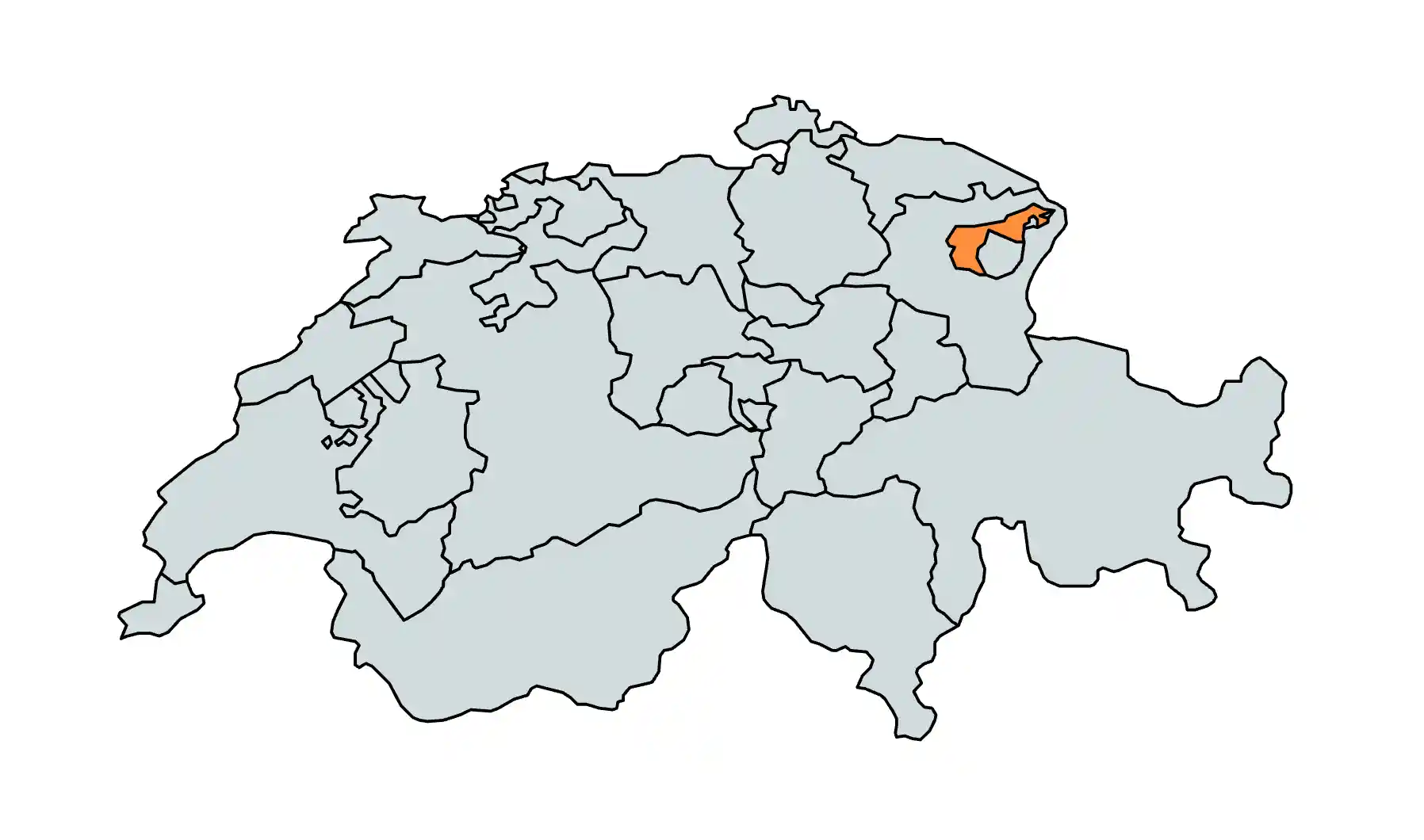
Rolling green hills stretch as far as the eye can see in this land of tradition and cheese. You find yourself in a world of perfect mounds and valleys that look like they were painted by hand. The houses are big and made of wood with many small windows that sparkle in the light. This is the place to find the true spirit of the Swiss countryside on a grand scale.
The roads wind gracefully over the hills toward the massive mass of the Säntis mountain. You can visit the historic village of Herisau to see the old textile heritage or stop in Urnäsch to learn about local folk art. The views often reach all the way to Lake Constance and across the border into Germany. It is an active landscape where the bells of the cows provide the soundtrack to your journey.
Life here follows the old rhythms of the seasons. You can find mountain dairies that sell spicy Appenzeller cheese right from the cellar. The hiking trails are easy to reach from the main road and offer views of the white peaks in the south. Appenzell Ausserrhoden is a place of charm and wide spaces. It feels like a living postcard where the grass is always green and the hospitality is warm.
Appenzell Ausserrhoden highlights
- Säntis Peak Drive to the base and take the cable car to the highest peak in the region for a view of six countries. The massive mountain world looks spectacular in every season.
- Urnäsch Folk Art Museum Learn about the unique traditions of the mountain people including their famous masks and cow bells. It is a colorful and deep look into the living culture of the rural north.
- Herisau Town Center Park in the regional capital to see the grand wooden houses and the old textile heritage buildings. The town offers a mix of urban comfort and traditional rural charm.
- Rehetobel Lookout Follow the winding ridge roads to find some of the best views over the rolling green hills and Lake Constance. It is a favorite spot for photographers during the golden hour.
- Waldstatt Wellness Trail Take a break from the car to walk a gentle path designed to refresh the body and mind in the fresh air. The trail offers beautiful vistas of the surrounding pastures.
- Heiden Biedermeier Village Visit a town rebuilt in a classic style after a fire where the buildings look uniform and very elegant. It is known as a high altitude health resort with grand lake views.
- Schwellbrunn Village Stop in the village voted most beautiful in the region for its perfect rows of timber houses. The view toward the Säntis mountain from the church square is truly iconic.
- Henry Dunant Museum Visit the final home of the founder of the Red Cross in the quiet hills of Heiden. It is a moving and educational stop that tells a global story in a local setting.
- Teufen Art Gallery Explore a modern art space tucked away in a traditional village known for its wealthy history. The building itself is a masterpiece of modern timber design.
- Seealpsee Alpine Lake Drive as far as you can and then hike a short way to find a crystal clear lake reflecting sheer cliffs. It is a hidden paradise for anyone seeking a classic Swiss landscape.
The local Four
History of Appenzell Ausserrhoden
This is a land that literally split itself in two over faith and freedom. For centuries the people of these hills lived under the rule of powerful monks from a nearby abbey. However the farmers possessed a fierce spirit and fought the Appenzell Wars to secure their place as free people. In 1597 the region reached a boiling point and the people decided to separate peacefully based on their religion to create the protestant half of the land.
The history here is woven into the very fabric of the rolling green hills. In the 1700s the region transformed into a global powerhouse for fine textiles and embroidery. Wealthy merchants built elegant villages like Herisau turning the rural landscape into a center of high fashion and trade. As you drive through the mounds today you see a legacy of peasant wealth where the beauty of the meadows was matched by the intricate lace produced in the farmhouse parlors.
Tradition in the outer hills has always been a living thing rather than a museum piece. The people developed a deep connection to the Santis mountain which served as their spiritual anchor. From the singing of yodels to the intricate masks of winter festivals the history is a celebration of a people who carved a rich life out of a mountain environment. It is a story of craft and conviction in a landscape that looks like a living postcard.