

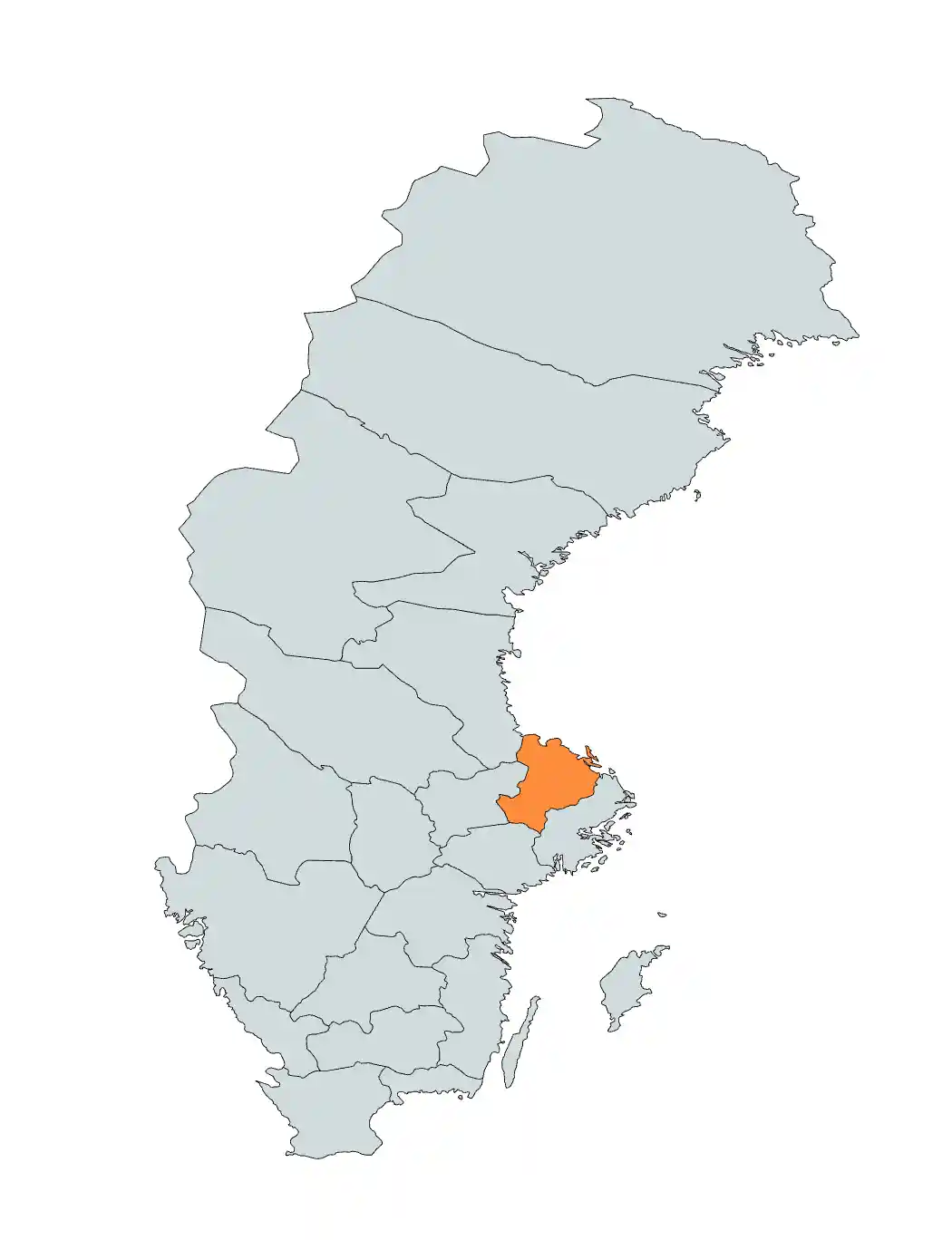
Uppsala is the soul of ancient Sweden where myths and reality blur among the massive burial mounds of the old kings. Three giant earth hills rise from the flat plains marking the spot where a nation was born over fifteen hundred years ago. This was the religious and political heart of the North long before the modern era. You can feel the weight of centuries as you walk the paths where Viking assemblies once gathered.
The city itself is dominated by the twin spires of the tallest cathedral in the Nordic region. Its red brick walls hold the tombs of kings and the relics of saints while the nearby university gardens bloom with thousands of rare plants. It is a place of deep learning and grand architecture where narrow streets lead to cozy cafes tucked into historic buildings. The river Fyris flows through the center providing a calm backdrop to the lively student life.
A drive through this province reveals a landscape of open fields and ironwork villages. Historic manor houses sit at the end of long tree-lined avenues and ancient churches hide medieval treasures. The roads are easy to follow and lead you to sites where the first Swedish coins were minted. It is a journey through the cradle of Swedish civilization where every stop feels like a step back into a grander time.
Uppsala (County) highlights
- Gamla Uppsala Mounds Stand before three massive burial mounds where the early kings of the Swedes were laid to rest over a thousand years ago. The site includes a historic church built over a pagan temple and a museum full of Viking treasures.
- Uppsala Cathedral Look up at the twin spires of the tallest church in the Nordic region located in the heart of the old university district. The interior is a masterpiece of Gothic architecture housing the tombs of famous kings and scientists.
- Linnaeus Garden Walk through the living library of the world famous botanist Carl Linnaeus who classified thousands of plants in these very beds. The garden and his old home are a peaceful green oasis that celebrate the birth of modern nature study.
- Skokloster Castle Visit one of the best preserved Baroque palaces in the world sitting on a scenic point by Lake Mälaren. The castle is famous for its unfinished banquet hall and massive collections of weapons and art from the 17th century.
- Lövstabruk Ironworks Explore a perfectly preserved industrial village with grand manor houses and rows of white cottages for the smiths. This was once the largest ironworks in Sweden and features beautiful gardens and a historic organ in the church.
- Finnerödja Forest Drive through the deep woods on the border of the province to find hidden lakes and quiet spots for berry picking. It is a rugged area that offers a break from the open plains and a chance to spot local wildlife.
- Härkeberga Church Step inside this modest stone church to see some of the most vibrant and well preserved medieval ceiling paintings in Europe. The colorful art tells stories of saints and daily life from a time before the Reformation.
- Bror Hjorths Hus Visit the colorful home and studio of one of Swedens most famous modern artists to see his playful sculptures and paintings. The house is a work of art itself and provides a deep look into the creative spirit of the region.
- Uppsala Castle Climb the hill to the pink royal fortress that has overlooked the city since the time of King Gustav Vasa. The terrace offers a panoramic view of the cathedral and the surrounding plains stretching out toward the horizon.
- Fiby Forest Nature Reserve Experience a true wilderness area where the trees are allowed to fall and rot as they have for millennia. It is a mossy and mysterious place that feels like the setting of an old folk tale far from any city noise.
The local Four
History of Uppsala (County)
Uppsala is the sacred cradle of Swedish history, where the Three Royal Mounds at Gamla Uppsala stand as monuments to the legendary Vendel period kings of the 500s. This was the site of the Great Thing assembly and a massive gold-plated pagan temple. In 1087, the temple was finally destroyed as Christianity took hold, and by 1164, the site became the seat of the first Archbishop. This move permanently cemented this region as the religious and political center of the Viking world.
The 1200s brought a architectural revolution with the start of the Uppsala Cathedral, the tallest in the Nordics. It became the final resting place for kings like Gustav Vasa and scientists like Carl Linnaeus. In 1477, the city founded the first university in Scandinavia, turning the province into an intellectual hub. During the 1700s, Linnaeus transformed the city's gardens into a living map of the world's plants. It changed how we understand nature and biology forever.
Driving through the province, you cross the flat plains that once held the fiercest Viking warriors. You pass Skokloster Castle, built in 1654, which remains frozen in time with an unfinished banquet hall because the owner died and the workers simply dropped their tools. The region is also home to the "Walloon" ironworks like Forsmark and Lövstabruk, where Belgian smiths arrived in the 1600s to create the world’s best iron. Uppsala is a province of deep layers from ancient pagan graves to the birth of modern science.