

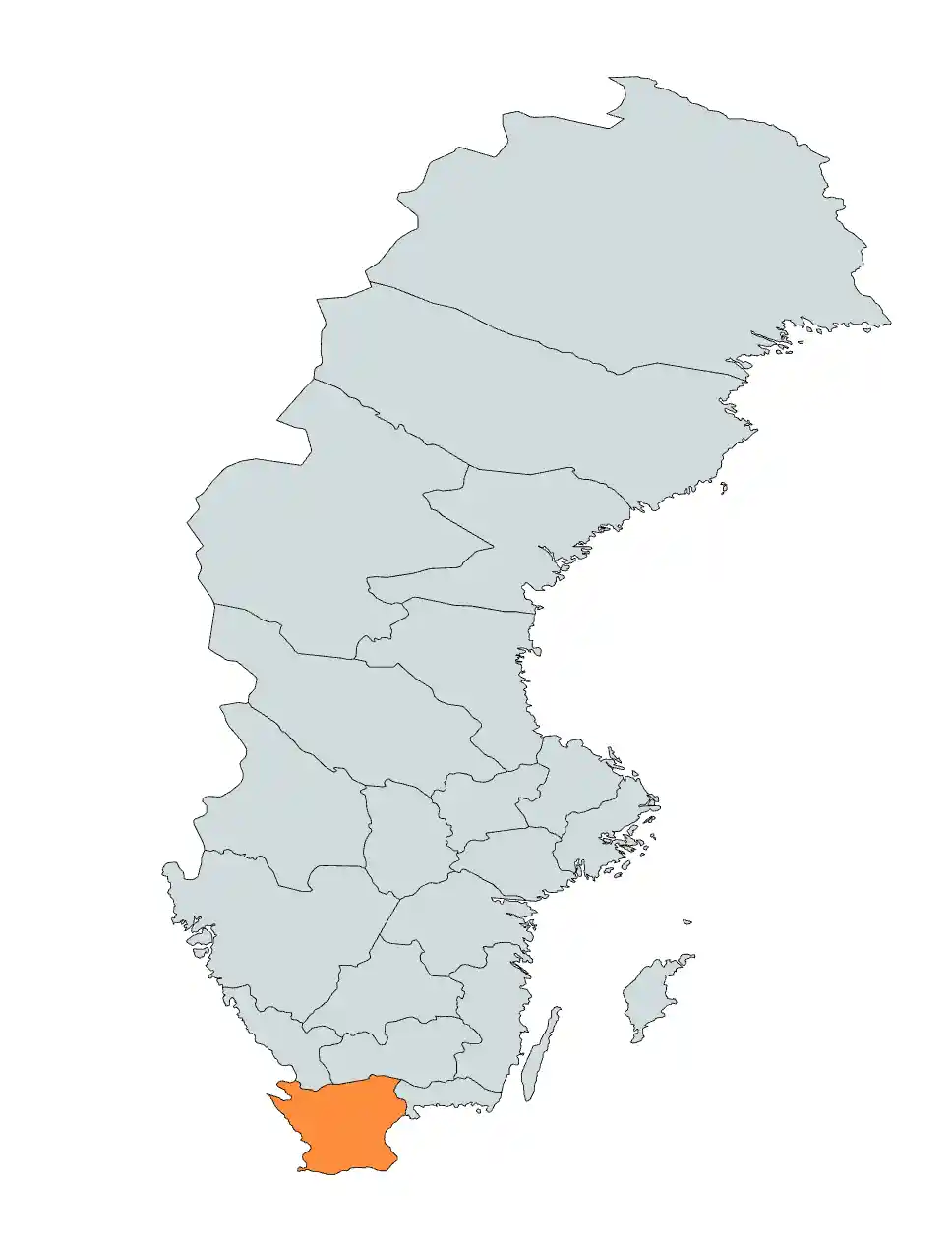
Scania is the sunny garden of Sweden and provides a colorful road trip through yellow canola fields and white chalk cliffs. Grand brick chateaus and old windmills stand among the rolling hills of the countryside like scenes from a classic movie. You can find trendy farm shops selling local wine and organic vegetables along every backroad in the beautiful Österlen region. The light here is unique and has drawn painters to the coast for generations to capture the bright colors of the land and the sea.
The white sand beaches of Scania are lined with colorful wooden huts tucked into the dunes to protect against the Baltic wind. You can walk the ancient stone circles of Ales Stenar high on a cliff overlooking the ocean or explore the vibrant streets of Malmö and Lund. It is a region where the food is world class and the art galleries are often hidden in old converted barns. The roads are lined with willow trees and lead through a patchwork of tiny fishing villages and grand agricultural estates.
The culture of Scania is distinct with a love for the good life and a close connection to the rest of Europe. You can find gourmet restaurants in remote farmhouses or visit the massive apple orchards of the eastern coast. The landscape is open and inviting with a sense of space that is rare in the thick forests further north. It is a place of contrast where the ultra modern city meets the medieval village and the sea is always a part of the view.
Scania highlights
- Ales Stenar Stand among fifty nine massive standing stones arranged in the shape of a ship on a cliff overlooking the sea. This ancient monument is one of the most iconic sites and offers a powerful sense of history.
- Nimis in Kullaberg Hike down to a hidden beach to find a massive driftwood sculpture made of thousands of planks built into the rocks. It is a secret art installation that requires a climb but rewards you with a unique sight.
- Hovs Hallar Explore the rugged coastal cliffs and rock formations where the red granite meets the crashing waves. This dramatic landscape was used as a filming location for famous movies and offers wild hiking trails.
- Glimmingehus Tour the best preserved medieval manor house in Scandinavia with its thick stone walls and defensive traps. The dark interior tells the story of the knights and lords who once ruled the southern plains.
- Söderåsen National Park Drive to the edge of a massive rift valley where the forest is deep and the cliffs offer views over a sea of green. The park features easy trails around a mirror lake and steep climbs for the adventurous.
- Dalby Söderskog Visit the smallest national park in the country to see a lush broadleaf forest that looks like a jungle in the summer. The ground is covered in wild flowers and the ancient trees create a thick green canopy.
- The Apple Coast (Kivik) Explore the eastern shore where the orchards meet the sea and the air is filled with the scent of fruit. You can visit the massive King’s Grave and buy fresh cider directly from the local farm presses.
- Falsterbo Peninsula Drive to the southern tip where the white sand beaches stretch for miles and the birds gather to cross the sea. The colorful beach huts and the shallow turquoise water give this area a tropical feel.
- Lund Cathedral Visit the massive twin towers of this Romanesque church to see the giant astronomical clock that has been ticking for centuries. The dark crypt below houses the stone giant Finn who legend says built the church.
- Ven Island Take the ferry with your bike to explore this white cliff island where the famous astronomer Tycho Brahe built his observatory. The island is famous for its yellow bikes and the steep paths that overlook the sound.
The local Four
History of Scania
Scania was the wealthy and fertile jewel of the Danish kingdom. This breadbasket of the north was covered in rich soil that produced enough grain to feed empires. It makes it the most fought over piece of land in the region. The landscape is still filled with over two hundred grand chateaus and brick churches built during the time of Danish rule. The 1658 Treaty of Roskilde finally made the region Swedish, but the local culture and architecture still hold a strong connection to its southern roots.
The history here goes back even further to the time of the Vikings who left behind massive ship settings like Ales Stenar on the coastal cliffs. These stone monuments show that Scania has always been a hub for sea travel and trade between the north and the rest of Europe. The hills were once the sites of massive battles where two nations struggled for control of the golden fields. This blend of Danish elegance and Viking grit created a region that feels different from the rest of Sweden.
Driving through Scania today feels like exploring a sunny garden filled with history. You can find trendy farm shops in old barns, walk the ramparts of medieval fortresses like Glimmingehus, or explore the academic streets of Lund. The white sand beaches and the yellow canola fields create a colorful backdrop for your journey. It is a place where the history of the land is measured in harvests and the sea is always just over the next hill.