

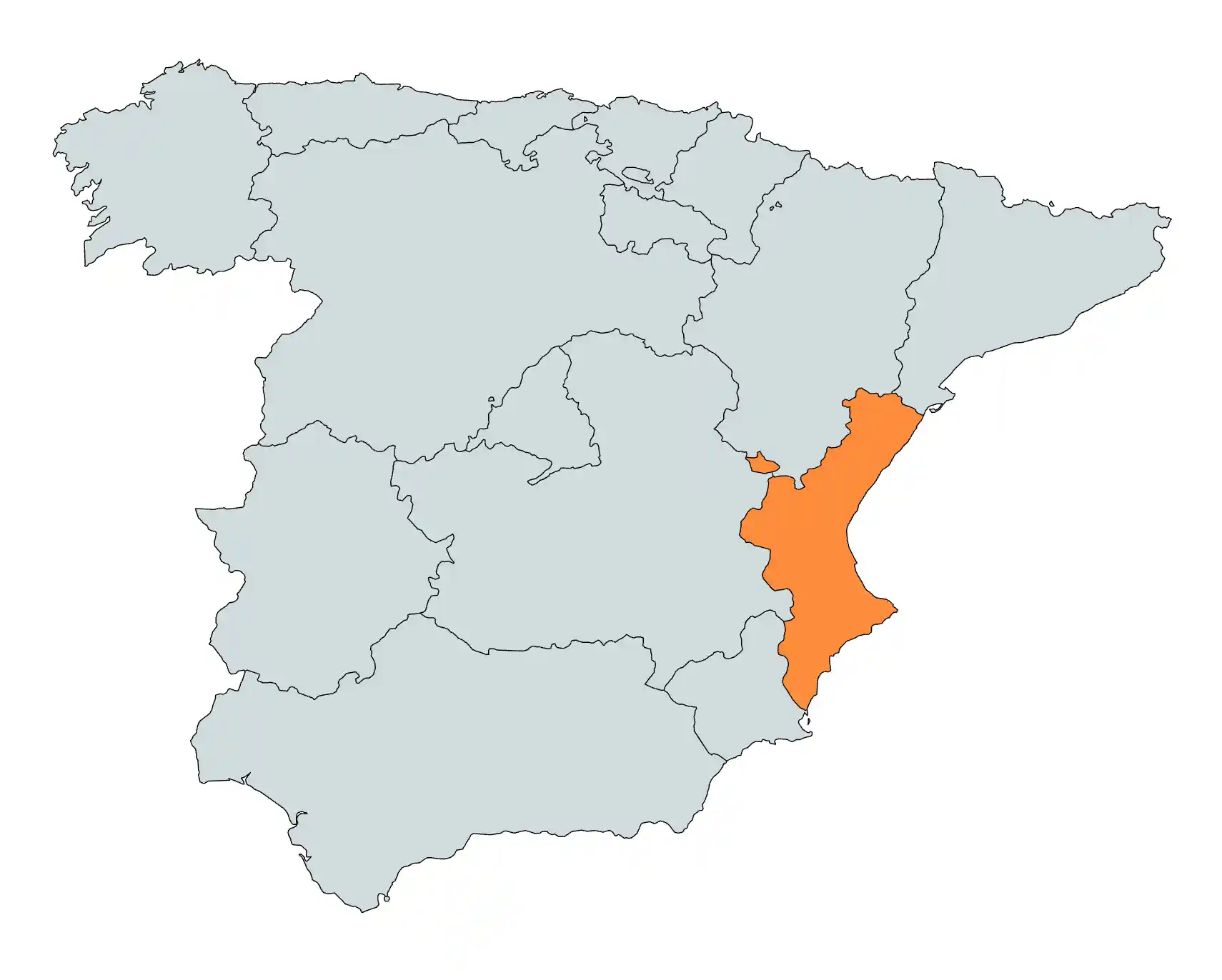
The Valencian Community is a bright region of coastal life and celebrated cuisine. This area is the birthplace of paella and home to the spectacular Fallas fire festival. It spans the warm, tourist friendly coast known as the Costa Blanca.
The coastline is lined with stunning beaches and major tourist resorts. Inland, the roads quickly climb into quiet, rugged mountains and orange groves. Valencia city itself is defined by architectural duality. It holds both Roman roots and the futuristic design of the City of Arts and Sciences. The drive connects busy urban centers with remote, sun kissed villages.
It is famous globally for its rich rice dishes and fresh citrus fruits. You will see striking modern design. You will find beautiful beaches and unique festival traditions. This is for you to fully enjoy the Spanish Levant coast on your road trip.
Valencian Community highlights
- Valencia’s City of Arts and Sciences A futuristic complex of museums, gardens and architectural marvels, it’s the cultural heartbeat of the region. Its design by Santiago Calatrava makes every angle a photo moment.
- Alicante Castillo de Santa Bárbara Visit this massive castle. It sits high on a hill overlooking the city and the beautiful Costa Blanca coastline.
- Albufera Natural Park Just outside Valencia, this vast freshwater lagoon is perfect for sunset boat rides and spotting rare birds. It’s also the birthplace of paella, making nearby village restaurants a must-stop.
- Peñíscola & Castle of Papa Luna This seaside town is crowned by a medieval fortress rising directly from the sea. Its narrow whitewashed streets feel like a blend of Valencia and Greece.
- Guadalest Valley Tucked high in the mountains near Alicante, the hilltop village of Guadalest looks like a fantasy movie set. Tiny museums and cliffside viewpoints give it a surreal charm.
- Las Fallas Festival (Valencia) Each March, Valencia transforms into a spectacular world of towering sculptures, fireworks and street celebrations. The burning of the fallas on the final night is an unforgettable experience.
- Xàtiva Castle Stretching along a mountain ridge, this double fortress is one of Spain’s most impressive yet underrated castles. Its views over endless orange groves are unforgettable.
- Castellón’s Desert de les Palmes A surprisingly lush mountain range despite its name, it offers panoramic routes overlooking the Mediterranean. Hidden monasteries and viewpoints make it ideal for peaceful hikes.
- Tabarca Island Spain’s smallest inhabited island sits off the coast of Alicante with crystal-clear waters and quiet beaches. Its perfect for a day trip.
The local Four
History of Valencian Community
The history of the Valencian Community is shaped by the sea. The subsequent Moorish rule was crucial to the region's development. They perfected sophisticated irrigation systems and introduced the cultivation of rice and citrus fruits. This agricultural foundation remains essential to the region's culture.
The Christian Reconquest was completed by King James I of Aragon in the 13th century. This established the independent Kingdom of Valencia. It retained its own language, laws and self governance for centuries. The 15th century marked a cultural and economic golden age for the city of Valencia. It became a powerful Mediterranean trade center.
You can see Roman foundations, Moorish water courts and beautiful medieval trading halls. The modern era brought forth architectural innovation, notably the futuristic designs in the capital city. This is the region that allows you to trace the history of Mediterranean trade and wealth.