

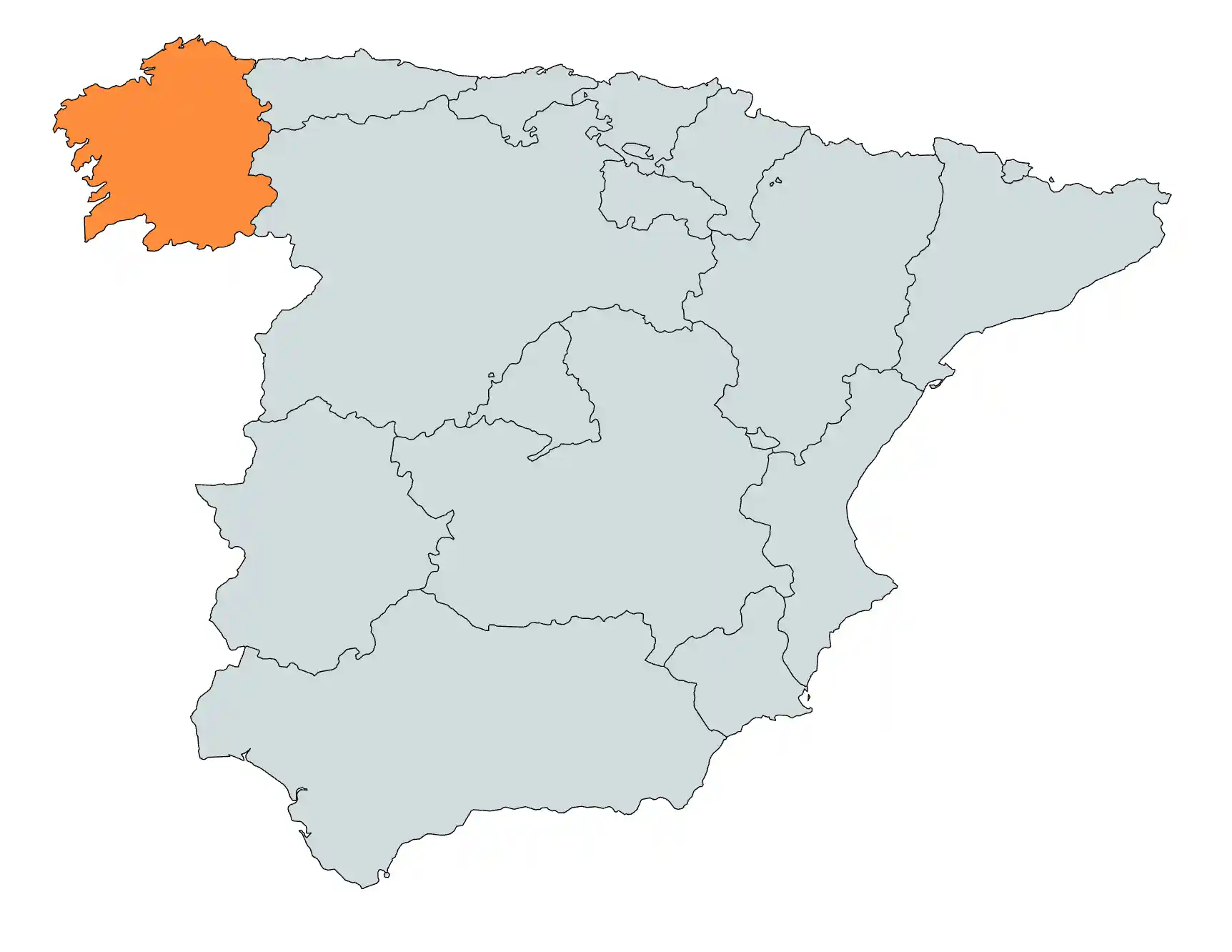
Galicia is the far northwestern edge of Spain. This is a mystical region defined by its green landscape and its majestic Atlantic waves. Here you dive straight into a Celtic culture that feels distinct from the rest of the country. This region is the celebrated destination for pilgrims walking the famous Camino de Santiago.
The coastline is majestic. It is famous for its Rías, which are spectacular coastal inlets resembling fjords. You can drive the length of the Rías Baixas. Visiting fishing villages and spectacular beaches. The journey ends in Santiago de Compostela. This granite city holds one of the world’s most important cathedrals. The driving routes connect beautiful forests with stunning ocean views.
It has an almost magical feeling of ancient folklore. You quickly discover the region's incredible seafood and wine. You will find ancient Roman lighthouses and beautiful medieval monasteries. Experience the powerful sense of completion that marks the end of the Camino de Santiago.
Galicia highlights
- Santiago de Compostela The spiritual heart of Galicia, famous for its majestic cathedral and as the endpoint of the Camino de Santiago. Its old town is filled with lively squares, monasteries and centuries of history.
- Rías Baixas A coastal paradise known for turquoise coves, pristine beaches, and world-famous Albariño wine. It’s a perfect region for seafood lovers and scenic coastal drives.
- Islas Cíes A protected archipelago with white-sand beaches and crystal-clear waters, often called “the Caribbean of Spain.” Hiking trails lead to breathtaking viewpoints and untouched nature.
- Cabo Fisterra Finisterre. Once thought to be the end of the known world, this dramatic cape marks the symbolic end of many pilgrims’ journeys. Sunset here is considered one of the most magical in Spain.
- A Coruña A vibrant port city with the ancient Roman Tower of Hercules lighthouse. Walk the waterfront promenades, beaches and the lively old town full of tapas bars.
- Lugo Home to the best-preserved Roman walls in the world, fully encircling the historic center. You can walk along the top for panoramic views of the city.
- Ribeira Sacra A breathtaking region of steep river canyons, terraced vineyards and ancient monasteries. It's one of Spain’s most beautiful wine regions and still a hidden gem.
- Ourense Thermal Baths Natural hot springs along the Miño River where you can relax in open-air thermal pools. The city also has a charming historic center and Roman bridge.
The local Four
History of Galicia
The history of Galicia goes back to its ancient Celtic past. The Galician people maintained a unique culture, language and mythology for centuries. Roman presence was strong in this remote northwestern corner of Spain. They established the lighthouse known as the Tower of Hercules in A Coruña. They called this land the finis terrae; the end of the world.
The medieval era transformed Galicia into a globally recognized destination. The tomb of Saint James the Apostle, Santiago, was purportedly discovered here. This event immediately established the Camino de Santiago pilgrimage route. The Camino brought massive streams of pilgrims, wealth and cultural exchange to the region. This influx of people cemented Santiago de Compostela as a major Christian capital.
Galicia's strong connection to the sea has endured through the centuries. Its sailors and fishermen maintained a thriving trade along the Atlantic coast. The region retained its distinct language and customs even after joining the larger Spanish kingdom. This part of your trip links you directly to the powerful spiritual journey of the medieval world. Visit this region to experience the ancient Celtic atmosphere and the granite beauty of the pilgrimage's end.