

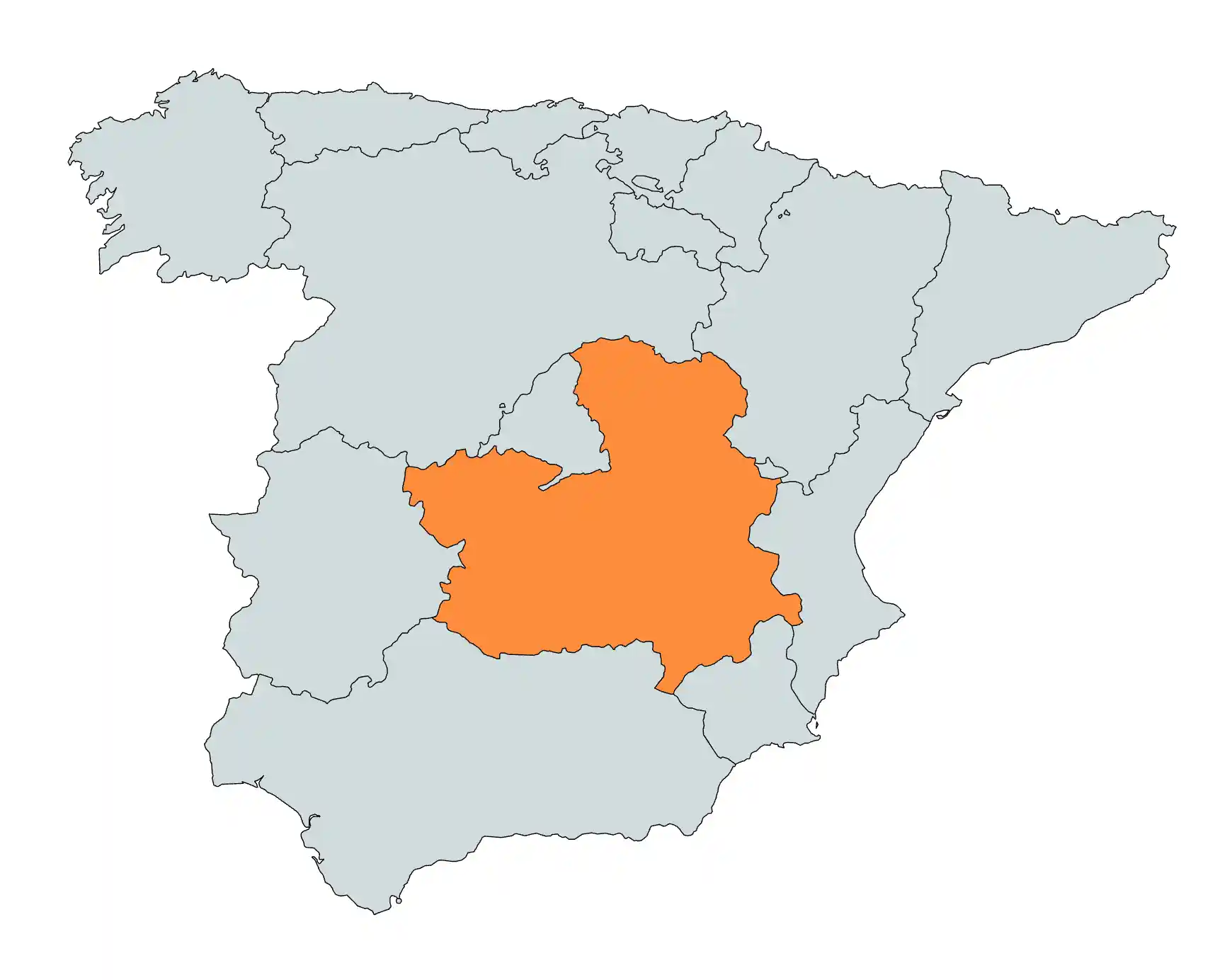
Forget the coast. The real road trip adventure happens in Castilla La Mancha, the famous region of Don Quixote. This is where Cervantes set his classic tale of imagination and windmills. Your road trip immediately plunges you into a profound historical landscape. This region stretches across Spain’s large central area. The capital Toledo stands as a powerful centerpiece. It is a city that once held three world cultures.
The drive itself is spectacular. It features wide open views and cinematic horizons. You follow the trails of the Knight Errant. You will pass fields of saffron and see iconic hilltop windmills. Visit the cliff hanging city of Cuenca with its unique dizzying houses. Explore the historical battlegrounds of the medieval Reconquista. This region is perfect for open air exploration and pure adventure.
You connect directly with history here. You will find authenticity under a huge blue sky. This part of your raod trip is your chance to explore a unique architectural heritage. Taste the traditional food and experience the powerful spirit of Spain’s most famous literary hero.
Castilla–La Mancha highlights
- Toledo The City of Three Cultures. A city where Christian, Jewish and Islamic history blend in winding medieval streets and iconic monuments. Its hilltop location offers beautiful views over the Tagus River. Visit the massive Primate Cathedral.
- Windmills of Consuegra These classic white windmills, made famous by Don Quixote, stand proudly along a ridge overlooking the open land. You can climb inside restored mills to see traditional mechanisms at work.
- Cuenca & Its Hanging Houses Cuenca’s famous Casas Colgadas cling dramatically to cliff edges, creating one of Spain’s most unique landscapes. The old town is a maze of steep alleys, stone bridges and serene plazas.
- Almagro & Corral de Comedias Almagro charms with its elegant Plaza Mayor and perfectly preserved 17th-century open-air theater. The town celebrates an annual international classical theater festival that fills its streets with culture.
- Sigüenza Castle A majestic castle-turned-parador dominates this ancient town, which is filled with Romanesque gems and peaceful stone lanes. Sigüenza’s cathedral and artisan shops add to its timeless atmosphere.
- Ruins of Calatrava la Vieja This hidden medieval fortress was once the headquarters of the Order of Calatrava and sits in a volcanic landscape. Exploring its walls and towers feels like stepping into Spain’s early medieval history.
- The Enchanted City (Ciudad Encantada) A surreal natural park filled with limestone formations shaped like animals, figures and fantastical shapes. Trails weave through narrow passages and open plazas carved by millions of years of erosion.
- Ruta de Don Quixote Follow the designated driving route that takes you through the key villages and landscapes central to the famous novel.
The local Four
History of Castilla–La Mancha
The history of Castilla La Mancha is defined by the city of Toledo. Toledo served as the capital of the Visigothic Kingdom before the Moors arrived. Toledo was a legendary city. It was famous for blending Christian, Muslim and Jewish cultures. This religious and intellectual harmony created a unique heritage for the entire region.
Control over this central area was contested during the Reconquista. The region’s identity was secured by the construction of hundreds of castles and fortified towns. These strategic military strongholds filled the landscape. Centuries later, this region gained worldwide fame through literature. Miguel de Cervantes set his famous novel Don Quixote here. The book turned the hard reality of the region into a timeless symbol of imagination.
That historical spirit is still visible today. You'll drive past the famous windmills. They stand as enduring symbols of the region's literary past. You will see ancient walls, medieval battle sites and architecture that reflects three faiths. This is a trip where the lines between reality and historical folklore disappear. Visit this region to experience the profound depth of Spanish culture and its central history.