

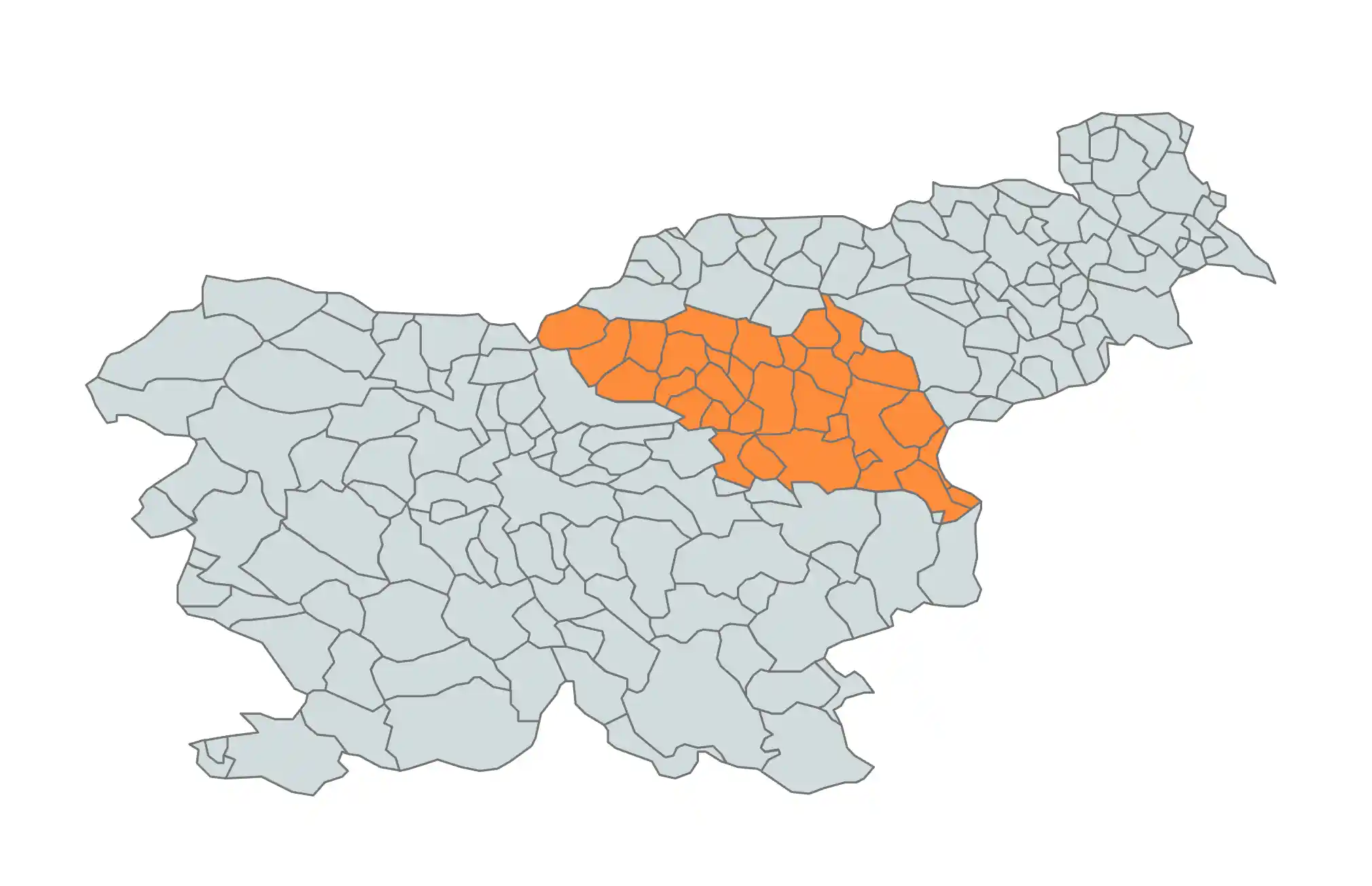
Enter a glacial paradise in this Savinja region where the road leads into the Logar Valley, a massive U shaped cirque surrounded by 2,000 meter peaks. You can drive to the very end of the valley where the road stops at the foot of the Rinka Waterfall. The Solčava panoramic road is a highlight for any driver, offering high altitude views of scattered farms and limestone walls that seem to float in the clouds.
The roads are narrow and hug the cliffside, providing constant views of emerald forests below and jagged gray rock above. In the lower valley, the landscape opens up into massive fields of green hops that fuel the nation's brewing industry. It is a spectacular sensory experience where every turn reveals a new perspective of the Alps.
Try the Upper Savinja stomach, a high quality air dried meat that is a staple of the local mountain diet. You can also visit the beer fountain in Žalec to sample different brews made from the aromatic local hops. From the high alpine meadows to the scent of the breweries in the lowlands, Savinja is a must for any road trip enthusiast.
Savinja highlights
- Logar Valley Alpine Cirque This is one of the most photographed valleys in Europe with a perfectly flat green floor and jagged gray peaks. The drive to the end of the valley is a must for any road trip through the Slovenian Alps.
- Solčava Panoramic Road Drive along the ridges above the clouds for incredible views of the Kamnik Savinja Alps from above. You can stop at high-altitude farms to buy local wool products and taste traditional mountain stews.
- Rinka Waterfall Located at the very end of the Logar Valley, this 90-meter drop is a spectacular sight visible even from the road. A short walk leads you to a balcony bar built into the rock right next to the falling water.
- Žalec Green Gold Fountain Visit the world’s first beer fountain where you can use a microchipped glass to sample various local brews. The surrounding fields are filled with towering green hop poles that define the landscape of the lower valley.
- Robanov Kot Glacial Valley This quieter neighbor to the Logar Valley offers a more authentic and rugged alpine experience for those who like seclusion. The road is narrower and leads to ancient farmsteads where the peace is absolute.
- Golte Mountain Plateau Take a cable car or drive up the steep mountain road to reach this high-altitude recreation area above the clouds. In summer, the meadows are filled with wildflowers and offer views that stretch across the whole region.
- Gornji Grad Cathedral This massive baroque church sits in a quiet village and is the largest and architecturally most significant building in the country. The drive through the Dreta Valley to reach it is scenic and filled with historic charm.
- Snežna Cave at Arta Explore the highest-altitude show cave in Slovenia where ice formations stay frozen even in the middle of summer. The road to the entrance is a scenic mountain climb that offers great views of the valley below.
- Velenje Lake District Stop at these man-made lakes created by coal mining for a day of swimming, sailing, or walking the perimeter. The area has been transformed into a vibrant park with great facilities for travelers.
- Upper Savinja Stomach Look for this high-quality air-dried meat product, known as Savinjski želodec, at local tourist farms. It is a protected delicacy made from the best pork and bacon, cured in the dry mountain air.
The local Four
History of Savinja
The history of the Savinja starts in the high glacial valleys where the landscape was carved by massive walls of ice thousands of years ago. Local shepherds were the primary inhabitants of these peaks for centuries leading their flocks to the high pastures of the Logar Valley every summer. They lived in simple wooden huts and developed a mountain culture that focused on survival and the production of durable wool and dried meats.
In the lower parts of the valley the story changed completely as the region became the hop garden of Europe. During the nineteenth century the cultivation of "green gold" transformed the economy and the appearance of the landscape with towering wooden poles and massive drying kilns. The wealth from the hop trade allowed for the construction of grand churches like the cathedral in Gornji Grad which dominates the skyline of the valley.
The upper reaches of the river remained a playground for the European nobility who visited the region for hunting and the refreshing alpine climate. They built small mountain retreats and villas that paved the way for modern alpine travel. Today the region offers a blend of high altitude herding traditions and the lush agricultural heritage of the valley floor.