

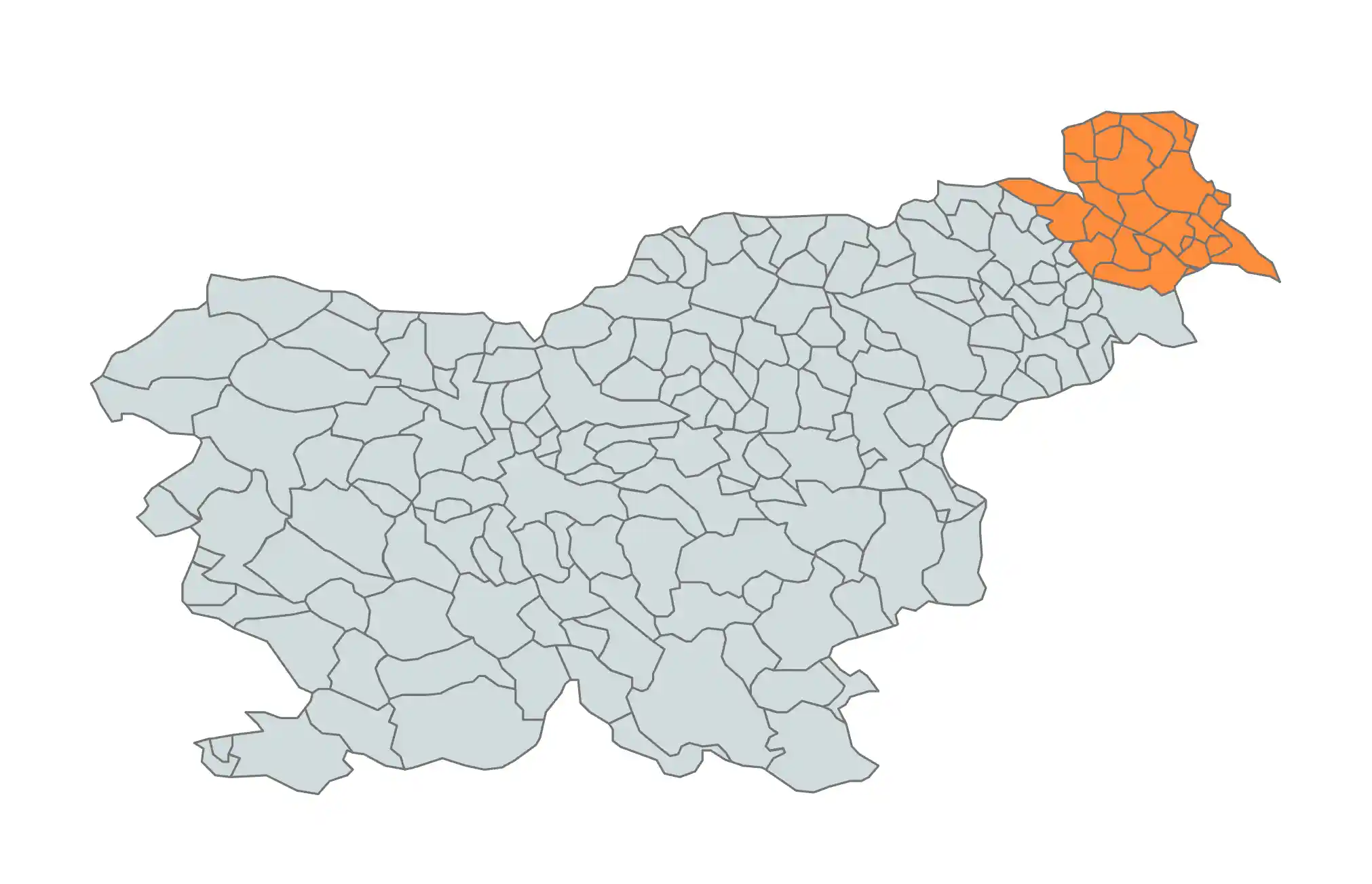
Mura provides a peaceful landscape that feels like a calm ocean of sunflower fields and river wetlands. Drive to the banks of the Mura to find the last floating watermills and take a traditional ferry across the current at the Island of Love. The roads here are straight and easy, leading you through the volcanic hills of Goričko where the largest castle in the land sits with 365 rooms.
This is the land of the white stork, and you will see their massive nests on almost every chimney in the quiet villages. You can stop at a pottery workshop in Filovci to see black ceramics being fired in traditional wood burning kilns. The horizon is wide and the sunsets over the plains are incredibly colorful. Making it a perfect region for a stress free cruise through the countryside.
Look for the famous Prekmurska gibanica, a heavy eight layered cake with poppy seeds, walnuts and apples. The local inns also serve rich bograč goulash, a meat stew cooked in a traditional cauldron. Mura is a quiet and soulful region that rewards those who take the time to explore its hidden corners and thermal springs.
Mura highlights
- Babič Mill on the Mura Drive to the riverbank to see the last working floating mill where grain is still ground by the river’s current. It is a peaceful spot that feels like stepping into a living history museum of rural Pannonian life.
- Goričko Landscape Park Explore the volcanic hills of the north where the roads lead to the largest castle in the country with 365 rooms. The park is a haven for biodiversity and offers quiet driving through ancient fruit orchards.
- Island of Love at Ižakovci Take a traditional ferry across the Mura River to this romantic island known for its riverside beauty and old crafts. It is a great spot to see the traditional life of the river people and their unique boat-building.
- Bukovniško Lake Energy Points This man-made lake is surrounded by deep forest and is famous for its healing energy points and the chapel of Saint Vitus. The drive here is easy and the lakeside paths offer a relaxing break from the car.
- Bogojina Plečnik Church Visit this architectural masterpiece designed by Jože Plečnik which sits on a hill overlooking the vast sunflower fields. Its unique white tower and wooden ceiling make it a landmark of modern religious design.
- Filovci Black Pottery Village Stop at this open-air museum to see traditional black ceramics being fired in wood-burning kilns. You can buy authentic handmade jugs and bowls that have been produced the same way for centuries.
- Murska Sobota Mansion Park Park at the heart of the region to see this grand renaissance mansion surrounded by a massive park of ancient oaks. It is a perfect spot for a stroll and a visit to the museum of Prekmurje culture.
- Moravske Toplice Thermal Springs Take a detour to soak in the famous "black" thermal water that bubbles up from the earth at high temperatures. It is one of the most relaxing and unique wellness stops on any road trip through the east.
- Vinarium Lendava Observation Tower Climb this modern steel tower for a view that covers the territories of four different countries at once. The drive through the Lendava hills takes you past some of the best white wine producers in the region.
- Prekmurska Gibanica Cake Ensure you stop at a local bakery for this eight-layered cake filled with poppy seeds, walnuts, apples, and cottage cheese. It is the most famous dessert in the region and is incredibly rich and satisfying.
The local Four
History of Mura
The far eastern plains of the Mura region were once part of the ancient Pannonian Sea and the soft sandy soil still reflects that prehistoric aquatic past. For centuries the river Mura acted as a shifting border between empires where storks nested on the chimneys of border guards. The people here developed a unique lifestyle centered on the river with floating watermills that could move with the changing currents to grind grain.
While the rest of the country was influenced by Mediterranean or Alpine cultures this region was shaped by the vast Pannonian plains and the proximity of the Hungarian crown. This resulted in a distinct architecture of long white houses with thatched roofs and a culinary tradition focused on rich spices and layered cakes. Volcanic activity millions of years ago left behind a legacy of thermal springs which have been used for healing since ancient times.
The local nobility left behind massive fortresses like the castle in Goričko which was designed with a room for every day of the year. During the twentieth century the region became a center for artisan crafts like black pottery and weaving which are still practiced in small village workshops. It is a land of wide horizons and a peaceful pace of life that feels connected to the earth.