

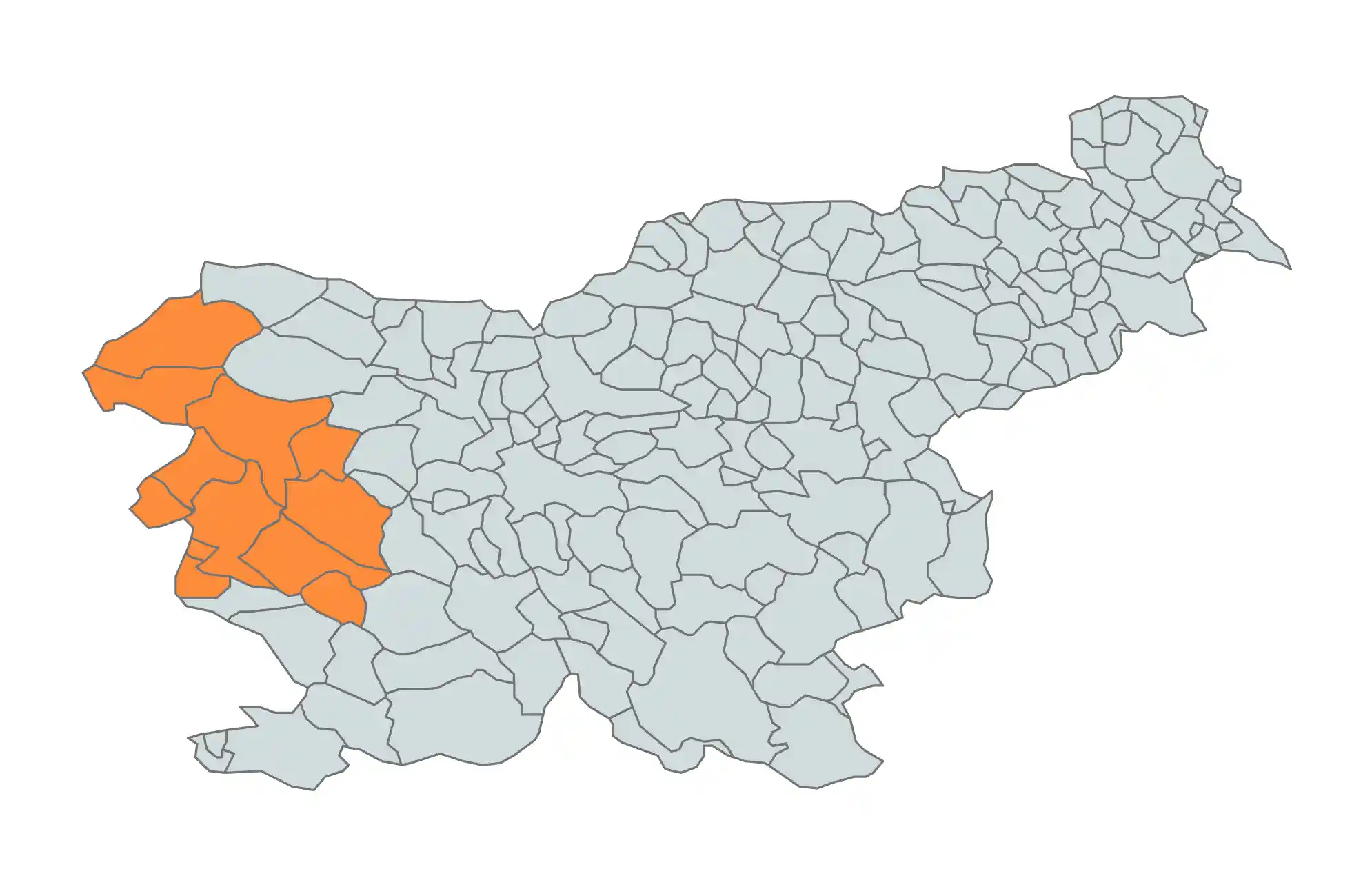
Trace the Gorizia path of the turquoise Soča River from the high mountain rapids down to the warm hills of the wine country. The drive along the river is world famous for its emerald color and the historic battlefields of the Great War. As you head south, the mountains give way to the rolling hills of Goriška Brda, where the road winds through hilltop villages like Šmartno.
This is the fruit basket of the country, where you can climb a lookout tower to see the Adriatic Sea and the Alps at the same time. The stone houses have red tile roofs and the balconies are overflowing with flowers, giving the region a distinct Mediterranean feel. The transition from the rocky mountains to the soft sunlit hills is one of the most beautiful drives you can take.
The food here is a mix of mountain grit and coastal grace, featuring cherries, apricots and world class white wines. Try the Kobarid dumplings, which are sweet treats filled with walnuts and raisins or sample local olive oils produced on the southern slopes. Gorizia is a region of incredible light and sophisticated flavors where the alpine world and the sea finally meet.
Gorizia highlights
- Soča River Emerald Pools Drive along the turquoise river to see the deep limestone troughs and natural pools of crystal-clear water. It is a spectacular sight from the road and offers several spots for a quick dip in the freezing current.
- Kobarid WWI History Stop in this historic town to learn about the intense battles of the Isonzo Front that took place in these mountains. The town is also a gateway to the stunning Kozjak waterfall hidden in a dark cave.
- Šmartno Medieval Walled Village Park at the gates of this fortified village that sits on a hill in the heart of the wine country. The narrow streets are filled with stone houses and small shops selling local olive oil and honey.
- Gonjače Observation Tower Climb the tower for a 360-degree view that stretches from the Julian Alps all the way to the Adriatic Sea. The drive through the Goriška Brda hills is often compared to the best vineyard routes in Tuscany.
- Solkan Stone Bridge Drive to the edge of Nova Gorica to see the longest stone arch railway bridge in the world. The bridge spans the emerald Soča and is a masterpiece of early 20th-century engineering and design.
- Sabotin Peace Park Follow the winding road to the top of the mountain to explore the WWI tunnels and enjoy a view of the river. It is a powerful place of history with incredible vistas that cover two different countries.
- Kanal ob Soči Bridge This picturesque town is famous for its colorful bridge over the Soča where locals dive into the water during summer festivals. The riverside houses and the church square make it a perfect photo stop.
- Vipava River Delta Springs Visit the town where the river bursts from the rock in multiple springs right under the historic houses. The town is known for its many bridges and high-quality boutique wineries specializing in indigenous grapes.
- Tolmin Gorge Limestone Canyons Explore the lowest entry point into Triglav National Park with its thermal springs and massive rock formations. The Dante’s Cave and the Devil’s Bridge are highlights of this deep and narrow canyon.
- Kobarid Dumplings (Štruklji) Stop at a local inn for these sweet treats filled with walnuts, raisins, and lemon zest. They are unique to this town and are the perfect reward after a day of hiking or driving.
The local Four
History of Gorizia
The history of Gorizia is painted in the turquoise of the Soča River and the bright colors of the Mediterranean sun. This was a land of constant transition where the Roman Empire built the fortress of Ad Pirum to guard the gateway to the Italian peninsula. For centuries the region was a bridge between the high Alps and the Adriatic coast where fruit orchards and vineyards flourished in the mild climate.
The most dramatic chapter of the local story took place during the Great War when the river became the front line for twelve brutal battles. The mountains are still scarred with trenches and fortifications that tell a story of incredible hardship and bravery in the face of nature. In the aftermath the people rebuilt their stone villages and returned to the land focusing on the production of world class wines and cherries that made the region famous.
The southern part of the region known as Brda underwent a transformation into the "Slovenian Tuscany" where every hilltop was crowned with a church or a medieval tower. This area became a symbol of the resilient Mediterranean spirit with family estates passing down the secrets of wine and olive oil for generations. It is a region of light and resilience where the memory of war has been replaced by the beauty of the harvest.