

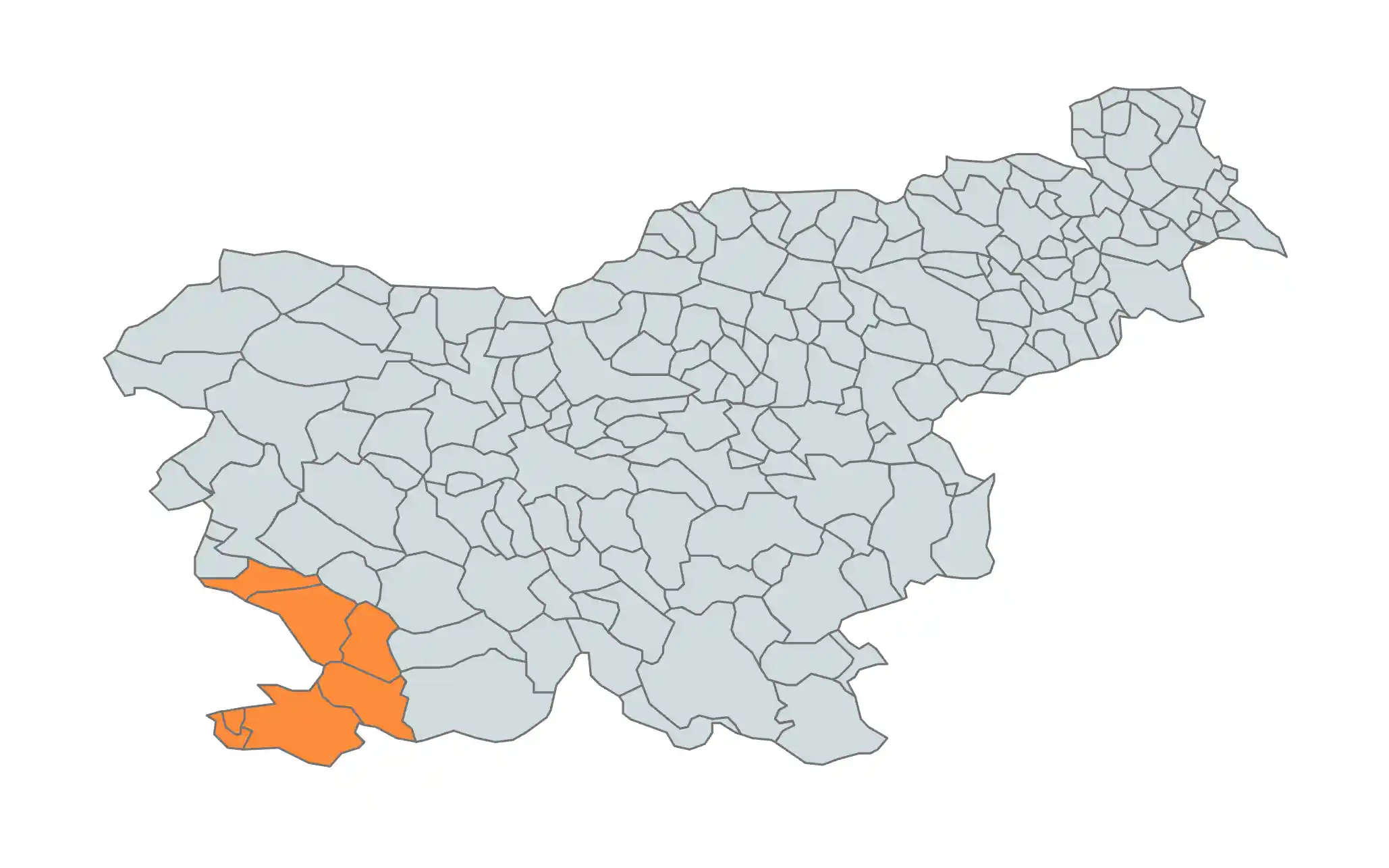
Drive from the mysterious underground world of massive caves to the salty air of the Adriatic coast. In Coastal–Karst, you can start the day at the Lipica Stud Farm to see the elegant white Lipizzaner horses before exploring the giant canyons of the Škocjan Caves. The landscape of the Karst plateau is defined by gray stone walls and red soil. It creates a dramatic and rocky backdrop for your journey.
The road eventually leads to the sea where the medieval town of Piran sits on a narrow peninsula filled with Venetian architecture. You can visit the Sečovlje salt pans to see how salt is still harvested by hand using 700 year old methods. The scent of wild rosemary and bay leaves fills the air as you walk along the waterfront or explore the narrow streets of the old ports.
In the karst villages, stop for a plate of jota stew and some air dried pršut ham, which is cured in the local bora wind. You can wash it down with a glass of dark Teran wine, which grows only in this specific red soil. Coastal–Karst is a region of deep contrasts where the rocky heart of the country meets the blue horizons of the Adriatic.
Coastal–Karst highlights
- Piran Venetian Peninsula Park outside the town and walk into this coastal gem with its narrow streets and marble-paved Tartini Square. The view from the bell tower of the church covers the entire coastline of three countries.
- Škocjan Caves Underground Canyon Explore one of the largest underground canyons in the world, a UNESCO site with a river roaring through the dark. The scale of the chambers and the bridge over the abyss are truly awe-inspiring.
- Lipica White Horse Stud Visit the cradle of the Lipizzaner horses where they have been bred for the Habsburg court since 1580. The drive through the white-fenced pastures and ancient oak avenues is elegant and serene.
- Sečovlje Salt Pans See how salt is still harvested by hand using 700-year-old traditional tools and wooden scrapers. The salt pans are a unique landscape of shallow pools and white crystals right at the edge of the sea.
- Štanjel Stone Village This hilltop village is a masterpiece of Karst architecture with its narrow alleys and the beautiful Ferrari Garden. The drive through the Karst plateau offers views of red earth and ancient stone walls.
- Socerb Castle Cliff View Park at this medieval castle for the most dramatic view of the Gulf of Trieste and the coast below. The castle is built into the rock and sits right on the edge of the limestone plateau.
- Hrastovlje Fortified Church Take the road to this small stone church to see the famous 15th-century frescoes of the "Dance of Death." The church is a quiet and powerful piece of history hidden in the dry hills.
- Izola Fishing Waterfront This former island town has a more authentic and relaxed feel than its more famous neighbors on the coast. The waterfront is lined with seafood restaurants and offers great views of the sunset over the Adriatic.
- Strunjan Flysch Cliffs Park and walk to the highest flysch cliffs in the Adriatic for a view of the hidden Moon Bay beach. The white cliffs and blue water create one of the most natural and wild spots on the coast.
- Karst Pršut and Teran Pull over at a local "osmica" farm to try air-dried ham cured in the bora wind and a glass of dark Teran wine. The combination of the salty meat and the iron-rich wine is the signature taste of the region.
The local Four
History of Coastal–Karst
The Karst plateau is a land of stone and mystery where the water has spent millions of years carving massive canyons beneath the surface. Early humans used these caves for shelter and ritual long before the Romans arrived to build the salt pans along the coast. The white horses of Lipica were bred here starting in the sixteenth century to serve the royal courts of Europe in a landscape that matched their elegance and strength.
Along the narrow coastline the Venetian Republic left an indelible mark on the architecture and the culture of the port towns. The salt trade made the region incredibly wealthy and the salt pans of Piran became the source of "white gold" that was exported across the world. Meanwhile the inland villages developed a lifestyle centered on the production of air dried ham and powerful red wine from the iron rich soil.
The bora wind which can blow with incredible force has shaped both the trees and the traditions of the people for centuries. It is this wind that cures the local meats and clears the air to provide views that stretch across the sea to the Italian coast. The region remains a unique blend of subterranean wonders and sun soaked maritime history where the stone of the earth meets the salt of the sea.