

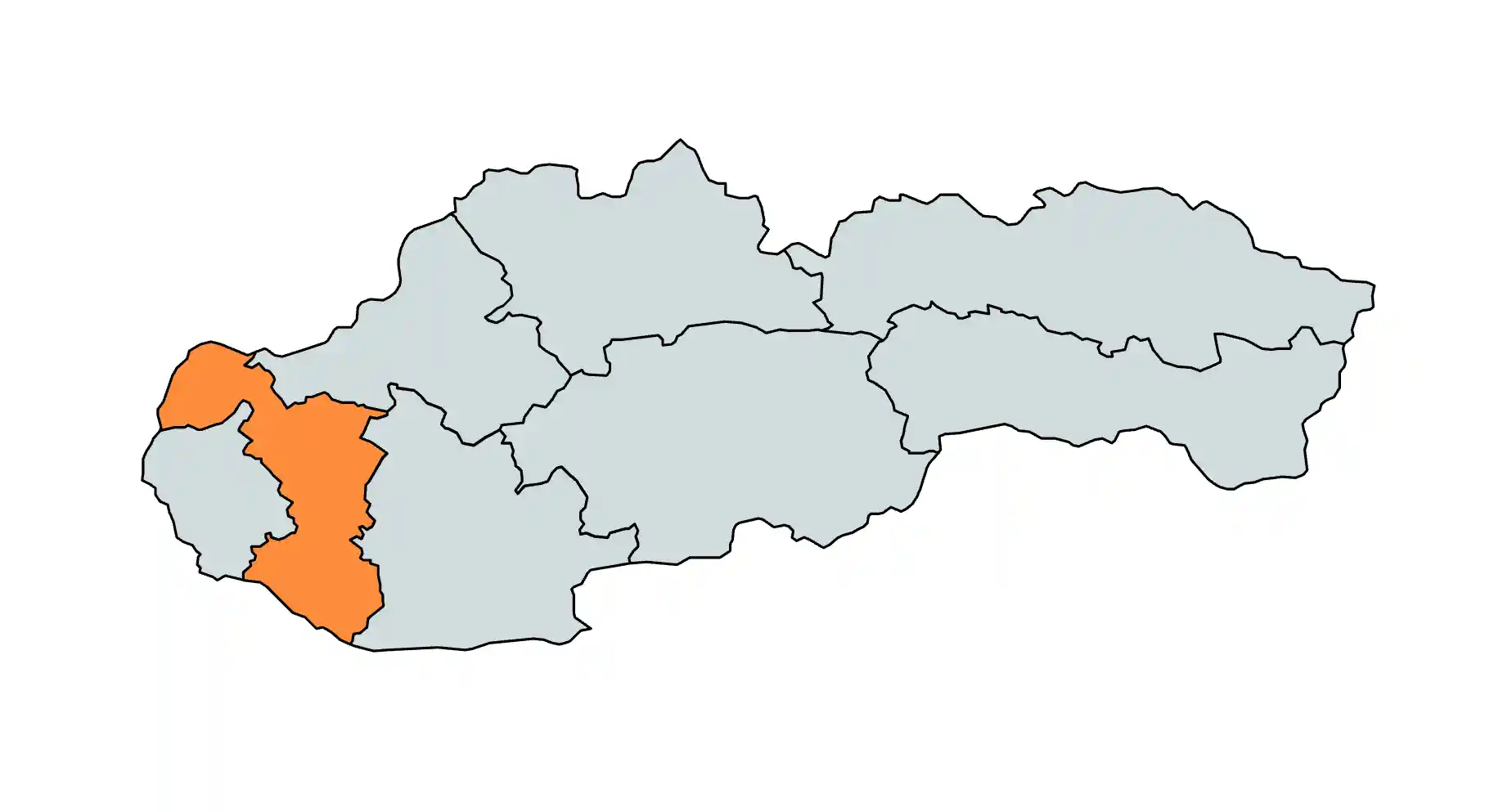
The vast fertile plains of the Trnava region are known as the garden of the country. This territory is a flat and open world where the horizon feels endless under the wide sky. Massive manor houses with white pillars stand in the middle of old parks where the Hungarian nobility once spent their summers. The Little Danube curves through the Trnava Region creating quiet spots for wooden watermills that still turn in the current.
You are in the heart of the grain country where the local mills and bakeries are the best in the land. The roads here are lined with tall linden trees and lead to hidden thermal springs that bubble up from the deep earth. Small towns hide red brick towers and ancient town walls that protect the stories of medieval kings. It is a peaceful land of harvest and history where the water defines the pace of life.
The northern part of the region climbs into the first hills of the Carpathians where the soil turns to stone. You can find the ruins of Smolenice or explore the deep halls of the Driny cave system. The Trnava region landscape is a mix of rich agricultural tradition and hidden underground wonders. It is the perfect place for a quiet escape where the simple beauty of the land takes center stage.
Trnava (region) highlights
- Smolenice Castle This romantic residence looks like a fairy tale palace with its central tower and sharp red roofs tucked into a lush forest. It is one of the most photographed spots in the region and offers a beautiful park for a relaxing walk.
- Piestany Spa Island A world famous health resort located on an island in the Vah River where thermal mud and mineral water rise from the earth. The parkland is filled with elegant statues and peacocks making it a prime stop for relaxation and luxury.
- Jelka Watermill This rare wooden mill sits on the banks of the Little Danube and features three levels of traditional milling machinery. It is a peaceful spot for a picnic where you can watch the slow river flow past the historic timber structure.
- Katarinka Ruins The remains of an old monastery and church hidden deep in the forest where the tall stone walls stand without a roof. It is a quiet place of reflection that can only be reached by a pleasant walk through the trees.
- Kuty Railway Museum A hidden gem for technical lovers where old steam engines and vintage rail cars are preserved in an outdoor setting. It tells the story of the vital rail links that once connected the fertile south with the rest of Europe.
- Hlohovec Observatory and Planetarium Located on a hill with a clear view of the night sky this center offers a look at the stars through powerful telescopes. It is a great stop for families and curious travelers who want to explore the mysteries of the universe.
- Dolna Krupa Manor A classicist palace surrounded by a large English park where the composer Beethoven once stayed and worked on his famous sonatas. The estate is famous for its rose gardens and the quiet beauty of its lake and pavilions.
- Vrbove Leaning Tower This unique bell tower has a noticeable tilt that has made it a local curiosity and a fun photo stop. It stands in the center of a small town and is a great example of the unexpected architectural quirks found in the region.
- Kralova pri Senci Bee Museum A charming open air museum dedicated to the history of beekeeping where you can see artistic wooden hives shaped like tiny houses. It is a sweet stop to learn about the ancient honey traditions of the Danubian plains.
- Gabcikovo Dam A massive engineering project on the Danube River where you can watch huge ships pass through the locks. The surrounding area is perfect for driving along the water to see the scale of human power over the river.
The local Four
History of Trnava (region)
The Trnava region is a fertile expanse that earned its reputation as the granary of central Europe thanks to its deep black soil and abundance of water. Since the Stone Age the landscape of the Danubian Lowlands has been a magnet for settlers who built massive circular earthworks and farming villages. The geography here is defined by the shifting branches of the Little Danube which created a world of river islands and hidden marshes.
In the 1600s this became the intellectual and spiritual heart of the country as the plains filled with the sound of church bells and university debates. While the southern lands were occupied by the Ottoman Empire these flatlands remained a safe haven for scholars and bishops. This era left behind a legacy of grand manor houses and sprawling English parks where the nobility spent their summers surrounded by rose gardens and white pillared architecture.
Industrial history is tied to the power of the rivers and the richness of the harvest. Massive wooden watermills were built along the banks to process the endless fields of grain while the discovery of deep thermal springs turned sleepy villages into world class spa retreats. The roads today follow the same flat paths once used by heavy grain wagons and royal carriages.