

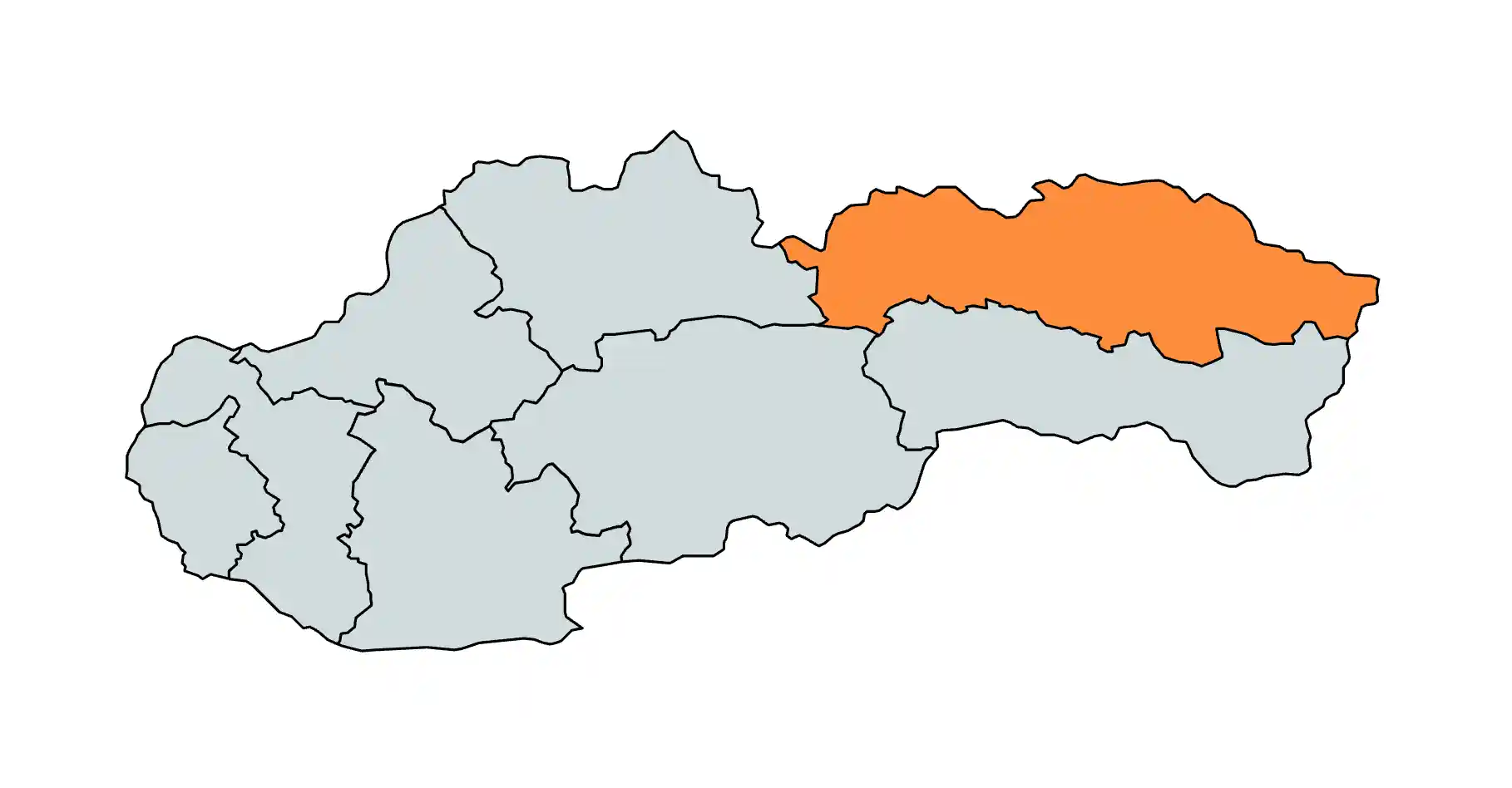
The Prešov region is a land of soaring peaks and silent wooden churches that stand alone in the remote wilderness. This is the roof of the country where the High Tatras create a wall of stone against the northern sky. The roads throughout the whole region wind through the Pieniny gorge where the red rock walls rise out of the river. This part of Slovakia is a mix of high alpine adventure and ancient spiritual peace.
You find yourself in a place of diverse cultures in the Prešov Region where the Rusyn people built unique temples with onion domes. These wooden structures are tucked away in green valleys where the pace of life matches the mountain streams. You can hike the trails of the Bieszczady or explore the Bardejov square within the Prešov Region. The Prešov Region is a sanctuary for those who want to find the true edge of the country.
The landscape is a mix of dramatic gray summits and rolling green meadows. You can take a cable car to the Lomnicky peak for a view above the clouds or visit the massive ruins of Spis Castle in the Prešov Region. The Prešov region gives you a journey through the most remote and beautiful corners of the eastern borderlands.
Prešov (region) highlights
- Lomnicky Peak Reach the top of the High Tatras by cable car to stand above the clouds and see the entire mountain range. It is one of the most dramatic viewpoints in Europe and features a small café at the very summit.
- Spis Castle A massive white stone fortress that is one of the largest in central Europe. It stands majestically on a hill and can be seen from miles away making it a primary landmark for any road trip through the east.
- Lutina Pilgrimage Site A beautiful religious center with modern wooden chapels and a forest path leading to a holy spring. It is a peaceful spot to see the unique architecture of the Greek Catholic church.
- Pieniny Dunajec Rafting Take a traditional wooden raft through a deep limestone gorge where the river forms the border with Poland. The red rock walls and the tall Three Crowns peaks create a stunning backdrop.
- Stara Lubovna Castle A well preserved fortress where the Polish crown jewels were once hidden. Below the castle is an open air museum with a beautiful wooden church and traditional farm houses.
- Bardejov Square Often called the most beautiful town square in the country this area is surrounded by colorful gothic houses and a massive basilica. The town also features a unique spa with historic wooden villas.
- Cerveny Klastor A red brick monastery located at the entrance to the Pieniny mountains. It was once home to a famous flying monk and now serves as a museum of herbal medicine and history.
- Morske Oko Lake A deep blue glacial lake hidden in the Vihorlat mountains surrounded by dense beech forests. It is a quiet and protected area that feels far removed from the busy mountain resorts.
- Dukla Pass Memorial A historical site marking one of the bloodiest battles of World War II. You can see tanks and airplanes in the open fields and climb an observation tower to look over the border.
- Sninsky Kamen A massive rock formation that rises above the forest like a natural tower. A short hike to the top offers a view over the eastern wilderness and the sparkling waters of the lakes below.
The local Four
History of Prešov (region)
The Prešov region is a land of spiritual frontiers where the stone peaks of the High Tatras meet the rolling hills of the east. It has always been a territory where different cultures and religions blended together creating a unique identity. The history is written in the timber of its wooden churches built by the Rusyn and Slovak people as symbols of faith in the remote wilderness.
Strategic trade was the lifeblood of the area for hundreds of years as merchants carried salt wine and textiles between the Baltic Sea and the Mediterranean. Towns like Bardejov became wealthy hubs of commerce with perfectly preserved gothic squares and thick defensive walls. Spis Castle served as the administrative center for the entire east managing a landscape that felt like the very edge of the world.
The 20th century brought intense conflict as the mountain passes became the site of massive battles during both World Wars. The Dukla Pass saw some of the most brutal fighting in the mountains leaving behind a landscape filled with memorials and abandoned tanks. Despite the turmoil the area has remained a place of deep peace where traditions are found in the quiet domes of wooden temples.