

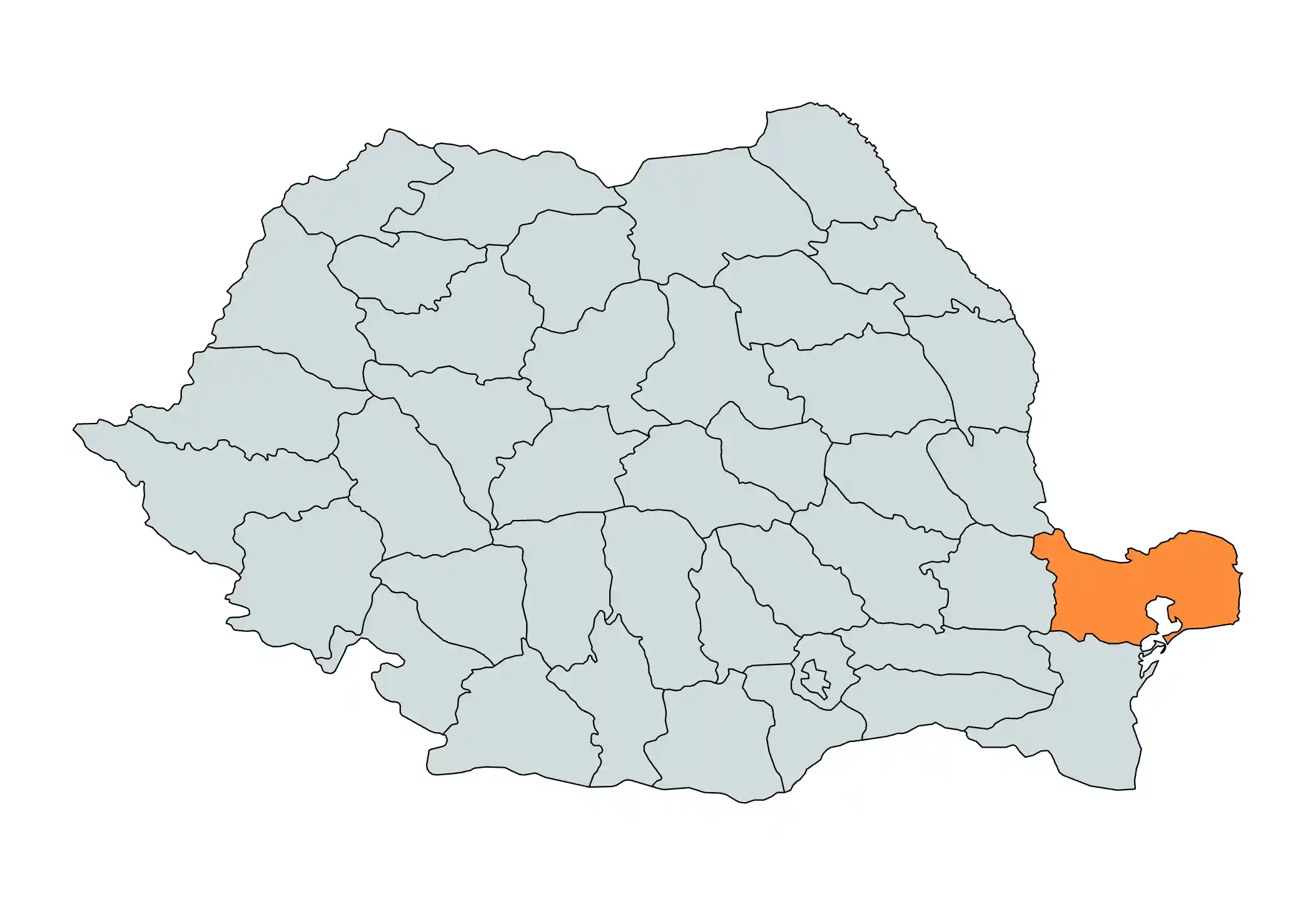
Tulcea county is a unique world of water and the most spectacular paradise for birds and nature lovers in the whole of Europe. You swap your car for a small boat to explore the vast and mysterious channels of the Danube Delta, where the river meets the sea. The water splits into a thousand different paths through the green reeds, taking you deep into a world of lily pads and hidden lakes. You can see massive colonies of white pelicans, wild horses running through the marshes and rare fish in the clear water. It is the wildest and most pristine wetland on the continent, offering a sense of peace and wonder that is truly unforgettable.
The Măcin Mountains are the oldest mountain range in the land and rise like ancient stone giants above the flat plains of the delta. They are not high, but they offer rocky paths and amazing panoramic views of the river and the surrounding wetlands. You find rare plants, wild turtles and a variety of birds of prey that hunt in the dry, rocky hills. The air here is dry and the sun is intense, creating a unique mountain landscape that feels like it belongs in a different part of the world. It is a fascinating place to hike and explore the ancient history of the earth itself.
The city of Tulcea serves as the essential gateway to the delta and is a busy, colorful river port filled with boats of all sizes. You can visit the massive local aquarium to see the giant sturgeon and other fish that have lived in the Danube for millions of years. The riverfront promenade is a lively place to walk, filled with cafes and restaurants that serve the most authentic fish dishes in the land. You find a fascinating mix of many different cultures and people who have lived by the rhythm of the water for generations. This route is a true journey into the wild heart of nature and the unique spirit of the river and the sea.
Tulcea (county) highlights
- Danube Delta Biosphere Reserve Leave the car behind to explore a vast, watery wilderness by boat, navigating a maze of reeds, hidden lakes, and narrow canals. It is a world-unique sanctuary for over 300 bird species, including giant pelican colonies and elegant white herons. The silence of the marshes and the golden light of the sunset make it one of the most magical natural landscapes on the planet.
- Măcin Mountains Hike through some of the oldest mountains in Europe, featuring rounded granite peaks and dry, rocky landscapes that feel like a piece of the Mediterranean. The views from the ridges stretch across the wide Danube and the flat plains of Dobrogea, offering a dramatic sense of space. It is a wild and sunny terrain where you might spot rare tortoises and eagles circling above.
- Enisala Fortress Stand upon a high limestone hill to find the ruins of a 14th-century castle that watches over the vast Razim and Babadag lakes. The thick stone walls and defensive towers provide a powerful vantage point for watching the wind move across the water and the tall grass. It is a hauntingly beautiful spot that captures the ancient maritime history of the region.
- Letea Forest Visit a prehistoric woodland where tall oaks grow in the sandy hollows between high dunes, draped in tropical-looking climbing vines. It is the northernmost subtropical forest in Europe and home to wild horses that roam freely among the ancient trees. The landscape is a surreal mix of desert and jungle, accessible only by boat or rugged off-road vehicles.
- Gura Portiței Travel to a narrow strip of golden sand that separates the fresh water of the Golovița Lake from the salty waves of the Black Sea. The village features traditional Lipovan architecture with bright blue accents and reed roofs that blend perfectly into the coastal landscape. It is the ultimate destination for those seeking total isolation and the raw beauty of the wild seaside.
- Babadag Forest Drive Navigate the winding roads through a lush and hilly forest that offers a cool, shaded retreat from the intense coastal sun. The area is famous for its biological diversity and the beautiful view of the lakes that appears suddenly between the trees. It is a peaceful route that highlights the green and rolling heart of the Dobrogea region.
- Celic-Dere Monastery Discover a peaceful holy site tucked into a quiet valley, famous for its "growing icon" and its traditional windmill. The monastery is a center of deep spirit and absolute silence, surrounded by vineyards and low hills. You can walk the shaded gardens and enjoy the calm rhythm of monastic life far from the main tourist paths.
- Sulima City and Beach Reach the easternmost point of the land, a historic "free port" accessible only by water, where the Danube finally meets the sea. The town features old lighthouses and an international cemetery that tells stories of sailors from across the globe. The beach is wide, quiet, and wild, offering a sense of standing at the very edge of the world.
- Saon Monastery Visit a beautiful religious complex located on the banks of a quiet lake, known for its peacock gardens and its traditional olive groves. The stone church and its white cells offer a sanctuary of peace, reflecting perfectly on the still water surface. It is an ideal place to pause your journey and enjoy the fresh breeze and the sounds of the water birds.
- Tulcea Aquarium (Danube Delta Museum) Explore a modern facility in the regional capital that features massive tanks filled with sturgeons and other rare fish from the river. The museum provides an in-depth look at the complex ecosystem of the delta and the traditional life of the local fishermen. It is a brilliant educational stop that prepares you for the wild nature of the wetlands.
The local Four
History of Tulcea (county)
Tulcea is the gateway to the Danube Delta and a land of ancient maritime mysteries. The regional capital was established as a Roman fortress named Aegyssus in the 1st century and has served as the primary command post for river navigation for two millennia. The county holds the oldest mountains in the country the Măcin Mountains which were formed over 300 million years ago and now stand as jagged granite ridges overlooking the river plains. This region was the last part of the territory to be liberated from Ottoman rule in 1878 and it still preserves a unique mix of Lipovan Russian Turkish and Greek cultures who settled here to escape religious persecution or find wealth in the fishing trade.
The history of the county is dominated by the Danube Delta which is the second largest and best preserved delta in Europe. This labyrinth of water and reeds was a vital tactical hideout for river pirates and a strategic prize for every empire that wanted to control the access to the Black Sea. The city of Sulina located at the end of the middle arm was once the seat of the European Danube Commission in the 19th century and was a truly international city where over 20 languages were spoken in its grand hotels and consulates. The region is also home to the Enisala Fortress which was built by Genoese merchants in the 14th century on a high hill to monitor the maritime trade routes.
A road trip through Tulcea requires navigating the winding roads along the Măcin ridges or taking the ferry across the river at Brăila. You can drive to the Halmyris ruins to see the remains of a Roman naval base or visit the Cocoș Monastery which was a center for the national resistance during the Ottoman occupation. The local gastronomy is centered on the famous fish soups cooked over open fires and the traditional pies of the Dobrogea region. Tulcea is a journey through the oldest mountains in the land and the wild watery frontier of the Danube Delta.