

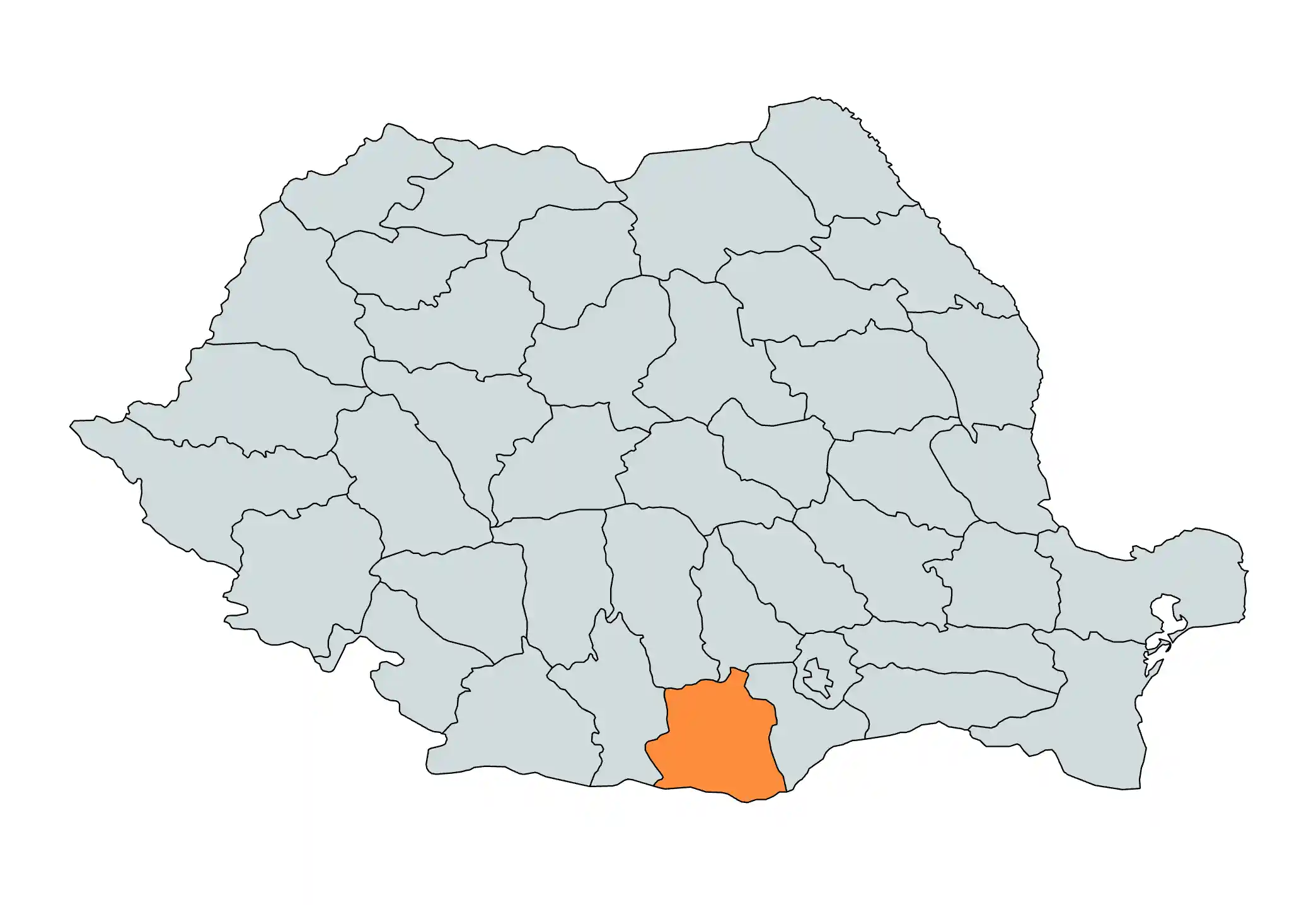
Teleorman county is a land of massive plains and the intense heat of the deep south where the horizon seems to stretch on forever. You drive through endless fields of wheat, corn, and sunflowers that create a patchwork of gold and green under a very big and bright sky. The land is almost perfectly flat and the roads are straight, which makes for an easy and rhythmic drive through the agricultural heart of the country. You find a steady, calm life in the small farming towns where the work is dictated by the cycle of the sun and the seasons. It is a place of light, wind and the quiet power of the earth.
The city of Alexandria features wide, leafy streets and several large parks that provide a welcome rest from the heat of the plains. You can walk through the center and find several grand churches with bright, silver domes that shine in the intense southern light. The pace of life is very relaxed and the local people are friendly, always ready to share a cold drink and a story about the local harvest. You find a simple charm in the local squares and the markets that are filled with fresh produce from the surrounding farms. The city provides a comfortable and quiet break in your journey across the southern landscape.
Follow the river road along the banks of the Danube to find quiet ports and hidden spots where the water moves slowly toward the sea. The river is very wide here and the banks are full of green reeds, willows and a variety of birds that nest in the wetlands. You can see across the vast expanse of the water into the distant hills of the neighboring south, creating a sense of being on a great frontier. It is a place of intense light and wide-open spaces that offer a quiet look at the river life and the grain lands. This route is perfect for those who want to experience the raw and simple beauty of the southern border.
Teleorman (county) highlights
- Zimnicea Danube Bank Reach the southernmost point of the country to see the wide Danube moving slowly toward the delta. The river bank offers a vast horizon and a constant cooling breeze that is a welcome relief from the heat of the plains. It is a quiet and airy spot where you can watch the big cargo ships pass by and feel the immense scale of the border water.
- Bujoru Forest Drive through a large and protected woodland that serves as a green oasis in the middle of the sunny agricultural landscape. The forest is home to wild flowers and offers a series of shaded paths that are perfect for a quiet afternoon break. It is a place of absolute natural silence that highlights the wild character of the southern heartland.
- Roșiori de Vede Old Houses Wander through the center of one of the oldest towns in the region to see merchant homes from the late 19th century. Architecture reflects the old wealth of the grain trade and provides a nostalgic look at a time when these plains were the breadbasket of Europe. It is a pleasant stop to enjoy the local rhythm of life and a slow walk through history.
- Turnu Măgurele Water Tower Admire a grand brick landmark that stands as a symbol of the city and its industrial history near the river. The tower is a masterpiece of early engineering and provides a unique silhouette against the big southern sky. It is a great point of interest for those who appreciate the aesthetic side of traditional utility structures.
- Vedea River Meadows Follow the winding path of the river through a landscape of green pastures and small, traditional farming villages. The area is peaceful and offers many spots for a quiet picnic under the shade of a willow tree. It is a simple and honest route that showcases the authentic, slow-paced life of the Teleorman countryside.
- Zimnicea Archaeological Site Explore ruins of ancient settlements that show how people have lived and traded along the Danube since the Iron Age. Site provides a fascinating window into the early history of the south and the strategic importance of the river crossings. It is an educational and breezy stop that connects your road trip to the deep past of the region.
- Sfântul Alexandru Cathedral Visit a majestic religious landmark in Alexandria that features a massive dome and elegant stone carvings. Interior is vast and filled with light, offering a sanctuary from the busy pace of the county center. It is a center of deep faith and architectural pride that captures the spirit of the southern plains.
- Danube Ferry Crossings Use local river transport to see the water from a slow and traditional perspective while moving between the banks. The ferry ride allows you to appreciate the sheer width of the Danube and the wild beauty of the surrounding marshes. It is a fun and airy experience that breaks up the long drives through the open fields.
- Bărăgan Plain Horizons Experience the immense scale of the flat landscape where the road stretches straight toward the sky through golden fields of wheat. In summer, the view is dominated by millions of sunflowers turning their faces toward the sun in a spectacular display of yellow. It is a journey that highlights the agricultural strength and the unique, minimalist beauty of the south.
- Suhaia Lake Find a quiet sanctuary for bird watching at a large and peaceful lake that is a favorite for local nature lovers. The water is surrounded by reeds and provides a calm environment for watching the sunset reflect on the still surface. It is a serene destination for those looking to escape the noise and enjoy the wild life of the river basin.
The local Four
History of Teleorman (county)
Teleorman is the land of the dark forests and the ancient southern grain trails. Its name originates from the Cuman language meaning Crazy Forest referring to the impenetrable oak woods that once covered the entire southern plain and served as a tactical refuge for the local population during the Ottoman raids of the 16th century. The regional capital Alexandria was founded in 1834 as a planned city with a unique grid system designed to facilitate the rapid transport of wheat and livestock toward the Danube ports. The county has always been a vital agricultural engine for the southern kingdom with its black soil feeding the capital and the trade routes to the Mediterranean for generations.
The history of the county is anchored by the Zimnicea site which is the southernmost point of the country and home to a fortress built by the Getae tribes in the 4th century BC. This location has been a strategic crossing point for millennia and was the site of a major bridgehead during the 1877 War of Independence where the national troops crossed the Danube to face the Ottoman forces. In the 18th century the region was dominated by powerful boyar families who built fortified manors to protect their grain wealth from the outlaws known as haiducks who roamed the vast plains. The local culture is deeply tied to the Călușari ritual which is a prehistoric dance performed to bring luck and health to the farming communities.
Driving through Teleorman offers a sense of the vast open horizons of the Danube plain where the roads cut straight through the golden fields of sunflowers and corn. You can visit the Plăviceni Monastery which was built in 1648 and is hidden in the meadows near the river or explore the ruins of the medieval fortifications at Turnu Măgurele. The local gastronomy is famous for its river fish and the traditional sourdough breads baked in clay ovens. Teleorman is a journey through the honest beauty of the agricultural heartland and the echoes of the ancient warriors who once guarded the southern forests.