

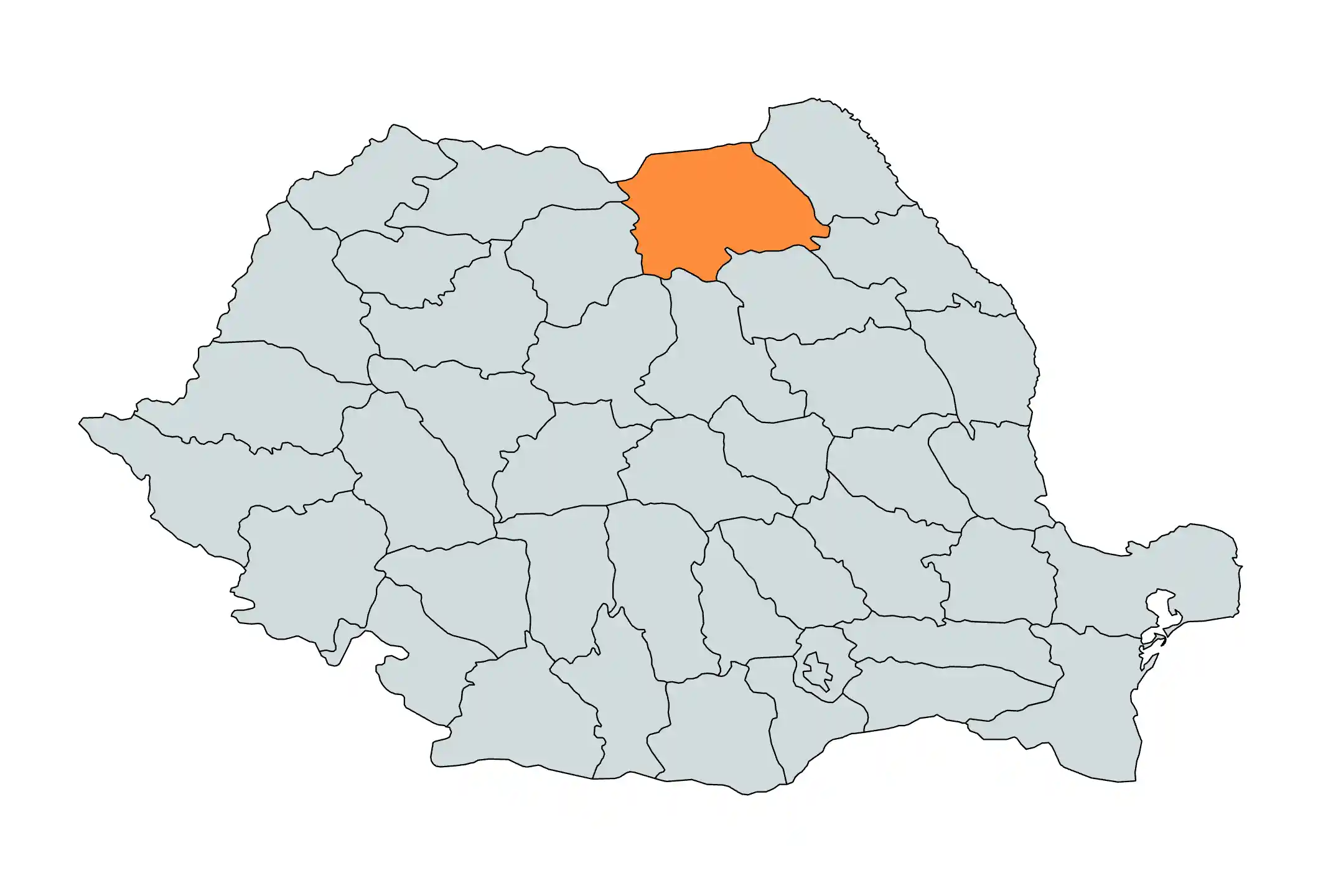
Suceava county is a world of incredible color and deep spiritual history, famous for the painted monasteries that are unique to the region. You visit the monasteries of Bucovina, where the exterior walls are covered in bright, detailed murals that tell stories from the ancient world and the holy books. The Voroneț blue is a secret shade of paint that has survived the wind and rain for over five hundred years and remains a mystery to this day. Each church is located in a green valley and is surrounded by high wooden walls that protected the monks during times of war. It is a peaceful and artistic journey through the deep forests of the north.
The Suceava Fortress stands on a high hill overlooking the city and was the central seat of power for the brave princes of the east. It was built to withstand the greatest armies and features thick stone walls and deep moats that have been beautifully restored for visitors. You can walk the battlements and explore the interior rooms to see how the court lived and defended the land against invaders. The view from the fortress looks across the whole city and the rolling green hills of the Bucovina region. It is a powerful symbol of eastern strength and the pride of the people who call this land home.
Drive through the mountains of Bucovina, where the forests are dark, deep and full of ancient spruce and fir trees. You find small, quiet villages where the people still wear traditional, hand-embroidered clothes and follow the old customs of the mountain life. The food in this region is rich and hearty, featuring wild mushrooms, forest fruits, and the famous local cheese pies. This route is a perfect blend of high religious art, heroic history and the untouched nature of the northern mountains. The local tradition of painting eggs with intricate patterns is a craft that you can still see in many of the village homes.
Suceava (county) highlights
- Voroneț Monastery Stand before Sistine Chapel of East, a world-famous church covered in a unique, brilliant shade of blue that remains a chemical mystery to this day. Intricate frescoes on exterior walls depict Last Judgment with incredible detail and artistic power. It is a treasure that captures soul of Moldavian spirit and stands as a testament to medieval genius.
- Suceava Princely Fortress Explore massive stone walls and deep moats of a stronghold that was once seat of power for Stephen the Great. Restored galleries and towers offer a commanding view of city and rolling hills that once witnessed epic battles against invaders. It is a rugged and majestic landmark where military history of the north feels very much alive.
- Putna Monastery Visit a holy site that holds tomb of the most beloved prince in history. Monastery is tucked away in a quiet mountain valley and serves as a major center for religious art and traditional music. It is a place of deep national pride and absolute silence, offering a sense of sanctuary for every traveler.
- Cacica Salt Mine Descend into a unique underground world where salt miners carved out a ballroom and a small lake by hand. Mine features a subterranean chapel with an altar made entirely of sparkling white mineral stone. It is a cool and fascinating site that shows the deep hidden riches of the northern Bukovina hills.
- Rarău Mountains Lady’s Rocks Hike toward spectacular limestone towers that rise sharply from green forests like ancient stone sentinels. From the high ridge, you can look out over a vast sea of fir trees and distant peaks stretching toward the border. Drive up the Transrarău road is one of most scenic mountain routes in the land, filled with sharp turns and fresh alpine air.
- Painted Church of Moldovița Marvel at a massive fortified monastery featuring exterior paintings in shades of gold and deep red that have survived centuries of wind and snow. Frescoes depict historical sieges and religious scenes with a vibrant energy that brings the stone walls to life. It is a masterpiece of Byzantine influence set in a peaceful valley of traditional wooden houses.
- Vatra Dornei Resort Stretch your legs in a classic mountain spa town famous for its mineral springs and wide, leafy parks. The air is remarkably fresh, making it a favorite retreat for health and relaxation since the days of the old empire. It is a great base for exploring the high peaks or enjoying a quiet walk by the rushing Bistrița River.
- Marginea Black Pottery Stop in a local workshop to see masters transform grey clay into a unique, jet-black ceramic using an ancient firing technique. You can watch the wheels spin and see the smoke-infused patterns that make this craft famous across the world. It is a wonderful chance to see a living tradition that has remained unchanged for hundreds of years.
- Sucevița Monastery Discover the last and largest of the painted churches, protected by high defensive walls and massive corner towers. Its exterior is almost entirely covered in green and red frescoes, including the famous "Ladder of Virtues" that climbs toward the roof. It is a place of incredible architectural scale and spiritual weight, hidden in a deep and silent valley.
- Ciprian Porumbescu Memorial Visit a quiet village manor where the famous composer wrote some of the most beautiful melodies in national history. The house is surrounded by a peaceful garden and offers an intimate look at the creative life of a northern artist. It is a moving and melodic stop that adds a layer of cultural grace to your journey through Bukovina.
The local Four
History of Suceava (county)
Suceava is the holy sanctuary of the Moldavian throne and a landscape defined by the military genius of Stephen the Great. The Suceava Citadel completed in the 14th century was the primary seat of power for the Moldavian princes and famously remained uncaptured even during the massive Ottoman siege of 1476. The county is world renowned for its UNESCO painted monasteries such as Voroneț founded in 1488 which features a unique blue pigment and a massive exterior fresco of the Last Judgment that has survived the harsh northern winters for over five centuries. This region was the spiritual and political heart of the state until the capital was moved south in the mid 1500s to escape the growing pressure from the southern empires.
The history of the county also reflects a heavy Habsburg influence in the northern half known as Bukovina which was annexed by the Austrian Empire in 1774. This period brought a wave of Central European architecture and multiethnic diversity to cities like Cernăuți and Suceava as well as the industrialization of the massive timber and salt resources. The Cacica Salt Mine opened in 1791 features a unique underground chapel hand carved by Polish miners into a solid salt block and a ballroom located 38 meters below ground. During the Great War the region was a brutal front between the Russian and Austro Hungarian armies with the mountain passes serving as strategic choke points for the massive infantry movements of the era.
A road trip through Suceava takes you across the Rarău Mountains via the Transrarău highway which reaches altitudes of 1500 meters and offers views of the Lady Rocks limestone towers. You can drive to the village of Marginea to see the only workshop in Europe that still produces black pottery using a prehistoric firing technique that dates back over 2000 years. The local roads through the Bistrița Valley lead to the Putna Monastery where the tomb of Stephen the Great remains a site of national pilgrimage. Suceava is a journey through the royal fortresses of the medieval princes and the refined imperial history of the northern borderlands.