

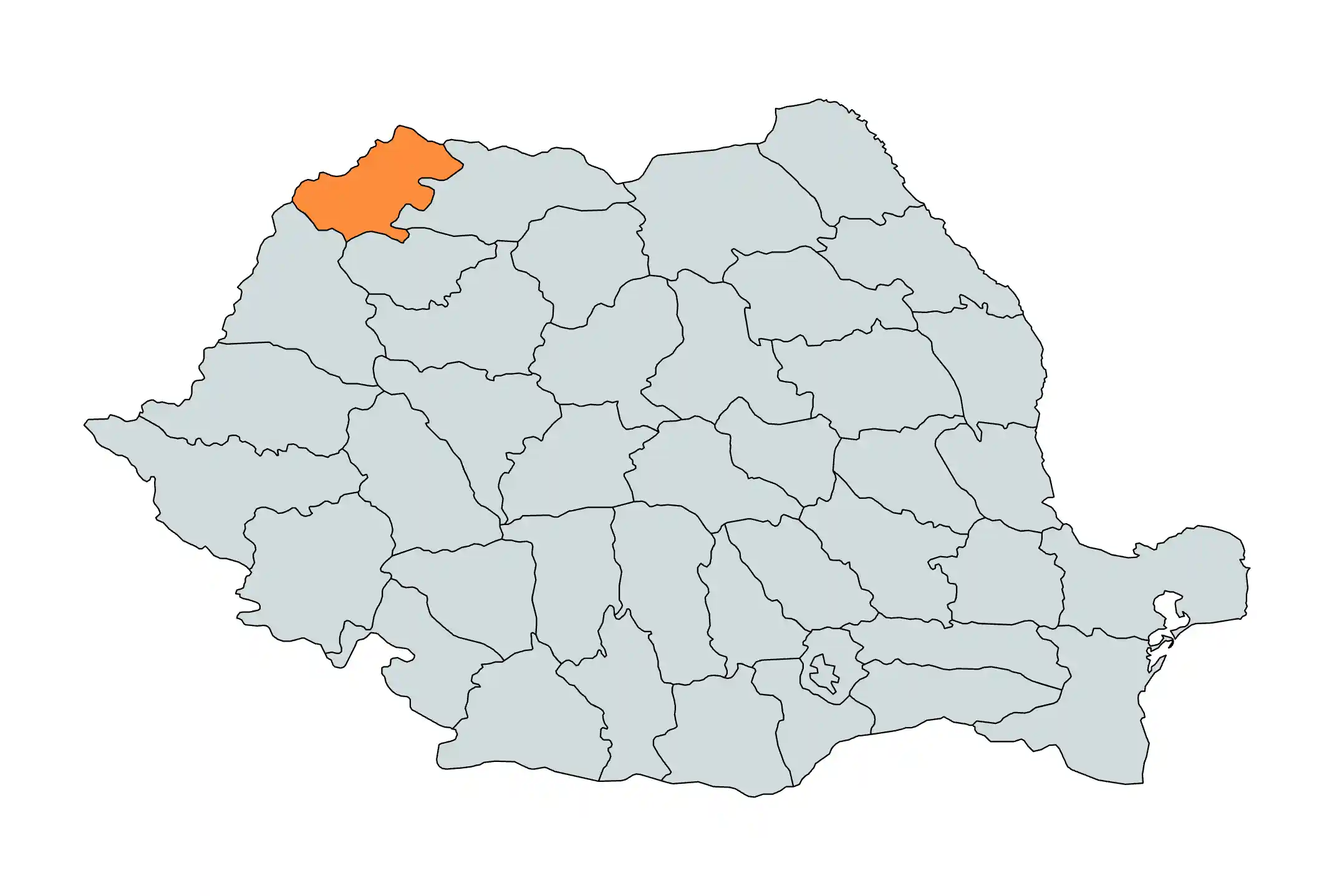
Satu Mare county is the gateway to the far north and a land where unique folk traditions and wood crafts are still very much alive. You drive through Oaș Country, where the traditional houses feature steep roofs and the entrance gates are masterpieces of colorful wood carving. The local people are famous for their pride in their heritage, their bright traditional clothes and their unique music. Life here keeps the old customs close, especially during festivals and weddings where the whole village celebrates together. It is a unique and vibrant world located right on the edge of the northern border.
The city of Satu Mare features a tall fire tower that offers a panoramic view of the entire surrounding plain and the city’s historic center. You can walk through the grand public squares where elegant palaces and ancient churches stand as reminders of the city’s multi-cultural history. The vibe of the city is a mix of different European influences, giving it a friendly and open atmosphere with a lot of light and space. You find a quiet, classic charm in the streets and the local parks that are perfect for a coffee break.
Explore the northern plains, where the land is flat and fertile and the golden crops stretch toward the horizon under a big sky. You find small, quiet lakes and patches of ancient woods that are perfect for a rest or a quiet picnic during your drive. The roads are easy to follow and lead toward hidden thermal springs that bubble up in the middle of the green meadows. It is a place of big horizons and a simple, honest beauty that reflects the agricultural heart of the north.
Satu Mare (county) highlights
- Merry Cemetery of Săpânța Border Drive along northern edge of county where Maramureș traditions bleed into hills of Satu Mare. Road offers a view of Tisa River and distant peaks, leading through villages where wooden gates and folk costumes are still part of daily life. It is a rugged and authentic route that captures the quiet, persistent spirit of the northern frontier.
- Ardud Fortress Explore ruins of a medieval stone stronghold featuring a reconstructed tower that watches over rolling plains. Site is famous for its labyrinth of secret tunnels that once allowed defenders to move unseen beneath the earth. It is a hauntingly beautiful spot where history of local noble families meets mysteries of old wars.
- Carei Castle (Károlyi) Step inside a grand Neo-Gothic palace surrounded by a massive arboretum filled with rare trees from around the world. Castle features elegant towers and a rich interior museum that shows the luxury of regional aristocracy. It is a refined and leafy destination that offers a quiet, scholarly atmosphere for a slow afternoon walk.
- Oaș Country Heritage Visit Negrești-Oaș to see a unique ethnographic museum that preserves the sharp, colorful traditions of the Oaș people. You can see traditional houses with steep roofs and learn about the famous "țipurit" songs and energetic local dances. It is a vibrant hub of living culture that highlights the fierce pride of the northern mountain folk.
- Tășnad Thermal Springs Relax in natural warm pools known for their healing properties, located in a quiet resort on the edge of the plains. It is a classic spot to unwind and soak away travel fatigue under the wide northern sky. The surrounding gardens offer shade and a peaceful environment for a day of rest and health.
- Satu Mare Fire Tower Climb a historic brick tower in city center for a 360-degree view of the town’s diverse architectural styles. From the top, you can see the mix of Baroque, Art Nouveau, and modern lines that define this border city. It is a great landmark to start your exploration of the local history and the busy life of the northern plains.
- Medieșu Aurit Castle Ruins Discover a Golden Renaissance palace that once stood as one of the most beautiful noble homes in the entire region. Even as a ruin, the stone arches and massive walls suggest a grand past of banquets and imperial visits. It is a quiet and evocative site that offers a powerful look at the layers of history buried in the local soil.
- Luna Șes Mountain Resort Navigate toward the base of the Gutâi Mountains to find a fresh alpine escape surrounded by dense pine forests. The area is perfect for those who want to breathe thin, cold air and enjoy the sound of rushing mountain streams. It is a peaceful sanctuary that feels very far from the summer heat of the lowlands.
- Dacian Furnaces of Medieșu Aurit Inspect ancient ceramic kilns that show how people worked with fire and earth thousands of years ago. These archaeological remains are some of the largest of their kind in Europe and tell a story of early industry and craft. It is an insightful stop that connects your road trip to the prehistoric roots of the land.
- Tur River Natural Reserve Explore a wild landscape of marshes and old river meanders that serve as a haven for rare water birds. The area offers quiet paths and boat routes for those who want to see the nature of the north in its most raw state. It is a serene and watery world where the horizon feels vast and the silence is absolute.
The local Four
History of Satu Mare (county)
Satu Mare is the northern gateway where the 1711 Peace of Sătmar ended years of anti Habsburg revolts and fundamentally changed the political map of the region. The city was originally a medieval salt trade fortress documented in 1213 as Castrum Zotmar and it served as a vital transit point for minerals moving from the Maramureș mines to the rest of Europe. In the 18th century the Vécsey family built a baroque palace in the city center on the site of the old citadel where the peace treaty was signed. To the west the city of Carei is home to the Károlyi Castle which was rebuilt in 1894 in a Neo Gothic style and features a massive arboretum with rare trees brought from three continents.
The county’s soul is found in the Țara Oașului region which remained culturally isolated for centuries creating a unique social structure where wood and clay were the primary currencies of art. The local architecture is defined by the steep roofs of the Cerțezoane houses and the green glazed pottery of Vama which has used the same chemical formulas since the 1700s. In 1944 the county was the site of the final battles for the liberation of the territory during WWII marking the moment the national borders were restored. The history of the region is a mix of high level imperial diplomacy and the fiercely independent traditions of the northern mountain people.
A road trip through the north takes you past the ruins of the Medieșu Aurit castle which was a 17th century Renaissance palace known as the most luxurious residence in the region before it was burned during the world wars. You can drive to Negrești Oaș to see the contrast between the modern wealth of the local diaspora and the 18th century wooden churches preserved in the local open air museum. The northern border roads offer a quiet path through ancient oak forests and the thermal springs of Tășnad which have been used for healing since the medieval era. Satu Mare is a journey through the diplomatic history of empires and the vibrant folk culture of the northern forest.