

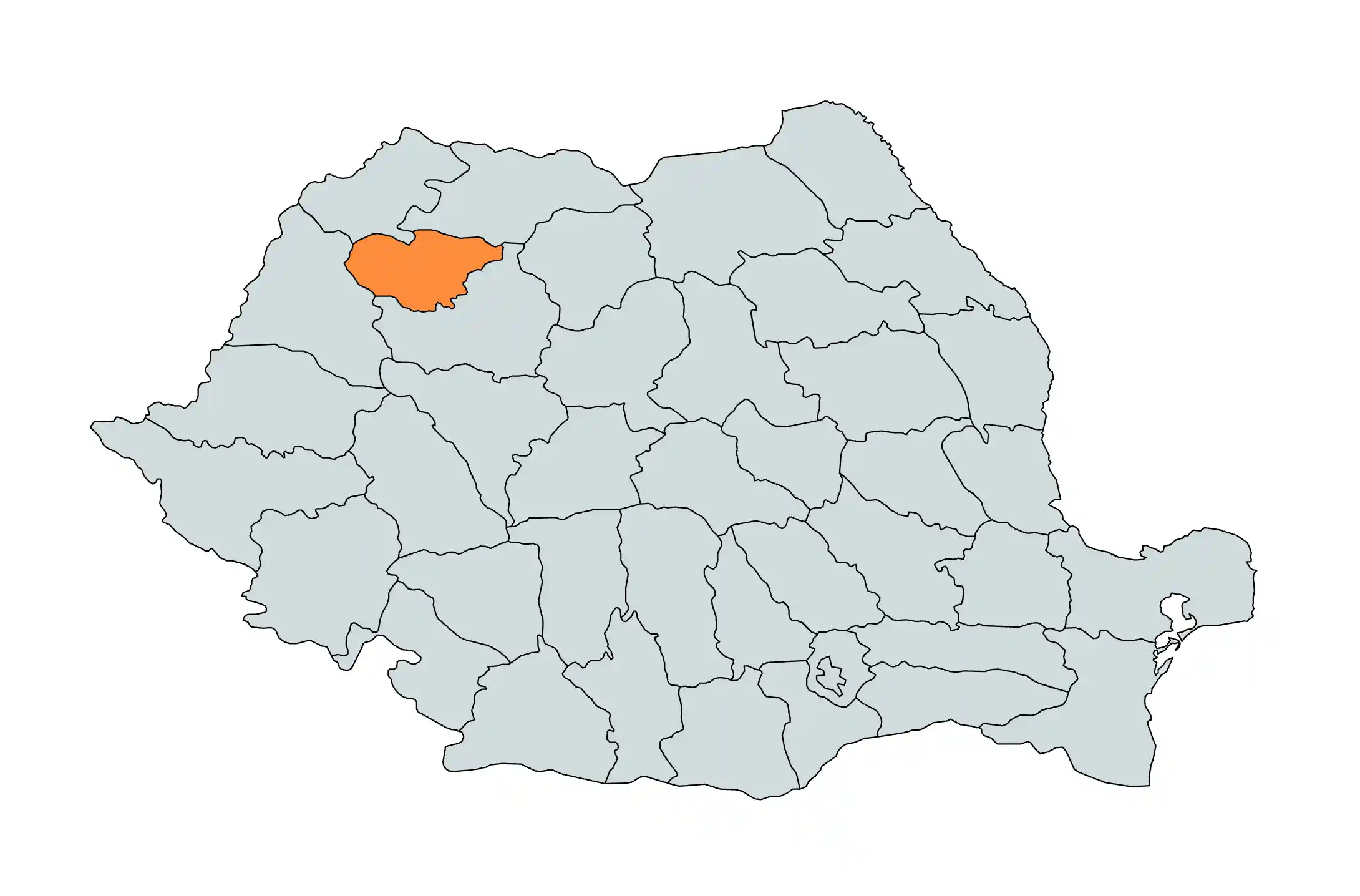
Sălaj county is a land of hidden ancient ruins and strange natural stone formations that feel like they belong in a fantasy novel. You visit Porolissum, where an entire Roman city once stood on a strategic hill to guard the northern frontier. You can still see the massive stone gates, the foundations of the houses, and the amphitheater where ancient games were held. The view from the ruins looks across the rolling green hills and the quiet valleys of the north, providing a sense of history and scale. You can walk along the original Roman road and imagine the soldiers who once marched across these stones.
Find the Dragon’s Garden. A unique natural site where the rocks have been shaped by the wind and rain to look like giant stone beasts. You can walk among these natural statues and explore the small caves and narrow passages that have formed between the rocks. It is a magical and quiet place that feels far away from the modern world, surrounded by green woods and the sound of bird song. Local legends say that the stones were once real dragons that were turned to rock by an ancient spell. The site is a favorite for photographers and those who love the stranger side of nature.
The hills of Sălaj are soft and rolling, offering a gentle and scenic drive through the heart of the rural north. You find ancient wooden churches and old, hidden mansions that are tucked away in the quiet valleys between the hills. Life moves at a steady, traditional pace here and the local people are known for their kindness and their strong plum brandy. Stop at a local farm stand to buy fresh fruit or honey and enjoy the peace of the countryside. This route is a journey into a green heartland that remains one of the country's best-kept secrets.
Sălaj (county) highlights
- Porolissum Roman Ruins Walk through the massive stone gate of a frontier city that once marked the very edge of the Roman Empire. You can explore a large amphitheater and paved streets that sit on a high hill with a commanding view of the surrounding mountains. It is a majestic and historical landmark that captures the immense scale of ancient military power.
- Dragon’s Garden (Grădina Zmeilor) Marvel at a bizarre landscape of giant sandstone towers and boulders that look like frozen mythical creatures. These natural rock formations have been carved by wind and rain into strange, bulbous shapes that are unique in the entire country. The short hike through the garden offers a surreal and photogenic adventure for every visitor.
- Wooden Church of Fildu de Sus Visit a spectacular 18th-century church featuring a very tall and sharp spire that seems to pierce the sky. The exterior is covered in delicate wood carvings, and the interior holds ancient paintings that show the simple, powerful faith of the village. It is a masterpiece of northern architecture tucked away in a quiet and green valley.
- Jibou Botanical Garden Wander through a world-class green space that features giant glass globes housing tropical plants and colorful flowers. The park is built on the grounds of an old noble estate and includes a beautiful castle and a small zoo. It is a place of deep green calm and scientific beauty that provides a refined break from the road.
- Băile Boghiș Resort Soak in mineral rich thermal waters at a quiet spa town located at the foot of the mountains. The resort is famous for its health benefits and offers a relaxed, traditional atmosphere for a day of rest. It is a peaceful destination that highlights the geothermal energy hidden beneath the hills of Sălaj.
- Sălaj Wine Cellars Drive through the rolling hills of Carastelec or Șamșud to find local vineyards famous for their crisp white and sparkling wines. The landscape is sunny and open, offering many small cellars where you can taste the local craft. It is a warm and inviting region that shows the agricultural heart and hospitality of the northwest.
- Moigrad Hill Drive Navigate the winding road that climbs the hills near the old Roman capital for a panoramic look at the Meseș Mountains. The view from the top is vast and shows a landscape of deep forests and small, traditional farming villages. It is a top spot for photographers who want to capture the scale and power of the local mountain world.
- Bălan Monastery Seek out a peaceful religious site tucked away in a quiet forest, known for its spiritual atmosphere and simple wooden beauty. The monastery is a center of deep peace and absolute silence, offering a calm retreat for every visiting traveler. You can walk the shaded grounds and enjoy the steady, calm rhythm of traditional monastic life.
- Wesselényi Castle Admire a grand Baroque manor in Jibou that served as the home to one of the most progressive noble families in history. The castle features fine stone carvings and is surrounded by the lush greenery of the botanical park. It is a place of history and architectural grace that provides a peaceful break from the main highway.
- Strâmtura Gorges Follow a narrow road through a rugged limestone canyon where the water has carved deep paths into the solid rock. The cliffs provide a cool shade and a dramatic backdrop for a scenic drive through the heart of the county. It is a wild and vertical world that showcases the intimate and raw beauty of the Sălaj landscape.
The local Four
History of Sălaj (county)
Sălaj is the land of the Roman frontier and the massive oak forests that gave the region its name. The most significant historical site is Porolissum which was established in 106 AD as the northernmost administrative and military center of the Roman province of Dacia. This massive complex featured two stone amphitheaters and a complex system of defensive walls and towers designed to stop the passage of the free tribes from the north. In 1601 the region saw the final victory of Michael the Brave at the Battle of Guruslău which is marked today by a 26 meter stone monument overlooking the Zalău valley.
The history of the county is preserved in its wooden churches which are among the tallest and most intricate in Transylvania. The church in Fildu de Sus was built in 1727 and features a spire over 40 meters high which was engineered to be seen from the surrounding valleys as a symbol of spiritual resilience. The county was also the birthplace of Iuliu Maniu in the village of Bădăcin who was a key architect of the 1918 Great Union and a leader of the national resistance. The geography is dominated by the Meseș Mountains which acted as a natural limestone barrier protecting the inner Transylvanian plateau for centuries.
For a road trip user the Meseș Pass offers sweeping views of the entire Zalău basin and a challenging drive for those who love mountain curves. You can visit the Dragons Garden which is a geological park near Gâlgău Almașului featuring vertical sandstone towers formed by millions of years of erosion. The local roads lead to the Jibou Botanical Garden located on the former Wesselényi aristocratic estate which features a 18th century baroque castle. Sălaj is a hidden gem of a road trip through the ruins of the Roman limes and the quiet forested hills of the Transylvanian borderland.