

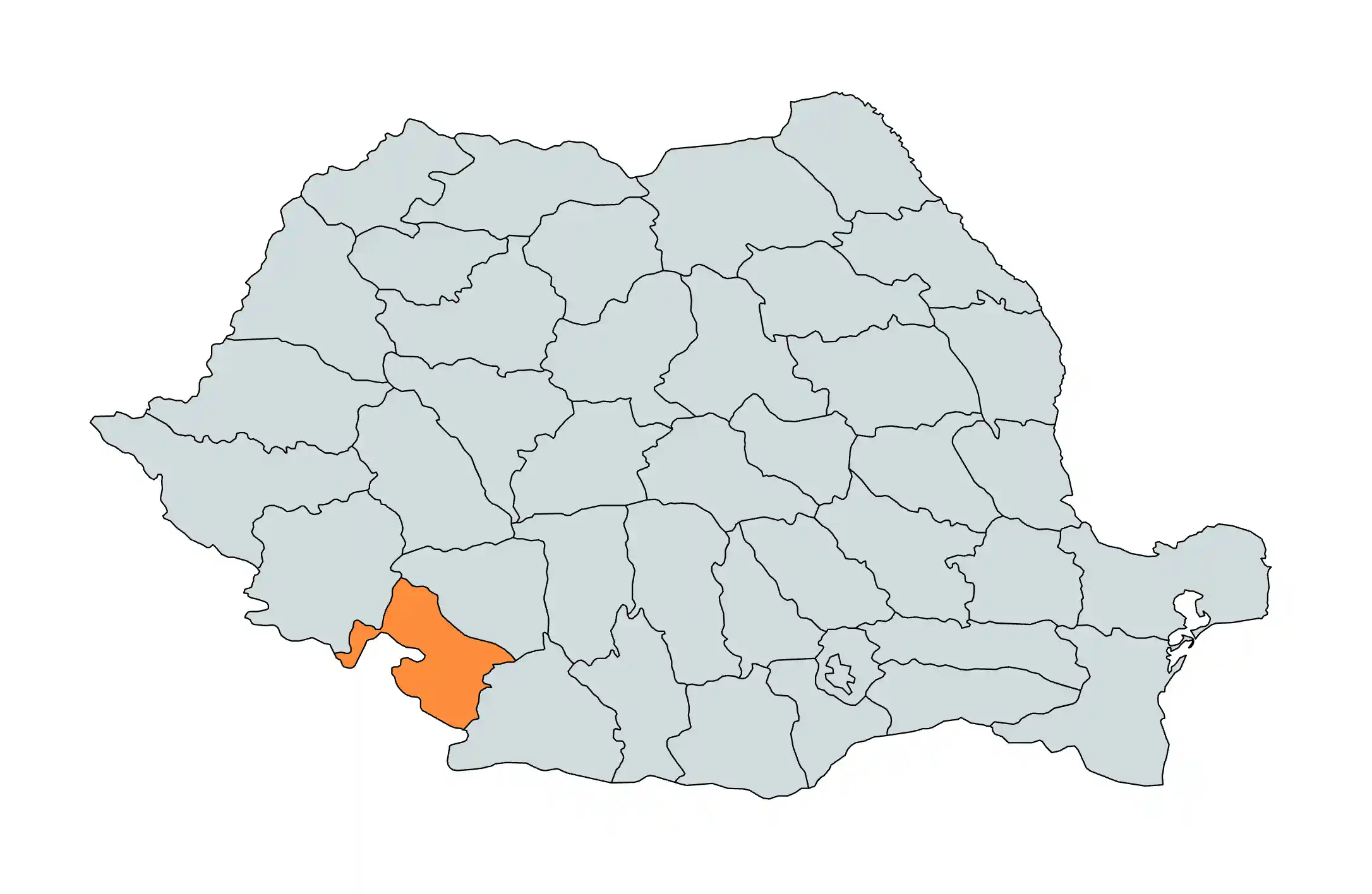
Mehedinți county is where the mighty Danube river meets the massive rock walls of the Carpathian mountains in a spectacular display of power. You stand before the giant face of Decebalus, which is carved directly into a massive cliff overlooking the water. It is the tallest rock sculpture in Europe and watches the boats pass through the narrowest part of the river gorge. The water below is deep and green, flowing with a force that has shaped the stone over millions of years. You can take a small boat to get right under the giant sculpture and feel the scale of the cliffs above you.
Drive through the Iron Gates, where the river is squeezed into a tiny space between the high mountains of the border. The road is carved into the rock and follows every bend of the water, offering a dramatic view of the cliffs on both sides. You find the Mraconia Monastery sitting right on the edge of the river, looking like it is floating on the water. The scenery is bold and grand in every direction, making it one of the most scenic drives for any road trip enthusiast. You can also see the massive dams and power stations that harness the energy of the river for the whole region.
The Mehedinți plateau offers a high road through stone villages and wild, ancient caves that are hidden in the limestone hills. You find the Topolnița Cave, which is one of the largest and most complex cave systems in the land, filled with giant galleries. The air on the plateau is sharp and the views look across the river into the distant mountains of Serbia. Stop to see the old water mills in the mountain streams that have been used by the locals for centuries. This route is a fascinating mix of river giants, high woods, and the hidden world beneath the earth.
Mehedinți (county) highlights
- Stone Face of Decebalus Marvel at tallest rock sculpture in Europe, a massive face carved into a high cliff overlooking Danube Gorges. Colossal monument watches over water where river is at its deepest and most narrow, creating a dramatic and epic atmosphere. It is a world-famous landmark that serves as a powerful tribute to ancient kings of land.
- Iron Gates Dam Drive across a massive concrete wall that holds back mighty Danube to create one of largest hydroelectric power stations in region. Scale of engineering is breathtaking, and museum inside dam offers a fascinating look at technology and history of river. It is a grand and industrial site that marks a major turning point in river's journey toward sea.
- Ponicova Cave Explore a mysterious underworld where river enters a massive limestone gallery that you can access by boat from Danube. Cave features giant halls and strange stone formations that have been carved by water over millions of years. It is a wild and watery adventure that offers a unique perspective on geological power of "Boilers" region.
- Drobeta Roman Ruins Walk among foundations of a grand Roman bridge and a stone fort that once served as gateway to conquered province. Site includes a modern museum with a detailed model of massive bridge that was once longest in world. It is a historical landmark of immense significance that connects modern road to great empires of past.
- Topolnița Cave Discover one of longest and most complex cave systems in country, featuring giant galleries and underground lakes hidden in Mehedinți plateau. Cave is a haven for researchers and adventure seekers, offering a glimpse into a dark and silent world of incredible stone beauty. It is a rugged and fascinating destination that highlights county's karst landscape.
- God's Bridge (Podul lui Dumnezeu) Drive over one of few natural stone bridges in world that is still open to traffic, a massive limestone arch formed by collapse of a cave. Bridge is a geological wonder that spans a quiet valley and is surrounded by rolling hills and traditional villages. It is a unique and picturesque spot that captures wild and unpredictable beauty of local earth.
- Severin Fortress Visit ruins of a medieval stone castle that once guarded important river crossing from its high position on bank. Restored towers and walls offer a wide view of Danube and distant Serbian mountains on opposite shore. It is a rugged and historical landmark that provides a great sense of region's long military history.
- Izverna Karst Spring Seek out a powerful subterranean river that gushes from base of a high limestone cliff into a crystal-clear blue pool. Area is a favorite for cave divers and nature lovers, offering a cool and shaded environment for a quiet afternoon break. It is a place of absolute natural purity that shows hidden water systems of Mehedinți mountains.
- Orșova Waterfront Stroll along curved embankment of a town that was entirely rebuilt after construction of dam flooded original site. Promenade offers a wide view of bay where Cerna River meets Danube, creating a peaceful and airy atmosphere. It is a classic spot to watch sunset over water and enjoy fresh breeze from river.
- Mehedinți Gorges Navigate a winding road through narrow gaps in limestone rock where landscape is rugged and vegetation is lush and green. Gorges offer a series of quiet trails and hidden waterfalls that are perfect for those looking to escape main tourist routes. It is a wild and vertical world that showcases intimate beauty of southern mountains.
The local Four
History of Mehedinți (county)
Mehedinți is the tactical gateway where the Roman Empire first entered the territory through the largest bridge of antiquity. In 103 AD the architect Apollodorus of Damascus completed Trajan’s Bridge at Drobeta which spanned over 1100 meters and was supported by 20 massive stone pillars to move legions across the Danube. The city of Drobeta Turnu Severin grew around this bridge and the ruins of the Roman camp are still visible today next to the Severin Fortress which was a key defensive outpost for the medieval kings of Hungary and Wallachia during the 13th century wars.
The county history is a chronicle of massive engineering projects that reshaped the natural world. In 1972 the completion of the Iron Gates I hydroelectric dam created a reservoir that submerged the island of Ada Kaleh which was an exotic Turkish enclave with its own mosque and tobacco factory. On the high cliffs overlooking the Cazanelor Gorges you can find the face of Decebalus which is 55 meters high and took a team of sculptors 12 years to carve using dynamite and chisels between 1994 and 2004. This is the deepest part of the Danube where the water flows through a narrow stone passage that was historically the most dangerous section for river navigation.
A road trip along the DN57 offers a direct view of the Mraconia monastery which sits on the very edge of the water. You can explore the Topolnița Cave which is the second longest in the country with over 20 kilometers of mapped passages or visit the Iron Gates Museum to see the original engine of the 19th century river locks. The local climate is sub Mediterranean allowing for the growth of figs and almond trees which are unique to this southwest corner. Mehedinți is a powerful journey through the ruins of Roman ambition and the modern scale of river engineering.