

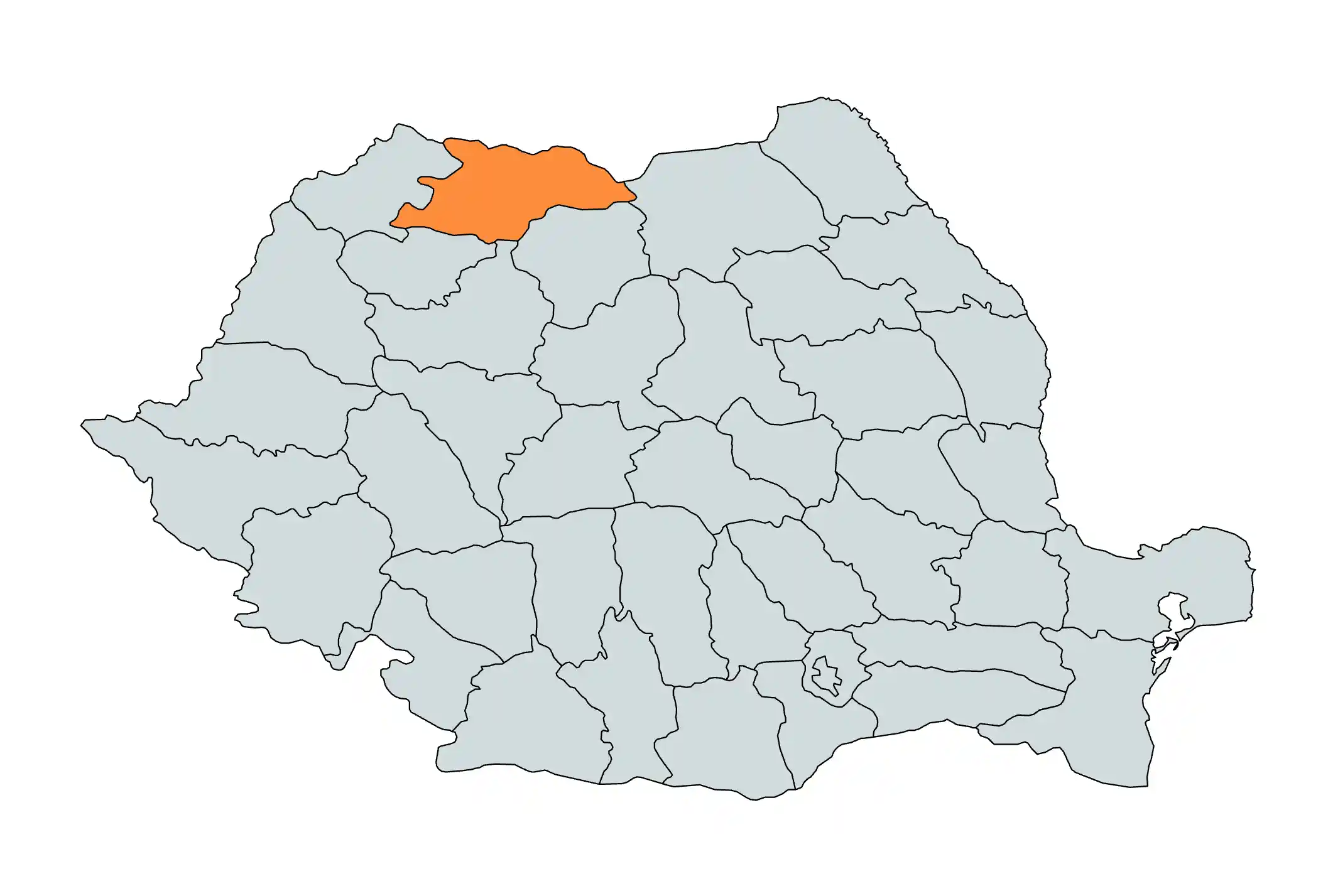
Maramureș county is a place where time seems to stand still, and the old traditions of the village are still the law of the land. You find massive wooden gates carved with intricate patterns of suns and moons at the entrance to almost every yard. The wooden churches are famous for having the tallest and narrowest steeples in the world, reaching high toward the mountain clouds. Life here follows the rhythm of the seasons and the work on the small family farms, using techniques that have not changed in centuries. It is a world of hand-carved wood and hand-woven wool that feels incredibly authentic and warm.
Visit the Merry Cemetery in the village of Săpânța, where bright blue wooden crosses tell the life stories of the dead with humor and color. It is a unique place where death is treated with a smile and a funny poem instead of sadness and dark stone. You see colorful paintings of the people at their work, with their families, or even enjoying a glass of the local plum brandy. The art is bold and unlike anything else you will see in the world, making it a highlight of any trip to the north. Each cross is a handmade piece of folk art that celebrates the spirit of the local community.
Ride the old Mocănița steam train through the Vaser Valley for a wild and rugged mountain adventure. The tracks follow a rushing river deep into the heart of the forest, far away from any modern roads or electricity. You see loggers at work and small wooden huts hidden in the trees as the train chugs along with clouds of white smoke. it is one of the last steam powered forestry trains in the world and offers a true link to the industrial past. You can enjoy a traditional barbecue at the final stop in the mountains before the slow, scenic journey back to the village.
Maramureș (county) highlights
- Merry Cemetery of Săpânța Walk through a world-unique graveyard where bright blue wooden crosses are decorated with colorful paintings and funny, honest poems about lives of deceased. It is a place that celebrates life rather than mourning death, capturing unique humor and folk spirit of northern people. Every cross tells a story, making cemetery a living gallery of village history and tradition.
- Bârsana Monastery Visit a spectacular wooden complex that looks like a vision from a northern fairy tale, featuring tall spires and intricate carvings. Entire site is built using traditional methods and is surrounded by perfectly manicured flower gardens and quiet paths. It is a center of deep spirit and incredible craft that highlights absolute mastery of local woodcarvers.
- Mocănița Steam Train Leave car for a day to ride a narrow-gauge steam train that chugs through wild and roadless Vaser Valley forest. Journey takes you along a rushing river and through deep canyons where only sound is whistle of engine and wind in trees. It is a nostalgic and rugged adventure that offers a rare look at untouched wilderness of northern mountains.
- Memorial of Victims of Communism Step inside a former prison in Sighetu Marmației that has been transformed into a powerful and moving museum of national history. Exhibits tell somber stories of those who fought for freedom and serve as a vital reminder of strength of human spirit. It is a profound and educational stop that adds a layer of deep narrative to your journey through north.
- Wooden Church of Ieud Explore oldest wooden church in region, a sturdy and elegant structure that has stood for over six hundred years. Interior is filled with ancient icons on glass and dark, atmospheric frescoes that show simple and powerful faith of mountain people. It is a UNESCO site that captures timeless and authentic character of Maramureș landscape.
- Breb Village Traditions Drive into a village where time appears to have stopped, and people still work land using traditional tools and horse-drawn carts. Massive, hand-carved wooden gates at every entrance are symbols of pride and protection, leading to houses that have remained unchanged for generations. It is a place of absolute authenticity and quiet beauty that offers a true escape into rural past.
- Prislop Pass Navigate a high-altitude road that connects northern hills to eastern mountains, offering vast views of Rodna peaks. Pass is a wide and windy plateau that serves as a site for traditional festivals where folk dance and music fill mountain air. It is a majestic and panoramic drive that highlights immense scale of northern Carpathian range.
- Horses Waterfall (Cascada Cailor) Take a chairlift and a short hike to see highest waterfall in country, where water falls in three dramatic steps over a massive rock wall. Sound of falling water is powerful and surrounding meadows are filled with wild flowers and grazing animals. It is a spectacular nature site that captures wild and fresh energy of high northern peaks.
- Baia Mare Mineralogy Museum Inspect a "flower of mines" collection that features thousands of rare and colorful crystals pulled from local mountains. Exhibits show incredible variety and beauty of minerals found deep beneath earth, looking like glowing sculptures of stone. It is a unique and fascinating stop that highlights mining history and geological wealth of region.
- Sârbi Water Mills Visit a small village where river is still used to power a series of ancient machines, including a wool carding mill and a traditional "washing machine" for carpets. You can watch water wheels turn and see simple, clever engineering that has served local community for centuries. It is a quiet and picturesque spot that shows living connection between people and natural elements.
The local Four
History of Maramureș (county)
Maramureș is a living archive of the medieval wood culture and a land of autonomous noblemen known as knezes. Because the region remained largely independent from central imperial control it preserved a unique social structure where wood was the primary currency and status symbol. The wooden churches of Maramureș such as the one in Ieud which dates back to 1364 were built without using a single iron nail to respect ancient religious taboos. These structures feature double roofs and sharp spires that were engineered to shed the heavy mountain snow and reach over 70 meters in height making them the tallest wooden buildings of the era.
The history of the county is also defined by the Sighet Prison built in 1897 which became a place of extermination for the intellectual elite between 1948 and 1955 during the communist consolidation. This somber history contrasts with the Merry Cemetery in Săpânța where local woodworker Stan Ioan Pătraș began carving colorful crosses in 1935 featuring satirical poems about the life and death of the villagers. The region was also a center for medieval mining with the Baia Mare mint producing gold and silver coins for the Hungarian kings starting in the 14th century using metal extracted from the surrounding volcanic mountains.
For a road trip user the Gutâi Pass offers a steep climb with hairpin turns that provide the best view of the Creasta Cocoșului rock formation. You can drive to the Vaser Valley to ride the Mocănița which is the last forest steam train in Europe still in operation since the 1930s for logging purposes. The local gates are carved with the rope of life and solar rosettes which are prehistoric symbols of protection that have been passed down for over 2000 years. Maramureș is an authentic step back into a world where the forest provided the houses the churches and the very identity of the people.