

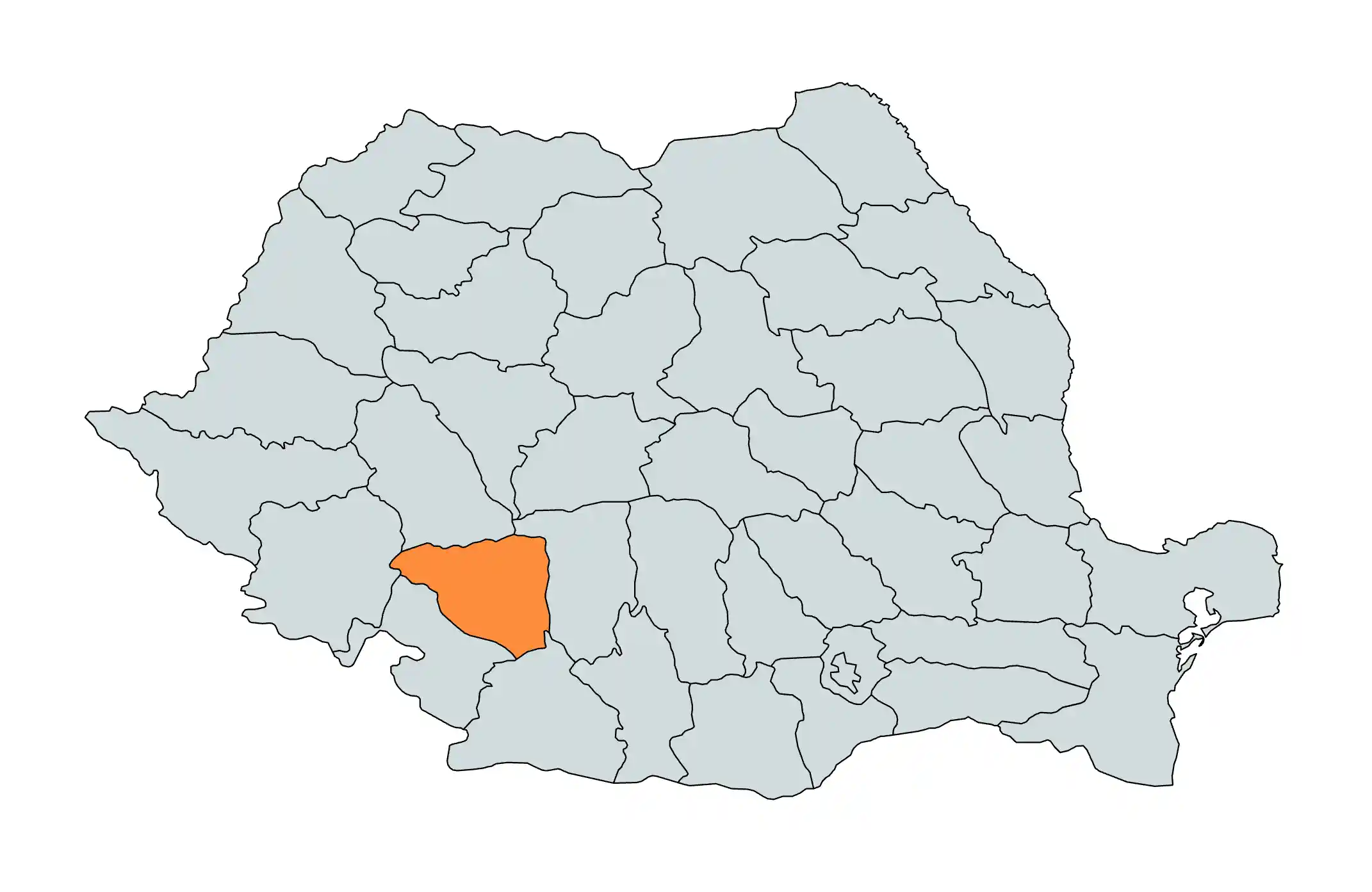
Gorj county is the land of stone and the birthplace of Constantin Brâncuși, one of the most famous artists in history. You can stand before the Endless Column and the Table of Silence in Târgu Jiu, which are world-renowned icons of modern art. These massive sculptures sit in quiet public parks where you can walk and reflect on the artist’s vision of infinity and peace. It is a unique place where high art and everyday life live together in the middle of a modern town. Many visitors from around the world come here to pay their respects to the master of stone and bronze.
Drive through the Jiu River Gorge for a thrilling mountain experience that takes you through the heart of a national park. The road follows the river as it cuts through massive rock walls, offering dramatic tunnels and narrow bridges. The cliffs are steep and covered in dense green trees, creating a cool and shaded environment even on the hottest days. It is a bold and exciting route for any driver, with plenty of spots to pull over and watch the rafters on the river below. The gorge connects the southern plains to the high Transylvanian plateau through a spectacular mountain corridor.
The mountains of Gorj offer high winding roads and secret caves like the Muierilor Cave, which was used as a shelter during ancient wars. You find small stone villages where the local people still practice the arts of wood carving and traditional weaving. The air is sharp and the high peaks are often wrapped in clouds, giving the landscape a mysterious and epic feel. Stop at a local mountain hut for a plate of hot sheep cheese and polenta after a day of exploring the trails. This route is a perfect mix of high-culture art and the wild, raw power of the Carpathian mountains.
Gorj (county) highlights
- The Infinity Column Stand at the foot of Constantin Brâncuși’s soaring masterpiece, a stack of golden rhomboids that appears to climb forever into the sky. Located in a large, open park in Târgu Jiu, this sculpture is a world-famous tribute to the infinite sacrifice of fallen heroes. Walking through the ensemble, which includes the Gate of the Kiss and the Table of Silence, is a profound artistic experience.
- Transalpina (Novaci Section) Begin your ascent on the "King's Road," the highest paved highway in the country, which reaches dizzying heights above the clouds. This section of the road features dramatic hairpin turns and vast alpine views that stretch across the Parâng Mountains. It is the ultimate driving adventure for those who crave the thin, cold air of the high peaks and the thrill of the open mountain.
- Tismana Monastery Discover the oldest Orthodox sanctuary in the land, a massive stone fortress tucked against a high mountain cliff. The monastery is famous for its intricate frescoes and its hidden cave where the national gold reserve was once concealed during the war. The surrounding forests are deep and lush, providing a majestic and silent setting for reflection.
- Muierii Cave Explore a "Cave of the Women" where massive limestone galleries are filled with spectacular stalactites and the bones of prehistoric cave bears. The cave has served as a refuge for local people for thousands of years and features a path that takes you deep into the heart of the mountain. Its cool, damp air and glowing stone formations create an underworld that feels truly ancient.
- Polovragi Gorge Follow a narrow road that hugs the base of towering white cliffs as the Olteț River rushes loudly beside you. The gorge is a narrow gap in the mountain that leads to a hidden monastery and a mysterious cave where legends of the Dacian gods still linger. It is a wild and vertical landscape that showcases the raw geological power of the southern Carpathians.
- Memorial House of Brâncuși Visit the tiny wooden cottage in Hobița where the father of modern sculpture was born and raised. The simple architecture and hand-carved details of the house show the folk roots that inspired his world-renowned art. It is a humble and moving stop that provides a deep look into the soul of the artist and the traditions of the Gorj countryside.
- Sohodol Gorges Drive through a natural stone cathedral where the water has carved strange shapes and tunnels into the limestone walls. This area is a local favorite for its "natural mirrors"—small pools of water that reflect the high cliffs and the bright sky. The road is intimate and scenic, offering many spots to pull over and touch the smooth, weathered rock.
- Castra of Bumbești-Jiu Explore the ruins of a Roman stone fort that once guarded the strategic entrance to the Jiu Valley canyon. The site offers a fascinating look at the ancient military presence in the region and the enduring strength of Roman engineering. It is situated in a green valley that provides a beautiful backdrop for a quick walk through history.
- Lainici Monastery Seek out a peaceful retreat located in the middle of the narrow Jiu Defile, where the mountains rise sharply on all sides. The monastery is known for its spiritual atmosphere and the sound of the rushing river that provides a constant natural soundtrack. It is a perfect place to pause your journey through the canyon and enjoy the cool mountain breeze.
- Padeș Monument Visit the site where the 1821 revolution began, marked by a grand stone monument standing in a wide, sunny meadow. The area is surrounded by rolling hills and traditional villages that have remained largely unchanged for a century. It is a place of great historical pride that offers a quiet and scenic break during a drive through the western hills.
The local Four
History of Gorj (county)
Gorj is a land of stone and spirit where the mountains provided the inspiration for the world's most famous modern art. It is the birthplace of Constantin Brâncuși who grew up in the wooden village of Hobița learning the ancient art of carving from the local peasants. In the capital of Târgu Jiu he created a monumental ensemble in nineteen hundred and thirty eight that includes the Infinite Column and the Gate of the Kiss serving as a sacred tribute to the heroes of the Great War. These sculptures transformed the regional landscape into a world class outdoor gallery that celebrates the human soul through minimalist form.
The history of the county is carved into the limestone of the Southern Carpathians where the region is famous for the Polovragi and Baia de Fier caves. These sites served as hideouts for outlaws and spiritual retreats for monks for over two thousand years. The local cule which are fortified manor houses at Curtișoara show how the noble families protected themselves from nomadic raids during the turbulent eighteenth century. The mountain roads wind through the Sohodol Gorges where the water has cut deep tunnels and arches into the prehistoric rock creating a natural fortress of stone.
Driving through Gorj offers a path through the Parâng Mountains leading to the high altitude Transalpina road which is the highest in the country. You can explore the Tismana Monastery which is the oldest and most beautiful sanctuary in the land founded in the fourteenth century and protected by high stone walls. The local culture is known for its energetic music and the intricate geometric patterns found on traditional woven rugs. Gorj is a journey from the humble origins of a global artist to the raw majestic power of the mountain peaks.