

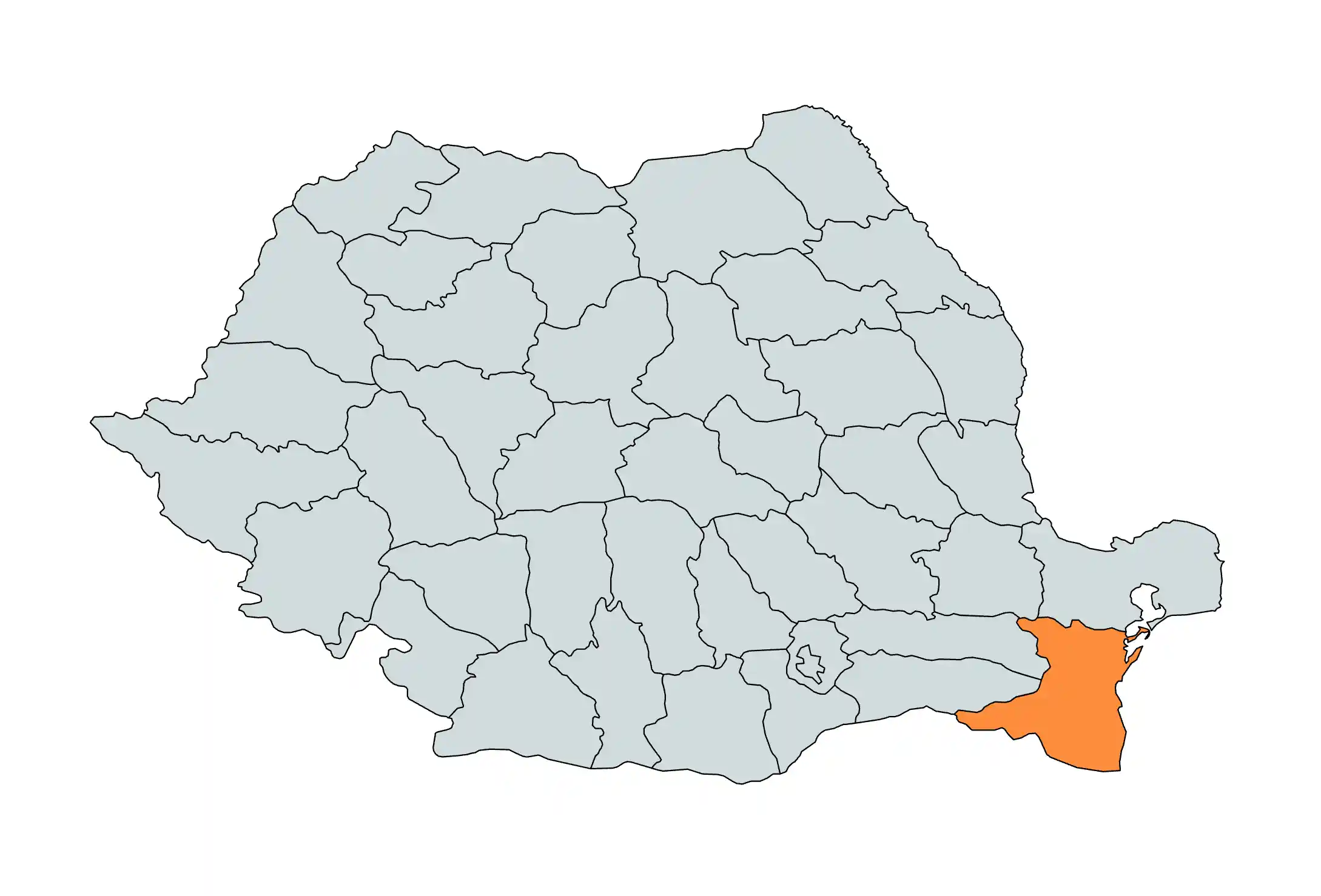
Constanța county is your gateway to the blue waves of the Black Sea and the beaches of the coast. You can walk along long sandy stretches in resorts like Mamaia or find quiet beaches further north in Vadu. The coast is a lively mix of summer music, fresh seafood and history that dates back to the ancient Greeks. You can see the massive cargo ships on the horizon waiting to enter one of the largest ports in Europe. It is the best place to find a summer vibe and enjoy the warm water and bright sea air.
Stand before the old Casino on the sea wall, a masterpiece of Art Nouveau architecture with shell-shaped windows. You can walk along the promenade as the waves hit the rocks and the sea breeze cools the afternoon sun. The city has a deep history of sailors and merchants, which you can explore in the old town area. You find ancient Roman mosaics and Greek statues right in the heart of the modern city center. The local history museum is filled with treasures found at the bottom of the sea and in the surrounding plains.
The surrounding plains of Dobrogea are dry, full of light and home to ancient monuments like Adamclisi. This giant stone trophy was built by the Romans and stands as a powerful reminder of the battles fought in these fields. Stop at a local vineyard in Murfatlar for a glass of white wine made from grapes that love the dry, sunny climate. This route is a blend of refreshing sea air and the heavy weight of ancient history. You can also visit the Enisala fortress for a view of the coastal lakes and the distant sea.
Constanța (county) highlights
- Adamclisi Tropaeum Traiani Stand before a massive circular stone monument built by Roman engineers to celebrate a great victory nearly two thousand years ago. The original stone carvings on the exterior depict ancient battles and provide a vivid window into the early history of the region. It is situated in the middle of a vast, sunny plain that emphasizes the grand scale of the Roman Empire's reach.
- Histria Fortress Walk through the ruins of the oldest city in the land, founded by Greek sailors on the quiet shores of a coastal lagoon. You can explore the remains of ancient temples, public baths, and paved streets that once buzzed with Mediterranean trade. The site is incredibly peaceful and offers a great opportunity for bird watching as the sun sets over the surrounding wetlands.
- Murfatlar Vineyards Follow the sun-drenched roads through endless rows of grapes that thrive in the dry, chalky soil near the Black Sea. This region is famous for its sweet dessert wines and offers many modern cellars where you can learn about the local traditions of winemaking. The rolling landscape is filled with golden light, creating a warm and inviting atmosphere for a slow afternoon drive.
- Enisala Fortress Climb a high limestone hill to find a medieval castle that watches over the vast coastal lakes and the distant sea horizon. The thick stone walls have survived centuries of wind and war, offering a perfect vantage point for photographers during the golden hour. It is one of the few places where you can truly visualize the ancient water routes that connected the river to the sea.
- Vadu and Corbu Beaches Seek out the last wild stretches of the Romanian coast where the sand meets the grass instead of tall hotels and loud music. You can drive along narrow sand paths to find a private spot by the crystal clear water and the shells of the Black Sea. These beaches are a haven for those who want to experience the raw beauty of the coast in total silence and peace.
- Limanu Cave Investigate a unique underground labyrinth where the long, rectangular galleries look as if they were carved by human hands in ancient times. The cave is full of local legends about hidden treasures and has served as a secret shelter for local people for thousands of years. Its entrance is tucked away in a quiet valley near a small village, making it a true hidden gem for explorers.
- Dobrogea Gorges Explore some of the oldest rock formations in Europe, where rounded stone towers rise from the flat grass like ancient sentinels. The road through the gorge is short but offers a dramatic change in scenery compared to the surrounding agricultural plains. It is a fantastic spot for a picnic among the weathered stones that were once coral reefs at the bottom of a prehistoric sea.
- Saint Andrew’s Cave Monastery Visit a holy site tucked away in a quiet forest that is believed to be the home of the very first monk to reach these lands. The cave church and the surrounding gardens are a center of deep spirit and absolute silence, offering a cool retreat from the coastal heat. You can walk the shaded paths and drink from the cold clear springs that are said to have healing powers.
- Gura Portiței Travel by boat to reach a narrow strip of golden sand that separates the fresh water of the lake from the salt water of the sea. The village features traditional Lipovan houses with bright blue accents and reed roofs that blend perfectly into the coastal landscape. It is the ultimate destination for those who want to see the wild and traditional side of the southern seaside.
- Constanța Casino Promenade Walk along the high sea wall to see a world-famous masterpiece of Art Nouveau architecture with shell-shaped windows facing the waves. While the city is a major port, this specific coastal road offers a grand and nostalgic view of the Black Sea’s power and elegance. Watching the sunset from this promenade is a classic experience that captures the old-world charm of the region.
The local Four
History of Constanța (county)
Constanța is the ancient lungs of the nation, founded as Tomis by Greek settlers around 600 BC. It is the oldest continuously inhabited city in Romania and famously served as the place of exile for the Roman poet Ovid in 8 AD. The city’s Roman Mosaic Edifice, built in the 4th century AD, was once a massive three-level commercial complex that proved Tomis was the premier trade hub of the Black Sea. By the 13th century, Genoese merchants took over the port, leaving behind the foundation of the Genoese Lighthouse that still stands on the sea wall.
The county’s history was modernized by King Carol I, who commissioned the Anghel Saligny Bridge (1895), which was the longest bridge in Europe at the time of its completion. The Constanța Casino, an Art Nouveau icon opened in 1910, became the symbol of the Romanian Riviera and hosted the Russian Imperial Family in 1914. Beyond the beaches, the Adamclisi Tropaeum Traiani stands as a massive monument built in 109 AD to commemorate one of the bloodiest battles of the Roman-Dacian wars, marking the final expansion of the Empire into this territory.
A road trip along the Black Sea coast and through the Dobrogea plateau reveals a landscape of ancient ruins and modern logistics. You can drive north to Histria, the oldest Greek colony on Romanian soil (657 BC) or head to the Danube-Black Sea Canal. A monumental and tragic engineering project that cut 64 km through solid rock. From the 4th-century cave monasteries of Saint Andrew to the massive Port of Agigea, Constanța is a journey through two millennia of maritime power and the salt-stained stones of ancient empires.