

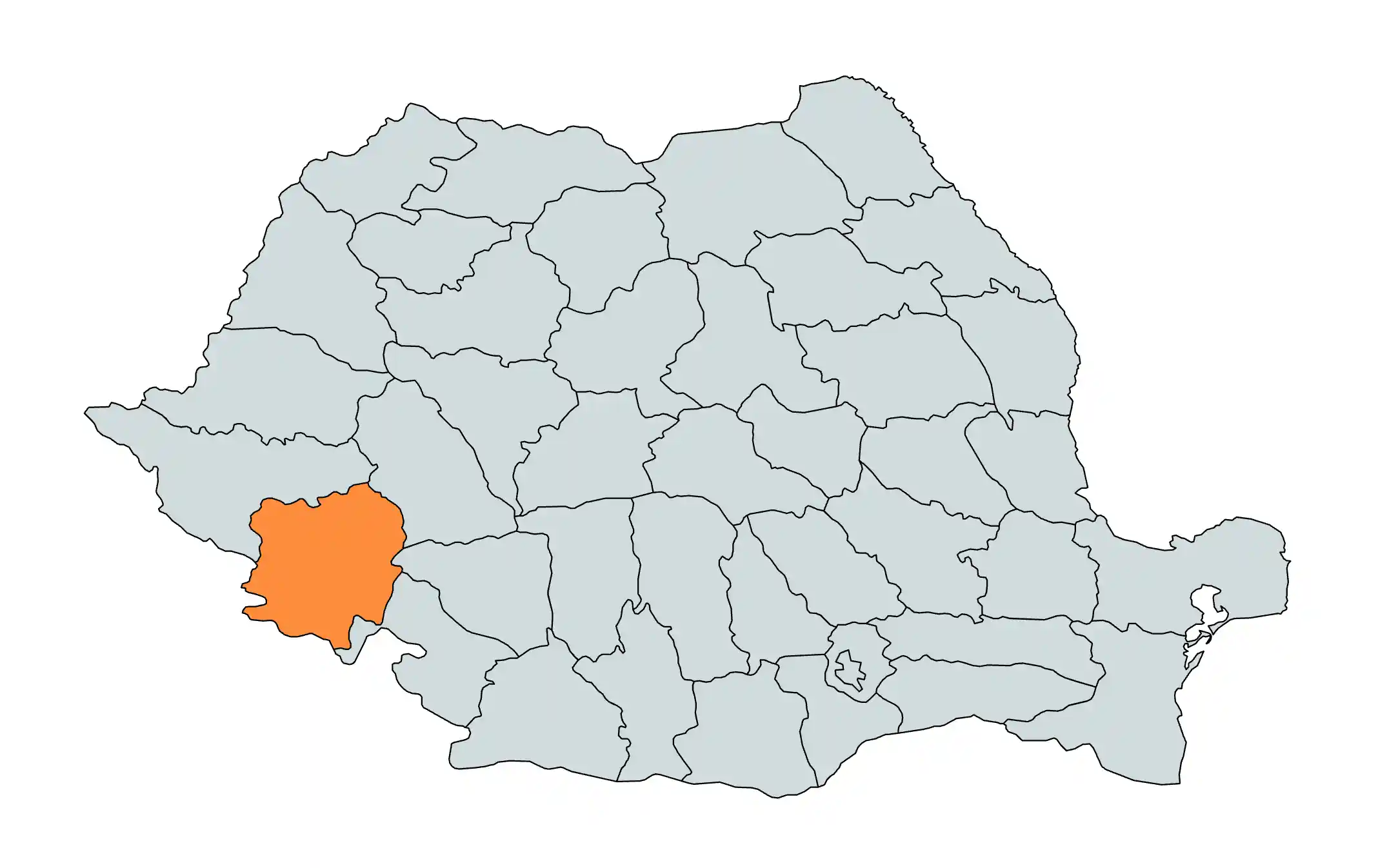
Caraș-Severin county is home to a world of rushing water and deep, ancient woods that cover the mountains. You can stand before the Bigăr waterfall where a mossy rock creates a soft, rounded curtain of falling water. It is a delicate and famous sight located exactly on the 45th parallel, making it a symbolic stop on any road trip. The stream flows into a clear blue river below that stays cool even in the heat of the summer. It is a top spot for a photo, especially when the light filters through the thick canopy of the surrounding trees.
Drive through the Danube Gorges where the river is squeezed into its narrowest and deepest point. The road is carved directly into the rock and follows the water as it bends through the massive stone walls. You find the giant rock face of Decebalus, a 55-meter carving that watches the boats pass from the Serbian border side. The scenery is bold and grand, showing the true power of the Danube as it cuts through the Carpathian range. It is a thrill to see the heights of the cliffs and the whirlpools that form in the deep water below.
The Semenic mountains offer a high-altitude route through thick pine trees and mountain resorts. You can visit the Oravița to Anina railway, which is the oldest mountain train line in the country and features stunning stone viaducts. The air is cool and smells of wood and rain, providing a fresh break from the warmer plains of the west. It is a wild and green paradise for hikers who want to find hidden mountain lakes and high meadows. You can stop at a local hut for a plate of fresh trout caught from the nearby cold streams.
Caraș-Severin highlights
- Bigăr Waterfall Pull over to see a round, mossy rock where a subterranean spring falls in a delicate green curtain of water. This landmark sits exactly on the 45th parallel and serves as one of the most photographed natural sites in the entire country. The mist from the falls keeps the surrounding air cool and fragrant with the scent of wet moss and stone.
- Danube Gorges Navigate a road carved into solid cliffs where the mighty river is at its deepest and most narrow point. You will pass the colossal stone face of Decebalus, which watches over the water from a high and rocky vantage point. This drive is widely considered one of the most spectacular in Europe due to its immense scale and beauty.
- Oravița to Anina Railway Leave the car behind for a few hours to ride the oldest mountain train line in the land through deep woods and dark tunnels. The tracks cross massive stone bridges that offer a bird's eye view of the rugged and untouched Banat mountain range. It is a slow and nostalgic journey that highlights the incredible engineering of the past century.
- Semenic Mountain Road Climb through thick pine forests on a high altitude road that leads to open alpine meadows and fresh mountain air. The temperature drops pleasantly as you ascend, making it a perfect retreat from the heat of the western plains below. Every turn provides a new perspective on the rolling green peaks that stretch toward the southern border.
- Nera Gorges Hike along narrow paths carved into limestone walls to find turquoise lakes and hidden water tunnels within the forest. The river has created a wild and winding canyon that is home to some of the most beautiful waterfalls in the country. It is a paradise for nature lovers who want to see the raw and colorful power of water.
- Iron Gates Natural Park Travel along the banks of the Danube to explore a protected area where rare plants and animals thrive in a Mediterranean climate. The drive offers constant views of the wide water and the jagged mountains of Serbia rising on the opposite shore. It is a land of light and wind where the history of river trade is still very much alive.
- Băile Herculane Wander through a grand but crumbling imperial spa town founded by the Romans for its potent thermal springs. The architecture reflects the luxury of the Austro-Hungarian era and creates a hauntingly beautiful atmosphere along the Cerna river. Taking a dip in the hot sulfur waters is a traditional way to heal the body after a long journey.
- Rudăria Water Mills Visit a charming village where twenty two old wooden mills still grind grain using the steady force of a mountain stream. You can walk the entire row of mills and see the simple, clever mechanics that have served the local people for centuries. It is a quiet and picturesque spot that captures the timeless spirit of Romanian rural life.
- Three Waters Lake Seek out a high mountain reservoir that offers a quiet sanctuary for fishing and camping under the dark forest canopy. The road leading here winds through small, traditional villages where the pace of life remains slow and steady. It is a perfect place to pause your drive and watch the sunset reflect on the mirror like surface.
- Mraconia Monastery Admire a peaceful church that appears to rise directly from the waters of the Danube at the base of a high cliff. It was once lost to a flood during the dam's construction but has been rebuilt as a silent sentinel of faith and spirit. Stopping here gives you a magnificent view of the river's power and the surrounding stone giants.
The local Four
History of Caraș-Severin
Caraș-Severin is the industrial forge of the west and a land of dramatic limestone canyons. It is home to Reșița, where the first steam locomotives in Southeast Europe were built using local iron and coal. The region’s history is a story of heavy industry that dates back to 1771, when the Habsburgs established massive furnaces to tap into the mineral wealth of the Banat Mountains. This rugged terrain also features the oldest mountain railway in the country, the Oravița-Anina line, which was a 19th-century engineering marvel designed to move coal through fourteen tunnels and over ten high stone viaducts.
The county’s history is also written in the thermal waters of Băile Herculane. Legend says the hero Hercules rested here to heal his wounds, and the Romans built a grand spa that became the favorite retreat of the Austro-Hungarian imperial family. Emperor Franz Joseph called it the most beautiful resort on the continent. Today, the neoclassical pavilions and Roman baths stand as elegant ruins among the steep rock walls of the Cerna Valley, telling a story of ancient luxury and imperial decline.
Road trippers should explore the Nera Gorges National Park, where the river has carved the longest and wildest canyon in the land. You can drive to the Bigăr Waterfall, which was once voted the most unique in the world because of its mushroom-shaped moss carpet and underground spring. The local mountain villages like Gărâna are famous for their wooden architecture and their history as colonies for German settlers. Caraș-Severin is a journey through the steam-powered past and the raw, vertical beauty of the western wilderness.