

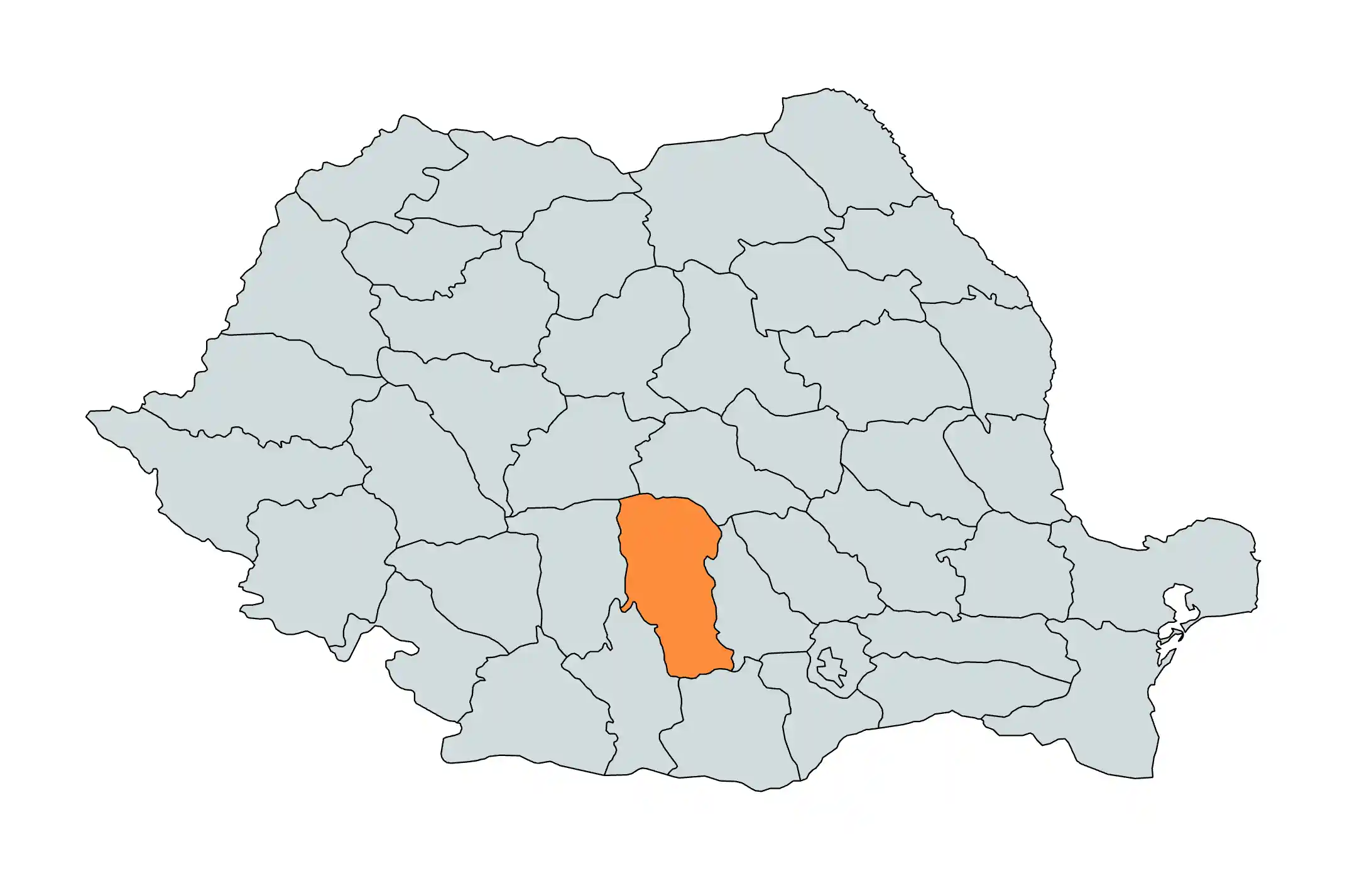
Argeș county is the home of the world’s most famous mountain road. The Transfăgărășan highway climbs to 2,042 meters into a world of grey peaks and white snow. You find 90 kilometers of hairpin turns that provide views of the Vidraru Dam, a massive concrete wall holding back a giant lake. It is a thrill for any fan of scenic driving. The wind is crisp and the scenery is vast at the Bâlea Lake summit.
Visit the royal church in Curtea de Argeș for a touch of elegance. Its stone walls are covered in delicate swirls and golden domes that look like twisted candy. This is where the kings and queens of the land rest in marble tombs. The gardens are full of flowers and tall trees perfect for a break. The legend of Manole, who built his wife into the walls to make them stand, is told at the gate.
Climb the 1,480 concrete stairs to find the real home of Vlad the Impaler. Poienari Fortress sits on a high cliff overlooking the Argeș river. The stone ruins look rough and strong against the sky, far more rugged than the fancy castles elsewhere. You get a perfect view of the canyon from the top of the eagle's nest. It is a wild spot with a dark and exciting history.
Argeș (county) highlights
- Transfăgărășan Highway Experience the ultimate driving thrill on a road that loops and zig-zags through the highest peaks of the Făgăraș mountains. You will pass the massive Vidraru Dam before climbing above the tree line to reach the icy waters of Bâlea Lake. Every mile of this journey offers a spectacular, cinematic view that has made it famous across the globe.
- Curtea de Argeș Monastery Marvel at a stone church so beautiful and detailed that it looks like it was carved from ivory rather than rock. This twisted-dome masterpiece is the final resting place of the country’s kings and queens, holding a deep spiritual importance. The surrounding gardens are a sea of flowers, providing a serene spot to rest during your mountain journey.
- Poienari Fortress Conquer the 1,480 concrete steps to reach the eagle’s nest ruins once used by the real Prince Vlad the Impaler. The fortress clings to a sharp cliff edge, offering a dizzying and powerful view of the deep canyon below. It is a rugged, honest site that captures the true, dark spirit of the medieval defense of the mountains.
- Vidraru Dam Stand on the edge of a massive concrete arc that holds back millions of tons of deep blue mountain water. The scale of the engineering is breathtaking, and the road crossing the top of the dam offers a dramatic perspective on the valley. It is an iconic landmark that signals the beginning of the high-altitude climb into the Carpathian heart.
- Corbi Stone Monastery Find a small, mysterious church carved directly into a giant yellow sandstone wall by a quiet stream. This ancient holy site feels like it belongs to another world, with its cool stone rooms and simple, hand-carved altar. It is a place of absolute silence where you can feel the weight of centuries of prayer in the rock.
- Topolog Valley Choose the path less traveled by driving through this scenic valley filled with rolling hills and traditional fruit orchards. The road is quiet and charming, especially in the spring when the trees are a cloud of white and pink blossoms. It is a perfect route for those who want to see the authentic, rural life of the southern hills.
- Namăești Rock Church Explore another hidden gem carved into the solid mountain stone, home to legends of ancient monks and secret icons. The interior is dark and atmospheric, lit by the soft glow of candles that dance on the uneven stone walls. It is a fascinating stop that shows how the local people integrated their faith into the very earth.
- Mateiaș Mausoleum Visit a grand stone monument built into the side of a hill to honor the bravery of soldiers during the great wars. The site offers a commanding view of the surrounding peaks and contains a small museum with life-sized scenes from the local battles. It is a powerful and somber stop that adds a layer of deep history to your road trip.
- Vâlsan Valley Follow a winding river road through a protected forest where a rare, prehistoric fish still swims in the clear mountain water. The woods here are deep and lush, providing a cool and shaded environment for a slow nature drive. It is a peaceful area where the sound of the rushing stream is your only companion.
- Golești Museum Wander through a large open-air park that brings the history of the Romanian village and the local aristocracy together. You can visit the grand mansions of the wealthy and the simple wooden huts of the farmers all in one green setting. The park is filled with old trees and offers a beautiful, educational break for the whole family.
The local Four
History of Argeș (county)
Argeș is the cradle of the Wallachian crown and a land of royal mountain mysteries. It was here in the 14th century that the first capital of the southern kingdom was established at Curtea de Argeș by the legendary Radu the Black. The local royal church is the final resting place of the kings and queens of Romania and is famous for the myth of Master Manole who supposedly buried his wife in the walls to ensure the structure would stand. This blend of royal history and dark folklore makes the region feel deeply spiritual and ancient.
The landscape is dominated by the jagged peaks of the Făgăraș Mountains and the real castle of Dracula at Poenari. Perched high above the Argeș River this fortress was rebuilt by Vlad the Impaler as a strategic hideout accessible only by climbing nearly fifteen hundred stone steps. The county also holds the history of the massive Vidraru Dam which was a feat of communist engineering that flooded an entire valley to create a giant lake. The road leading there was carved into the rock by soldiers to allow for rapid military movement across the peaks.
Driving through the county today takes you from the elegant royal court to the rugged Transfăgărășan highway which cuts through the clouds. You can explore the Câmpulung Muscel area where the first letter written in the Romanian language was discovered in 1521. The local villages are famous for their unique architecture with tall stone foundations and wood carvings that reflect the mountain character. Argeș is a royal epic where the history of the monarchy meets the raw power of the high Carpathian peaks.