

Viana do Castelo is the wild heart of the Minho region where the Lima River meets the Atlantic waves. It is a land of granite peaks and emerald valleys that guard the northern frontier of Portugal. For a road trip traveler it provides a perfect loop of wave battered beaches and ancient mountain villages. You can drive from the salt sprayed coastline to the high plateaus of Peneda Geres in a single afternoon.
The climb to the Santa Luzia Basilica provides a famous panoramic view over the medieval city below. From this height the river mouth creates a stunning blue border against the green hills. Follow the coast north to find a landscape of traditional stone windmills and Neolithic monuments. The roads here are lined with low stone walls and vineyards that produce the Vinho Verde unique to this soil.
Deep in the Lima Valley the town of Ponte de Lima welcomes you with its massive Roman bridge and vibrant gardens. Continue your drive into the mountains to find the sanctuary of Peneda tucked against a sheer rock wall. Here the local life revolves around communal granite granaries and wild horses roaming the high meadows. Viana do Castelo is a place where gold adorned folklore remains a living part of every village.
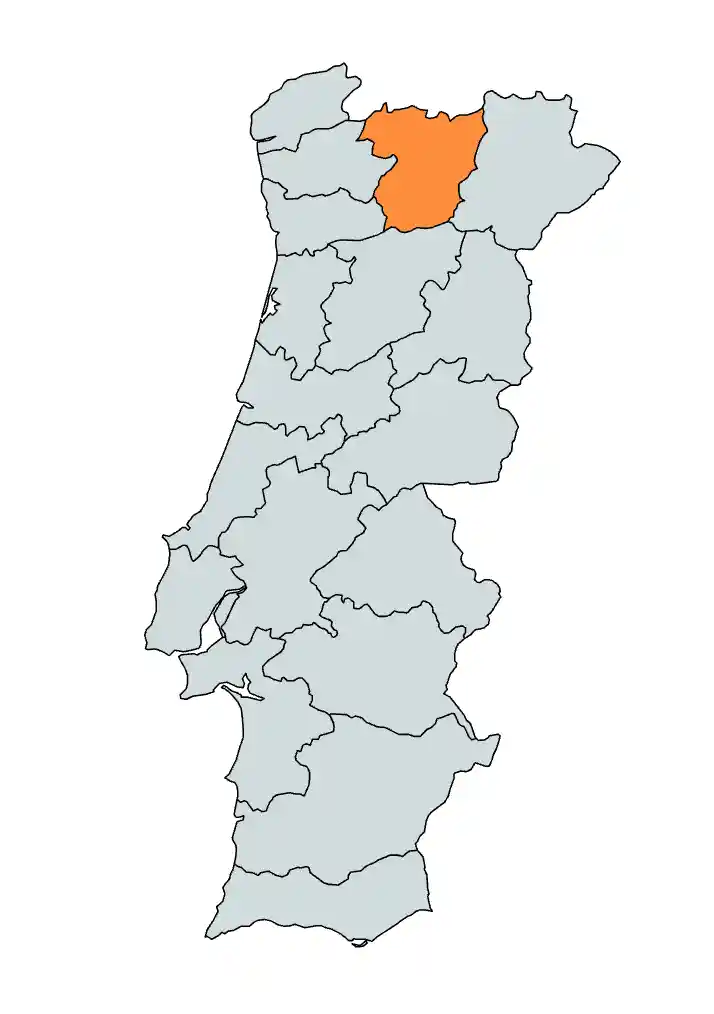
Vila Real (district) highlights
- Mateus Palace and Gardens Go just outside the city to visit this iconic baroque manor house surrounded by some of the most beautiful gardens in Portugal. It is a must for any Vila Real itinerary because of its grand architecture and the famous reflection in its front lake.
- Alvão Natural Park Navigate through this rocky protected area to find the impressive Fisgas de Ermelo which is one of the largest waterfalls in Europe. The scenic roads through the park pass by traditional stone villages where life follows the rhythm of the mountain seasons.
- Trajan Bridge in Chaves Cross the ancient Roman bridge that has spanned the Tâmega River for nearly two thousand years in the northern part of the district. This historic landmark is a testament to the engineering of the Roman Empire and remains a central part of the city.
- Pinhão Railway Station Park your car in the heart of the Douro Valley to admire the famous blue tiles that decorate this historic train station. The hand painted scenes tell the story of the wine harvest and provide a perfect backdrop for your road trip photos.
- Santuário de Panóias Explore this mysterious archaeological site where ancient rituals were carved directly into massive granite boulders centuries ago. It is a fascinating stop for history fans who want to see the remains of a Roman sanctuary dedicated to various gods.
- Casal de Loivos Viewpoint Stop at this famous lookout point above the Douro River for what many consider the best view in the entire wine region. From this height you can see the river curve through the terraced vineyards in a perfect mirror of the valley shape.
- Lamas de Olo Village Discover a hidden mountain hamlet where traditional houses with thatched roofs are still standing at high altitudes. This remote spot offers a peaceful escape from the busy tourist routes and shows the authentic rural side of the Vila Real mountains.
- Corgo River Boardwalks Take a break from driving to walk the wooden paths that wind through the deep river canyon right in the center of Vila Real. These walkways provide a close look at the waterfalls and steep cliffs that make the city geography so unique.
- Sanctuary of Nossa Senhora da Graça Drive the winding road up to the peak of Monte Farinha to see this white chapel perched high above the surrounding valleys. The 360 degree views from the top are breathtaking and make it one of the most spiritual and scenic stops in the north.
- Peso da Régua Riverfront Visit the official capital of the Douro wine region to see the historic piers where wine barrels were once loaded onto traditional boats. The riverfront drive here is lined with museums and wine shops where you can learn about the world first demarcated wine region.
The local Four
History of Vila Real (district)
Vila Real is a district where royal history meets the rugged mountains of northern Portugal. Its name literally means "Royal Town," a title granted by King Denis in the 13th century when he established this hilltop outpost to grow the kingdom's reach. As you drive through the district, you follow in the footsteps of ancient explorers like Diogo Cão, the local navigator who was the first European to reach the Congo River.
The story of the region is written in its grand architecture and stone monuments. In the 17th and 18th centuries, Vila Real became a favorite summer retreat for the Portuguese aristocracy, leading to the construction of stunning manor houses like the Mateus Palace. Further north, the city of Chaves holds a two thousand year old Roman bridge that still carries traffic today. It links the modern world to the days of the Empire.
The district also guards deep spiritual and agricultural traditions. Near the city center, you can find the Santuário de Panóias, where ancient tribes and Romans carved ritual sites directly into massive granite boulders. In the Douro Valley to the south, the history is carved into the earth itself through the terraced vineyards that have produced world class wine for centuries. Vila Real is a destination where every road leads to a story of resilience and royalty.