

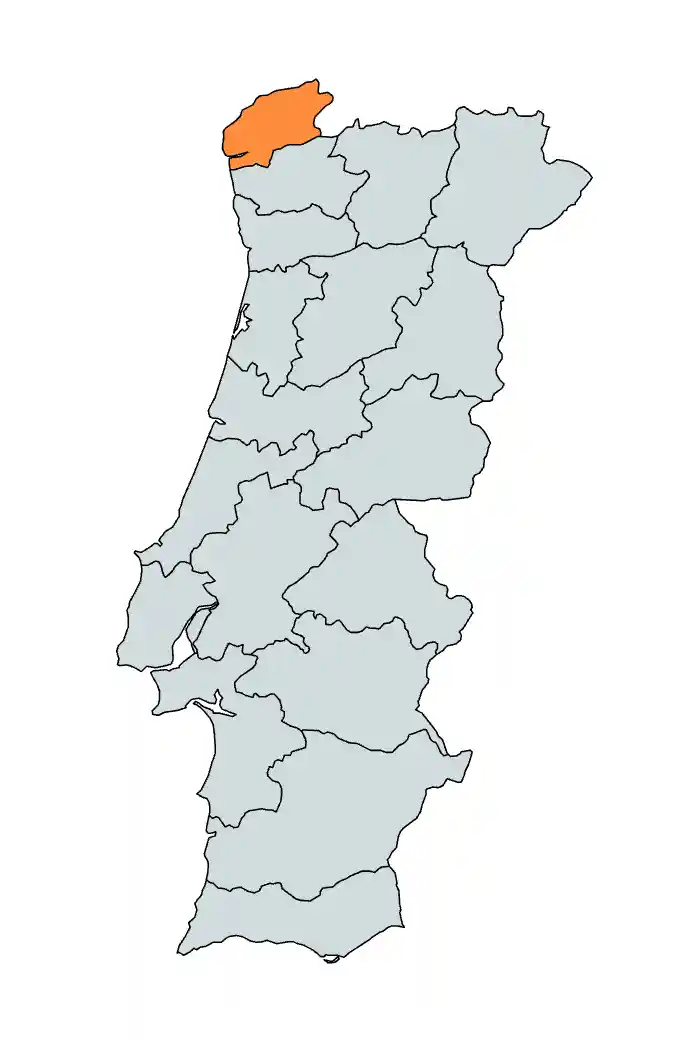
Viana do Castelo is the wild heart of the Minho coast and the granite soul of the north. It is a region where the Lima River meets the Atlantic and the green mountains of Peneda Gerês guard the Spanish border. For a road trip traveler it offers a perfect loop of wave battered beaches and ancient mountain villages.
The climb to the Santa Luzia Basilica provides one of the most famous panoramic views in the world. From this height you can see the river mouth carving through the medieval city below. Follow the coast north toward Vila Praia de Âncora to find a landscape of salt-sprayed windmills and Neolithic dolmens. The roads here are lined with stone walls and vineyards that produce the crisp and floral Vinho Verde unique to this soil.
Deep in the Lima Valley the town of Ponte de Lima welcomes you with its massive Roman bridge and vibrant flower gardens. Continue your drive into the Serra da Peneda to find the sanctuary of Peneda tucked against a massive rock wall. Here the local life revolves around communal granite granaries and wild horses roaming the high plateaus. Viana do Castelo is a place where gold-adorned folklore remains a living part of every village festival.
Viana do Castelo (district) highlights
- Santa Luzia Basilica (Top Viana do Castelo Viewpoint) Explore this iconic hilltop landmark on your Northern Portugal road trip for panoramic Atlantic views. It is a top Viana do Castelo attraction featuring stunning architecture and a famous rose window.
- Ponte de Lima (Oldest Town in Portugal) Drive to this historic Minho destination to walk the ancient Roman bridge and visit the riverside gardens. It is an essential stop for Portugal travel itineraries focusing on authentic heritage and local culture.
- Santuário da Peneda (Gerês Hidden Gem) Navigate this scenic mountain drive to find a dramatic sanctuary built against a sheer granite cliff face. This remote site is a highlight for travelers seeking off the beaten path spots in the Peneda Gerês park.
- Soajo Granaries (Traditional Village Landmark) Visit these famous stone structures to see a unique piece of Northern Portugal history on a high granite plateau. The site is perfect for road trip photography and learning about ancient communal farming traditions.
- Sistelo (The Little Tibet of Portugal) Discover the steep green terraces of this landscape while driving through the mountains of Arcos de Valdevez. It offers some of the best hiking in Portugal and incredible views of man made agricultural wonders.
- Vila Praia de Âncora (Coastal Road Trip Stop) Follow the Atlantic coast drive to this traditional fishing town famous for fresh seafood and prehistoric dolmens. It is a great location for a beach day in Viana do Castelo away from the main city crowds.
- Lindoso Castle and Granaries Explore this medieval castle on the Spanish border which features the largest collection of traditional stone granaries in Europe. This historic site is a must for any Northern Portugal driving tour through the National Park.
- Caminha and the Minho River Mouth Drive to this elegant border town where the Minho River meets the Atlantic for stunning sunset views. The ferry crossing to Spain makes it a strategic and scenic point on a cross border road trip.
- Moinhos de Montedor (Coastal Windmills) Stop at these rare stone windmills to see a rugged side of the Viana do Castelo coastline near the ocean. The hiking trails here provide a fresh salt sprayed experience and views of ancient maritime landmarks.
- Citânia de Santa Luzia (Ancient Celtic Ruins) Walk through the remains of an Iron Age fortified village located just minutes from the main city center. This archaeological site is a top pick for history fans looking for ancient ruins in Northern Portugal.
The local Four
History of Viana do Castelo (district)
Viana do Castelo is where the green soul of the Minho region meets the deep blue Atlantic. Its history is a 2000 year old journey that began long before the first explorers set sail. High on the Santa Luzia hill you can still walk through the Citânia de Santa Luzia which is a remarkably well preserved Iron Age village. These ancient stone foundations prove that Celtic tribes were already masters of this coastline centuries before the Romans arrived to build their own bridges and roads.
As you drive into the medieval heart of the city the story shifts to the heroic Age of Discovery. During the 15th and 16th centuries the shipyards of Viana do Castelo were some of the most important in Portugal. Local shipbuilders crafted the sturdy vessels that crossed the Atlantic to Brazil and the cold waters of Newfoundland. The wealth from the sea is still visible today in the grand Manueline windows and the ornate gold jewelry that local women wear during the famous Romaria de Nossa Senhora da Agonia festivals.
The district also guards the northern frontier of Portugal with powerful stone fortresses and timeless river crossings. In the town of Ponte de Lima you can drive across a river that the Romans once believed was the River of Forgetfulness. Further north the star shaped fortress of Valença and the castle of Lindoso stand as silent sentinels of a long history of border defense. From the legendary gold filigree to the granite granaries of the high mountains, Viana do Castelo is a living museum of Portuguese identity.