

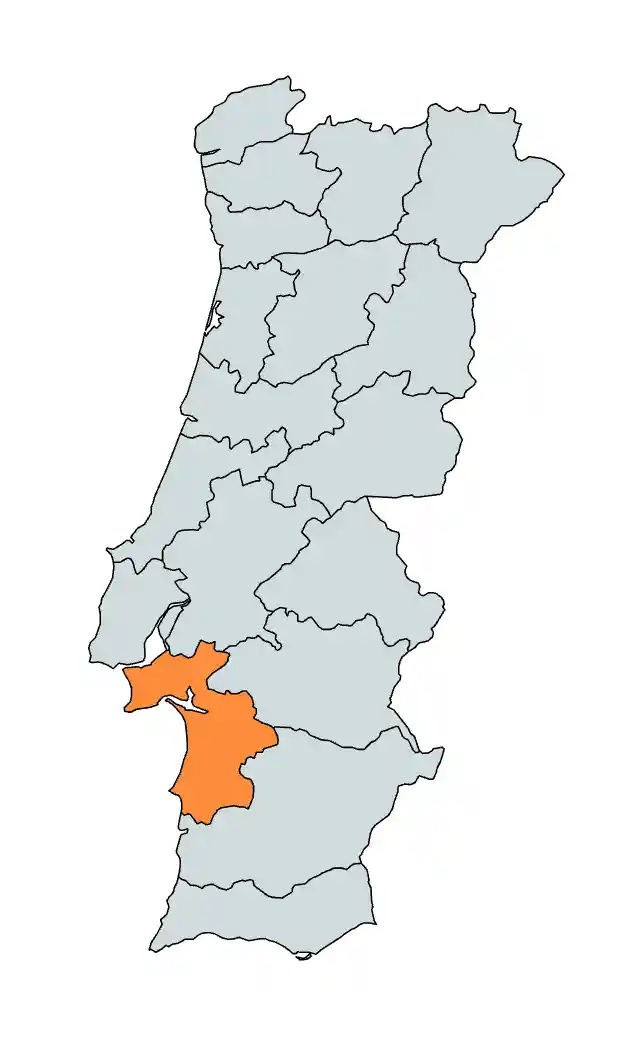
Setúbal is a district of turquoise bays and white-sand escapes. It is the perfect road trip mix of high-altitude mountain drives and low-lying river islands. Here, the sheer limestone walls of the Arrábida range dive straight into the Atlantic. For a traveler, it is a playground of secret coves and world-class wine estates.
The drive along the Estrada de Escarpa offers some of the most dramatic views in Portugal. Pull over at the 7th Battery ruins to see the coastline stretch toward the horizon. Below the cliffs, the beaches of Galapinhos and Creiro provide calm, clear waters that feel like the Caribbean. Further west, the lonely lighthouse at Cabo Espichel stands on a high plateau where dinosaur footprints are still pressed into the rock.
Cross the Sado by ferry to reach the Tróia Peninsula. This thin strip of sand is famous for its wild dolphin pod and weathered Roman salt fish ruins. Drive south to find the village of Carrasqueira, where traditional fishing huts sit on wooden piers over the mudflats. End your journey in the rice fields of Comporta. A land of thatched-roof cabanas and endless dunes. Setúbal is where the grit of a fishing port meets the refined beauty of a protected wilderness.
Setúbal (district) highlights
- Estrada de Escarpa (N379-1) Drive this cliff-hugging route between Setúbal and Sesimbra for some of the most dramatic coastal views in Europe. The narrow road winds 500 meters above the sea, offering several pull-off points to photograph the turquoise Atlantic meeting the steep Arrábida mountains.
- Cabo Espichel Explore to the edge of the world at this high plateau where a lonely 18th-century sanctuary and lighthouse face the open ocean. Walk along the cliff paths to find the "Pedra da Mua," where remarkably clear dinosaur footprints are still visible in the ancient limestone.
- Mercado do Livramento (Setúbal) Head into the city center to visit one of the world's most beautiful fish markets, housed in a grand Art Deco building. The interior walls are covered in thousands of blue azulejo tiles that tell the history of the region’s legendary fishing industry.
- Palace and Bacalhôa Estate Stop in Azeitão to explore this 15th-century estate that blends Italian Renaissance style with traditional Portuguese tilework. The road trip detour is worth it for the private lake and the chance to taste the region’s famous Moscatel wine in a historic cellar.
- Village of Carrasqueira Discover this rare masterpiece of popular architecture where fishermen built a labyrinth of wooden piers over the Sado mudflats. It is a photographer's dream at low tide, especially at sunset when the sky reflects perfectly in the shallow river water.
- Palmela Castle Take the steep drive up to this hilltop fortress for a 360-degree view that stretches from the Tagus River to the Arrábida coast. The castle houses a luxury Pousada and a church with a unique interior, making it a perfect high-altitude stop for a coffee with a view.
- Lapa de Santa Margarida Find this secret cave at the base of the Arrábida cliffs by following a hidden stone staircase that leads down to the water’s edge. Inside the cavern, you'll discover a tiny, centuries-old altar that feels completely disconnected from the modern world.
- Roman Ruins of Tróia Cross the estuary by ferry to explore the remains of what was once the largest fish-salting industrial complex in the Roman Empire. The site sits right on the edge of the sand dunes, featuring well-preserved tanks where "Garum" (ancient fish sauce) was produced for the entire Mediterranean.
- Portinho da Arrábida Follow a steep descent to reach this idyllic white-washed hamlet tucked into a calm, emerald bay. It is a quiet sanctuary for a seafood lunch at a waterfront terrace, though you’ll need to arrive early as parking is strictly limited in this protected zone.
- Moinho de Maré da Mourisca Drive into the heart of the Sado Estuary Nature Reserve to find this restored 17th-century tide mill. The surrounding salt marshes are some of the best spots in the district for birdwatching, where you can see flamingos and storks from the quiet wooden boardwalks.
The local Four
History of Setúbal (district)
Setúbal is a district where the Atlantic’s power meets the ancient salt of the earth. Its history is a 2000 year old story of survival and global trade. Long before the first road was paved the Romans founded Cetóbriga on the shores of the Sado. They built a massive industrial hub to salt fish and produce garum which was a fermented sauce exported across the entire Roman Empire. Today driving across the Tróia Peninsula allows you to walk through the very stone tanks where this ancient industry began.
As you head north toward the hills of Palmela the story shifts to the era of the Reconquista. The Moors built a formidable fortress on the highest peak which was later captured by the Order of Santiago. This castle became a vital link in a chain of defenses that protected the southern approach to Lisbon. In the 15th century the district entered its golden age during the Age of Discovery. King João II was so fond of Setúbal that he spent significant time here and it was in this city that he ratified the Treaty of Tordesillas in 1494. This document effectively divided the newly discovered world between Portugal and Spain.
The 18th and 19th centuries left a mark of resilience. After the great earthquake of 1755 the city of Setúbal was rebuilt with the elegant plazas and wide avenues you see today like the Avenida Luísa Todi. The district then became the heart of the Portuguese canning industry with hundreds of factories lining the waterfront to process the Atlantic’s bounty. From the seafaring poets like Bocage to the silent cloisters of the Arrábida hills, Setúbal remains a rare territory where royal legacy and wild nature still exist side by side.