

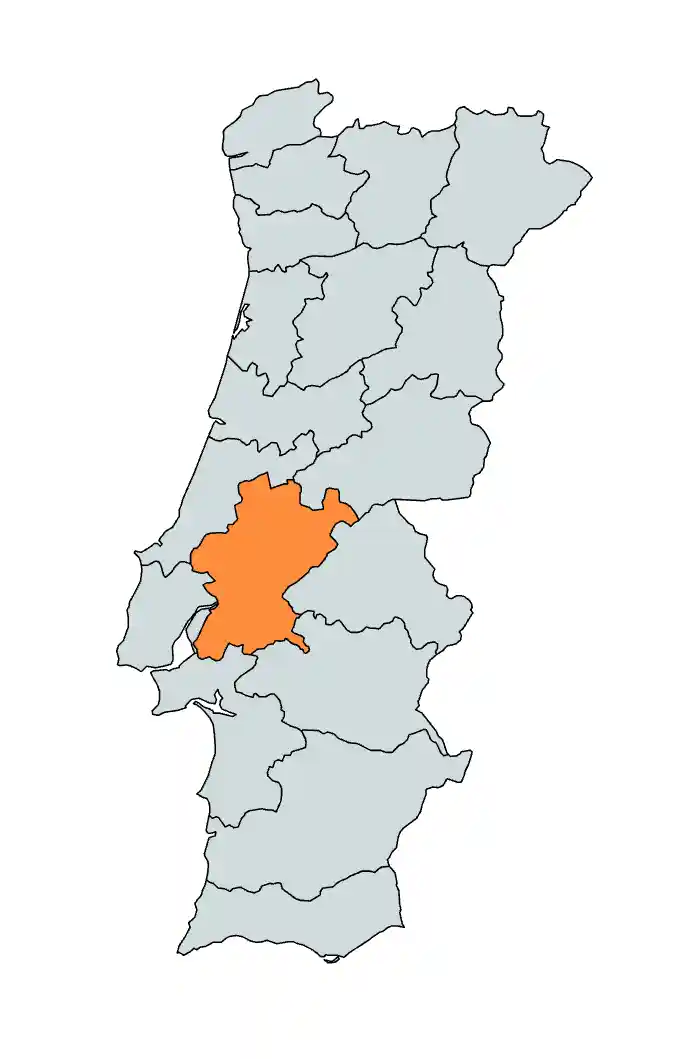
Santarém is the "Gothic Capital" where medieval stone meets the deep green marshlands of the Tagus. It is a district of wide horizons and quiet, hilltop power. For a road trip, it shifts from the fortified walls of the heartland to the misty river islands. The roads cut through vast golden plains and olive groves that have defined this region for centuries.
The hilltop capital of Santarém acts as a giant balcony over the river valley. You can stand at the Portas do Sol gardens to see the Tagus stretch toward the horizon. The town is packed with weathered gothic arches and hidden courtyards that reveal its history as a royal favorite. Nearby, the town of Almeirim is the place to stop for a bowl of Sopa da Pedra, a legendary stone soup that is a staple for any traveler passing through.
Further north, the spirit of the Knights Templar takes over. The city of Tomar is home to the Convent of Christ, a massive fortress and monastery with a round church inspired by Jerusalem. Driving toward the river, you’ll find Almourol Castle sitting on a rugged rock in the middle of the water. It looks like something out of a myth, accessible only by a small boat that shuttles visitors across the current.
To see the wilder side of the district, head for the wetlands of the Ribatejo. In Golegã, the streets are built for horses, and you’ll often see riders moving through the town center. The surrounding fields are the best place to spot the white Lusitano horses grazing near the riverbanks. Santarém isn't about flashy landmarks; it’s about the land and the legends carved into its stone.
Santarém (district) highlights
- Almourol Castle Drive to the banks of the Tagus to see this fairy-tale fortress rising from a small, rocky island in the middle of the river. Accessible only by boat, it was once a strategic stronghold for the Knights Templar and provides incredible views of the water from its stone battlements.
- Convent of Christ (Tomar) It served as the headquarters for the Order of the Temple in Portugal for centuries. The architecture is a breathtaking mix of Romanesque, Gothic, and Manueline styles, including the world-famous "Chapter House Window."
- Portas do Sol (Santarém) Park your car at this former Moorish citadel transformed into a public garden perched high above the city’s ancient walls. From the terrace, you get a sweeping panoramic view of the vast Tagus floodplains and the long, elegant Dom Luís I bridge.
- Rio Maior Salt Pans Visit these unique inland salt mines where residents have been harvesting salt from a subterranean sea for over eight hundred years. The area is filled with charming wooden huts that now house local shops selling salt flowers, honey and traditional handicrafts.
- Golegã Horse Capital Navigate to this historic town where the streets are designed with riders in mind and the central square is often filled with elegant Lusitano horses. It is the equestrian heart of Portugal, famous for its grand manor houses and the annual National Horse Fair every November.
- Dinosaur Footprints (Vale de Meios) Stop in the Serra de Aire mountains to see some of the best-preserved Jurassic-era dinosaur tracks in the world on a flat limestone slab. A short walk leads you to these massive indentations left by sauropods (a herbivorous dinosaur) millions of years ago in what was once a muddy lagoon.
- Escaroupim Fishing Village Drive to the riverbank to discover this traditional "Avieira" village where fishermen used to live in brightly painted wooden houses on stilts. It is a peaceful spot for a boat trip through the Tagus wetlands to see herons, egrets and wild horses grazing on the islands.
- Mira de Aire Caves Journey underground to explore the largest cave system in Portugal, featuring giant illuminated chambers and deep subterranean lakes. The descent takes you through a labyrinth of stalactites and stalagmites that ends in a massive cavern nearly 180 meters below the surface.
- Constância "The Poem Village" Park in this picturesque white-washed village where the Zêzere and Tagus rivers merge at a beautiful river beach. It was once home to the famous poet Luís de Camões and features flower-lined alleys that lead down to quiet riverside cafes.
- Algar do Pena Head to the limestone heart of the Natural Park to visit the largest underground vertical chamber discovered in the country. This hidden geological gem allows you to peek into a massive subterranean dome that feels like a natural cathedral carved by water over millennia.
The local Four
History of Santarém (district)
Santarém is the guardian of the Tagus. Its history is written in the flow of the river and the strength of the limestone cliffs that overlook it. For thousands of years, this district served as the gateway to the heart of Portugal. It was the Roman Scalabis, a vital trading post where the river's path met the empire's roads. Today, a drive through the district feels like moving through a chronological map of the nation's birth.
The Middle Ages turned Santarém into a landscape of knights and legends. This was the territory of the Knights Templar, who built their headquarters in Tomar and left behind the mysterious Almourol Castle on its river island. These fortresses were designed to protect the frontier and the fertile plains below. The city of Santarém itself became a royal favorite, earning the title "Gothic Capital" as kings built soaring arches and grand palaces to celebrate their victories over the Moors.
As you navigate the rural roads of the Ribatejo, you are following in the hoofprints of history. This region became the cradle of the Lusitano horse, a breed once prized by European royalty for war and art. The vast floodplains shaped a culture of brave campinos and resilient farmers who learned to live with the river’s changing tides. From the secret salt mines of Rio Maior to the knightly towers of the north, Santarém is a district where legends aren't just remembered. They are still etched into every road and riverbend.