

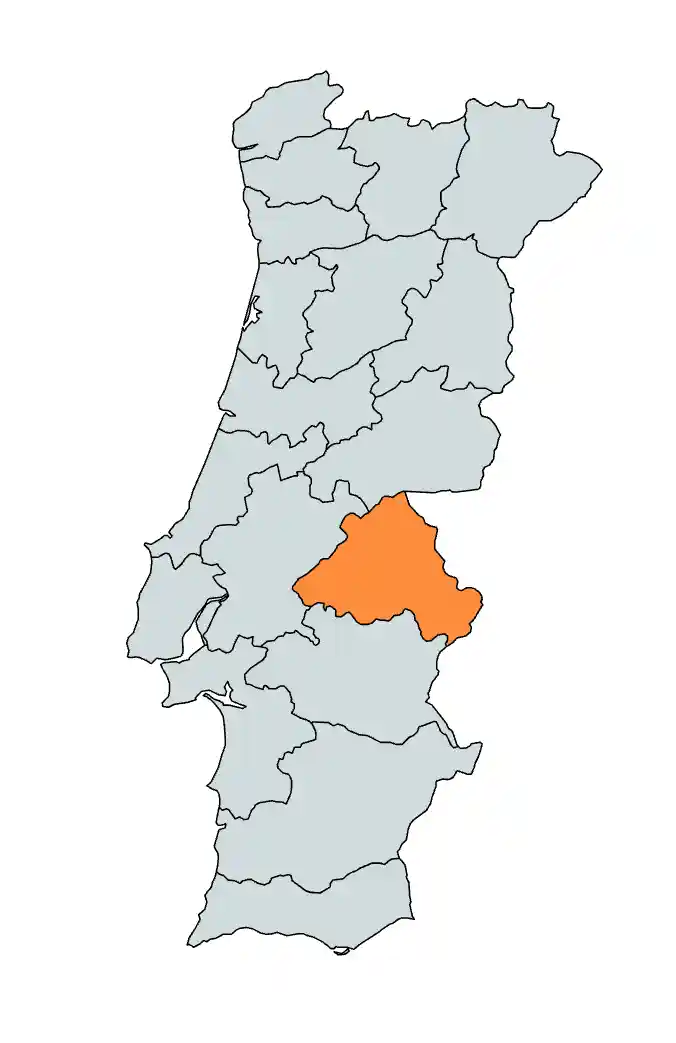
Portalegre is the silent giant of the Alentejo. It is a district of high granite peaks and endless olive groves. For a road trip it offers the most dramatic elevation changes in the region. The roads climb from the heat of the plains into the cool air of the Serra de São Mamede. The air smells of wild lavender and roasting chestnuts.
Start in the mountain town of Marvão. It is an eagle’s nest of white stone perched on a cliff. Drive the winding road to the summit and walk the castle walls. From here you can see across the border into Spain. The silence is absolute. It is a place where medieval history feels like a living neighbor.
Head south to Castelo de Vide. This is the "Sintra of the Alentejo" because of its lush gardens and cool springs. Touch the granite doorframes that have stood for six centuries. The town is a collection of blooming flowers and hidden fountains. It is one of the best preserved historic gems in the country.
Drive through the rolling hills to Alter do Chão. This is the land of the Lusitano horse. Visit the royal stud farm to see these majestic animals in the fields. Continue to the city of Portalegre to see the grand baroque mansions. The district is famous for its tapestry and cork production. The roads here are lined with cork oak trees with their bark stripped in deep red layers. Portalegre is a district of shadows and light. It is the raw heart of the rural highlands.
Portalegre (district) highlights
- Marvão Castle Drive to the highest peak in the district to find this medieval fortress clinging to a granite cliff. The castle walls offer a dizzying 360 degree view that stretches across the plains of the Alentejo and far into Spain.
- Castelo de Vide Navigate the steep cobblestone alleys of one of the best preserved medieval Jewish settlements in the world. Look for the 13th century synagogue and the gothic granite doorways that lead to secret gardens and ancient stone fountains.
- Roman Ruins of Ammaia Stop your car in the heart of the São Mamede Natural Park to walk through the remains of a lost Roman city. You can see the foundations of the forum and a large bath complex that once served thousands of citizens in the mountains.
- Amoreira Aqueduct (Elvas) Pull over to admire this massive 16th century stone engineering marvel featuring 843 arches rising up to five tiers high. It took over a century to build and still stretches nearly nine kilometers to deliver fresh water to the border city.
- Guy Fino Tapestry Museum Visit the city of Portalegre to see enormous hand woven tapestries that are famous for their unique pointillism technique. The museum is housed in a grand baroque palace and displays works that look more like detailed oil paintings than fabric.
- Pico de São Mamede Drive the winding mountain road to the highest point south of the Tagus River for a spectacular view of the rugged skyline. The surrounding natural park is a sanctuary for rare eagles and wild boar and offers the greenest landscapes in the region.
- Flor da Rosa Monastery Explore this fortified monastery in Crato which was once the headquarters of the Knights Hospitaller in Portugal. The building is a unique blend of a church, a palace and a castle featuring giant stone halls and a serene cloister.
- Alter Real Stud Farm Drive to Alter do Chão to see the world famous Lusitano horses at a royal stud farm founded in 1748. You can watch training sessions and visit the museum dedicated to the history of the breed that once served the kings of Europe.
- Campo Maior Bone Chapel Visit the dark and fascinating Capela dos Ossos which is entirely lined with the bones of residents who died in a 1732 gunpowder explosion. It is a haunting but beautiful hidden gem located inside the church of São João Baptista.
- Portagem River Pool Park at the 16th century stone bridge in Portagem to take a cool swim in the river with a view of Marvão towering above. The area features natural swimming basins and shaded riverbanks that provide a perfect break from the summer heat of the plains.
The local Four
History of Portalegre (district)
Portalegre is a land of strategic heights and border legends. Its history is a chronicle of a kingdom constantly on guard. Because it sits on the edge of the Spanish frontier, the district became a fortress of stone and spirit. It began with the Romans who built the city of Ammaia in the valley. They chose this spot for its fertile soil and mountain springs. Today those ruins offer a glimpse into a time when these mountains were a busy hub of the Roman Empire.
In the Middle Ages the district became the front line of Portuguese defense. This era gave us the "Eagle's Nest" of Marvão. It was an unbeatable fortress that never fell to an enemy. Kings and knights spent centuries reinforcing these peaks to protect the sovereignty of the nation. Nearby Castelo de Vide grew as a sanctuary for those fleeing the Inquisition. This created a rich cultural blend that is still visible in the stone synagogues and narrow Jewish quarters of the mountain towns.
The later centuries brought a different kind of wealth to the district. Portalegre city became a center for the global textile trade. The grand baroque palaces you see today were built by silk and tapestry merchants. In the surrounding fields the tradition of cork harvesting took root. This ancient practice still defines the landscape and the economy. A road trip through Portalegre is a journey which moves from Roman baths and knightly bastions to the industrial elegance of the Alentejo elite.