

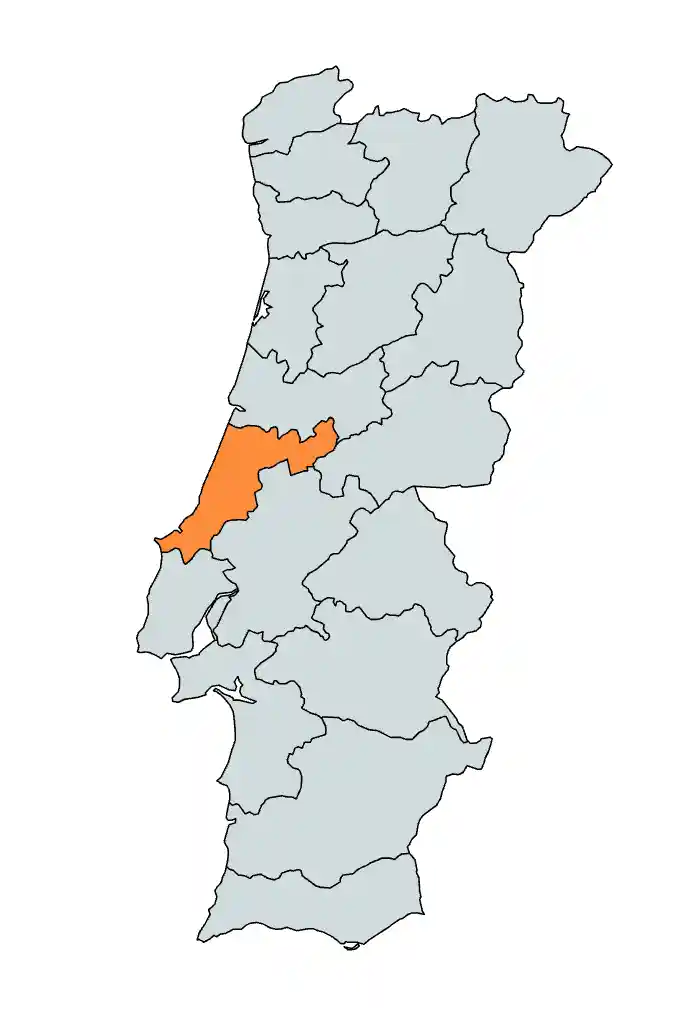
Leiria district is the clash of titans. It is where the Atlantic’s most violent waves meet the silent grace of stone. For a road trip, this district provides a rocky coastline and a heart of ancient pine. The roads cut through the Pinhal de El-Rei, a royal forest planted seven centuries ago to build the caravels of explorers.
Start at the edge of the world in Nazaré. Stand on the cliffs by the lighthouse at Praia do Norte. This is home to the largest surfable waves on earth. In winter, the ocean rises like a mountain. It is raw and terrifying. Watch the local fishermen dry octopus on wire racks along the sand. It is a tradition that has not changed in generations.
Drive inland to find the "Gothic Triangle". The Batalha Monastery is a skeleton of golden limestone. Its Unfinished Chapels have no roof and offer a view of the clouds through intricate stone lace. Nearby sits Alcobaça, where massive tombs tell the story of Pedro and Inês, the most tragic lovers in Portuguese history. These are not just monuments. They are the soul of the nation carved into rock.
Follow the Silver Coast to Óbidos. This is a town inside a fortress. Park your car and walk the high stone ramparts. The houses are white and blue with bursts of red bougainvillea. Drink a ginjinha liqueur from a chocolate cup in a hidden alleyway. End your journey in Peniche. It is a rugged peninsula of red cliffs and surf camps. Leiria is a district of giants and ghosts. It is the essential stop on any Portuguese road trip.
Leiria (district) highlights
- Praia do Norte (Nazaré) Stand on the cliffs by the São Miguel Arcanjo fort to witness the planet's largest surfable waves exploding against the shore. This geological phenomenon is created by a deep underwater canyon that turns Atlantic waves into 30 meter walls of water.
- Batalha Monastery Explore this masterpiece of Gothic and Manueline architecture built to celebrate a 14th-century victory on the battlefield. The highlight is the Unfinished Chapels where ornate stone pillars reach toward the open sky instead of a roof.
- The Walled Village of Óbidos Navigate your car to the gates of this perfectly preserved medieval town gifted by kings to their queens for centuries. Walk the entire perimeter atop high stone ramparts and sip cherry liqueur from an edible chocolate cup in the narrow white alleys.
- Alcobaça Monastery Step into Portugal’s first Gothic building to see the giant minimalist cloister and the hauntingly beautiful tombs of the star-crossed lovers Pedro and Inês. Their tragic romance is immortalized in the intricate stone carvings of this silent and spiritual sanctuary.
- Berlengas Islands Park in Peniche and board a boat to this rugged archipelago of pink granite cliffs and translucent turquoise water. The 17th-century fort of São João Baptista rises directly from the sea and is connected to the main island by a winding stone bridge.
- Pinhal de El-Rei (Royal Pine Forest) Drive the long straightaways through this historic forest planted in the 1300s to hold back the dunes and provide timber for discovery ships. It remains a peaceful corridor of green that connects the medieval inland towns to the crashing surf of the Silver Coast.
- São Pedro de Moel Stop at this aristocratic seaside village where whitewashed villas with dark wood balconies overlook jagged Atlantic cliffs. It is a surfer’s hidden retreat featuring a stunning lighthouse and some of the most dramatic sunsets in the district.
- Mira de Aire Caves Descend 110 meters into the earth to explore Portugal’s largest cave system filled with illuminated stalactites and underground lakes. The tour ends with a ride in a vertical elevator back to the surface after walking through massive subterranean cathedrals.
- Castelo de Porto de Mós Visit this fairytale fortress known for its unique green-tiled pyramidal towers that stand out against the green hills of the Serras de Aire. It served as a luxury fortified residence for the military elite and provides a softer side of medieval architecture.
- Lagoa de Óbidos Follow the coastal road to the largest saltwater lagoon in Portugal for a calm break from the heavy Atlantic waves. This shallow basin is a haven for kitesurfers and traditional fishermen who still use colorful wooden boats to harvest eels and shellfish.
The local Four
History of Leiria (district)
Leiria is a district forged by the ambition of kings and the fury of the Atlantic. Its history is a roadmap of Portugal’s transformation from a young kingdom into a global maritime empire. It began in the deep green of the Pinhal de El-Rei. This royal pine forest was planted by King D. Dinis in the 13th century to stabilize the shifting sands of the Silver Coast. Those very trees later became the hulls and masts of the caravels that discovered the New World.
The district’s heart is the "Gothic Triangle". Where architecture tells stories of blood and devotion. The Batalha Monastery was born from a vow on a battlefield in 1385. It stands as a golden limestone monument to Portuguese independence. Its intricate stone lace and soaring arches were meant to touch the heavens. In nearby Alcobaça, history is more personal. The massive monastery there houses the tombs of Pedro and Inês. Their forbidden love and gruesome end remain the most legendary romance in the nation’s history.
The path through Leiria is following the Queens' Estate. For centuries, the town of Óbidos was given as a wedding gift to the queens of Portugal. They maintained its whitewashed charm and protective walls. Along the coast at Nazaré, the history is written by the waves. Generations of fishermen have survived the terrifying swells created by the deep underwater canyon. Every stone in this district has witnessed the birth of a maritime superpower.