

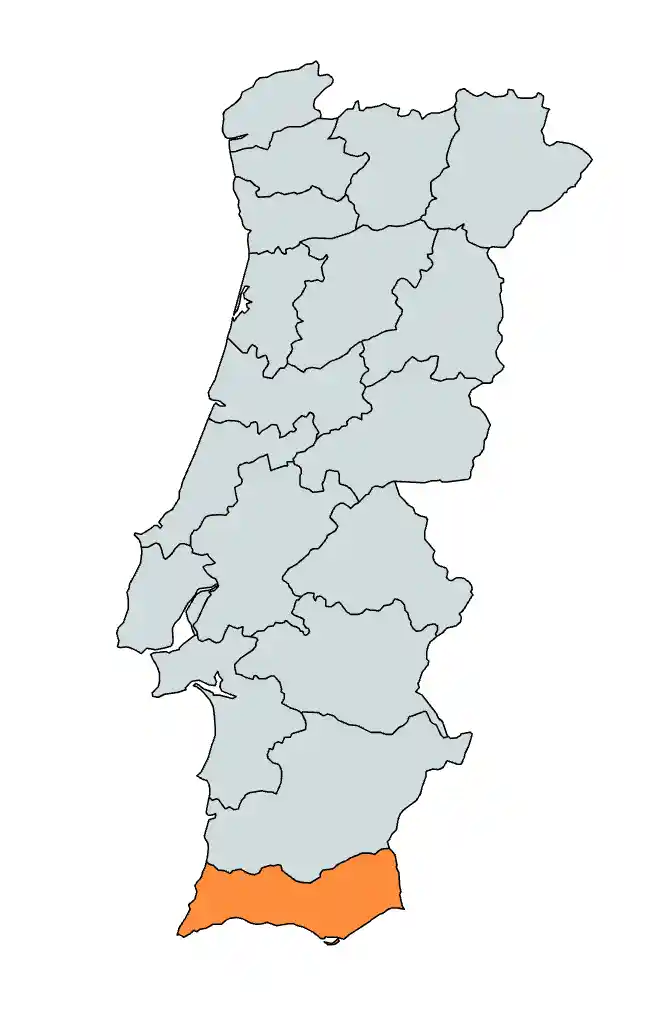
Faro is the gateway to the Algarve. It is a district of salt marshes and sun-bleached limestone. This is where the Atlantic meets the quiet lagoons of the Ria Formosa. For a road trip, it provides a contrast between high-energy coastal hubs and silent mountain peaks. The roads follow the shoreline before cutting inland to the orange groves of the Barrocal.
Most visitors pass through the airport but miss the Old Town of Faro. Enter through the Arco da Vila. Storks nest on the rooftops above medieval cobblestones. Visit the Cathedral for a view over the maze of sandbars and blue channels. If you feel adventurous, find the Bone Chapel at the Carmo Church. Its walls are lined with the skulls of over a thousand monks.
Drive west for the icons. The Benagil Cave is a cathedral of stone with a natural skylight. Stop at Ponta da Piedade near Lagos. It is a cluster of golden rock formations and turquoise grottoes. The drive ends at Sagres. This is the edge of Europe. Stand on the cliffs of Cabo de São Vicente as the sun sinks into the ocean. The wind here is fierce and the landscape is raw.
Head east for a slower pace. Visit Tavira, a city of Roman bridges and 37 churches. Then climb the winding roads to Monchique. This is the highest point in the Algarve. The green forest feels worlds away from the beach. Faro is a district of hidden islands and ancient fortresses. It is the sun-soaked frontier of Portugal.
Faro (district) highlights
- Cacela Velha Park your car on the cliffs above the eastern Ria Formosa to find this tiny whitewashed hamlet that time forgot. Walk the fort walls for a panoramic view of the turquoise lagoons meeting the sea, then wade across the low-tide channel to reach empty sandbars.
- Almendres Cromlech (Evora) Note: While Almendres is in Evora, the Faro equivalent is the Alcalar Megalithic Site near Portimão. Explore 5,000-year-old limestone burial mounds and prehistoric monuments that predate the pyramids. It is a haunting, silent detour into the deep spiritual history of the Algarve’s first inhabitants.
- Faro Bone Chapel (Capela dos Ossos) Tucked behind the Carmo Church, this macabre masterpiece is constructed from the skeletal remains of over 1,200 Carmelite monks. The walls and ceilings are meticulously lined with skulls and femurs, designed to inspire reflection on the transient nature of life.
- Ponta da Piedade Navigate the coastal roads near Lagos to reach these dramatic golden cliffs, carved into honeycombed arches and hidden grottoes by centuries of Atlantic storms. Descend the steep stone steps to the water's edge or walk the clifftop boardwalks for the most photographed sunset in Portugal.
- Benagil Sea Cave Go to the small Benagil beach and rent a kayak or paddleboard to enter this massive sea cathedral with a natural circular "eye" in its roof. The light filtering through the dome onto the private sandy beach inside makes it one of the most surreal natural wonders in the world.
- Palácio de Estoi Drive inland to this 19th-century "pink palace," a hidden Rococo gem adorned with blue-and-white azulejo tiles and lush Versailles-style gardens. It is a striking contrast to the coast, offering a peaceful, aristocratic atmosphere and a glimpse into 1800s Portuguese luxury.
- Cabo de São Vicente Steer your way to the wind-whipped southwestern tip of Europe, where 75-meter cliffs drop vertically into the churning Atlantic. Known as the "End of the World" by ancient explorers, it features a powerful lighthouse and raw, untamed views that stretch infinitely toward the horizon.
- Monchique Mountains (Fóia) Escape the coastal heat by driving the twisting roads up to the Algarve's highest peak, surrounded by cork forests and eucalyptus groves. On a clear day, the 360-degree view spans the entire southern coastline, and you can stop for "firewater" (medronho) tasting at roadside stalls.
- Tavira’s Roman Bridge and Island Stop in the most traditional town in the Algarve to walk the seven-arched bridge over the Gilão River and explore its 37 historic churches. Take the small ferry from the town center to the Ilha de Tavira, a massive sandbar island with crystal-clear water and a sprawling anchor cemetery.
- Pego do Inferno Waterfall Follow a secret trail near Tavira to find this emerald-green pool fed by a cascading waterfall, hidden deep within a valley of oleander and carob trees. It is a legendary local swimming hole that provides a cool, freshwater sanctuary far away from the crowded Atlantic beaches.
The local Four
History of Faro (district)
Faro district is a land forged by the tides and conquered by the sun. Its story began with the Phoenicians and Romans, who transformed the marshy Ria Formosa into a hub for salted fish and purple dye. Under five centuries of Moorish rule, the city of Ossonoba (modern-day Faro) became a brilliant center of science and culture. You can still see this North African influence in the "Algarve chimneys" and the geometric architecture that lines the narrow streets of the Barrocal.
The turning point came in 1249 when King Afonso III drove the Moors out, making the Algarve the final piece of the Portuguese puzzle. For centuries, Faro stood as the sentinel of the south. In Lagos, Prince Henry the Navigator launched the Caravels that would map the African coast, turning this district into the launchpad for the Age of Discovery. Even the "End of the World" at Sagres became a sacred place where sailors prayed before disappearing into the unknown Atlantic.
A road trip through Faro reveals a history of resilience. The district survived the devastating 1755 earthquake, rebuilding its cathedrals and palaces in the elegant Rococo style seen in Estoi. From the medieval walls of Silves Castle to the 16th-century fortresses guarding the sea in Tavira, Faro is a living map of Portugal's maritime soul. It is a place where the echoes of Roman merchants, Moorish poets and Portuguese explorers still linger in the salt-heavy air.