

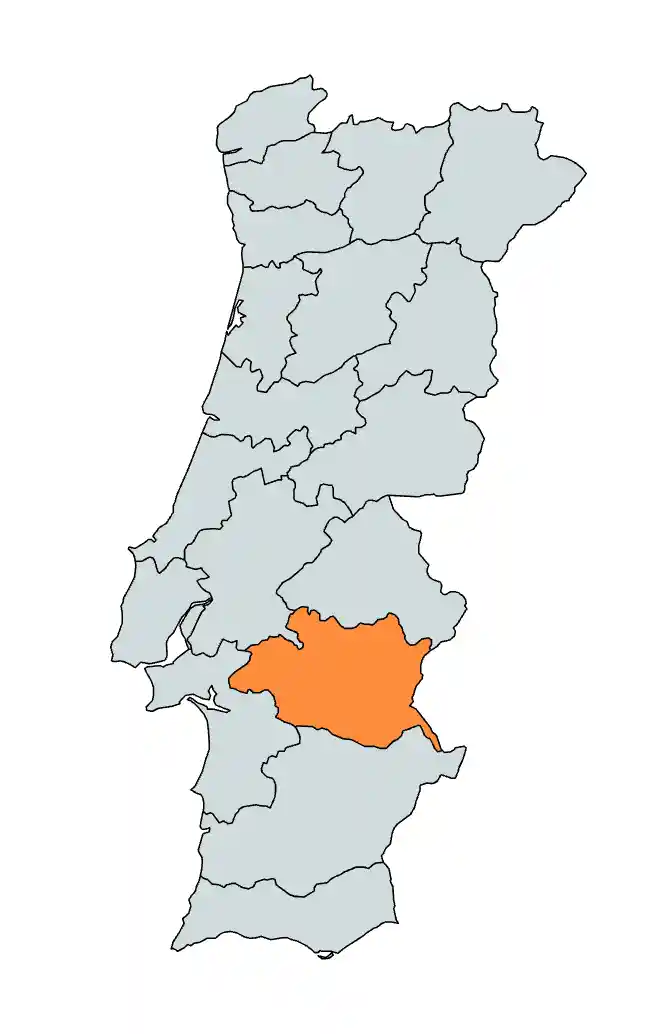
Évora district is the golden soul of the Alentejo. It is a district of endless plains and cork forests. This is where the sun feels heavy and the history feels ancient. For a road trip, it provides a journey through Neolithic mysteries and Roman power. The roads are straight and cut through silver-green olive groves.
The city walls of Évora enclose a living museum. Visit the Roman Temple at sunset when the granite columns glow. Then step into the Chapel of Bones. It is a chilling Franciscan site where the walls are lined with thousands of human skulls. It is a stark reminder of life's fleeting nature. The city’s narrow streets are whitewashed and cool. They lead to hidden plazas where you can eat local black pork and sheep's cheese.
Drive west to the Almendres Cromlech. This is the oldest stone circle in Europe. It is older than Stonehenge. Walk among the 95 monoliths that have stood for seven thousand years. Then head east toward Monsaraz. The road climbs a steep hill to this fortified village. It is built entirely of schist and lime. From the castle walls, you can see the massive Alqueva Lake stretching into Spain. It is one of the best spots in the world for stargazing.
Finish your journey in Viana do Alentejo. Visit the castle with its unique Moorish-style battlements. Évora is a district of silence and endless horizons. It is the heart of the Portuguese south.
Évora (district) highlights
- Almendres Cromlech Drive to the oldest megalithic stone circle in Europe, a prehistoric site older than Stonehenge set within a quiet grove of ancient cork oaks. The 95 standing stones form a celestial observatory that has tracked the sun and stars for over seven thousand years.
- Monsaraz Village Navigate the steep road to this fortified hilltop village, built entirely of schist and lime, which provides a bird’s-eye view of the Spanish border. From its medieval castle walls, you can watch the sunset over the vast Alqueva Lake. It's the largest artificial reservoir in Western Europe.
- Chapel of Bones Visit this chilling 17th-century Franciscan chapel in Évora where the walls and pillars are meticulously lined with the skulls and bones of 5,000 monks. It serves as a hauntingly beautiful memento mori, designed to provoke deep reflection on the fleeting nature of human existence.
- Vila Viçosa Ducal Palace Tour the "Marble City" and its massive royal palace, featuring a 110-meter facade crafted entirely from the region's famous high-grade white stone. This was the ancestral home of the House of Braganza and remains one of the most opulent displays of Renaissance architecture in the south.
- Evoramonte Castle Stop at this unique, knot-shaped fortress perched high on a ridge, famous for the stone "ropes" carved into its exterior walls. The climb to the roof provides an unobstructed, 360-degree panorama of the endless Alentejo plains stretching toward the horizon.
- Arraiolos Village Explore this whitewashed town globally famous for its hand-stitched wool carpets, a tradition passed down through generations since the Middle Ages. Visit the circular castle on the hill for a view of the town's blue-and-yellow-trimmed houses and local artisan workshops.
- Anta Grande do Zambujeiro Seek out one of the largest dolmens in the world, a massive prehistoric burial chamber hidden in the countryside near the village of Valverde. This "cathedral of the stone age" features a corridor of towering monoliths that demonstrate the incredible engineering of Neolithic tribes.
- Alto de São Bento Viewpoint Drive just outside Évora city to this rocky outcrop for the best panoramic view of the historic center's towers and aqueducts. It is a favorite local "hidden gem" for watching the sunset turn the city's granite monuments and whitewashed walls a deep golden hue.
- Terena Castle Discover this lesser-known fortress guarding a quiet village near the Spanish border, overlooking the shimmering waters of the Lucefécit reservoir. It is a peaceful stop for road trippers looking to escape the main tourist trails and explore rugged frontier history.
- Corval Pottery Village Visit the largest pottery center in Portugal, where dozens of traditional workshops line the main street of this tiny sun-baked hamlet. You can watch master potters at work and buy hand-painted ceramics decorated with the classic floral and rural motifs of the Alentejo.
The local Four
History of Évora (district)
Évora is a landscape written in stone and silence. Its history stretches back seven thousand years to the Almendres Cromlech. Where Neolithic tribes raised massive monoliths to track the sun. Long before Portugal existed, the Romans turned this into the city of Liberalitas Julia. They built the high-seated Roman Temple and sophisticated baths. It made Évora a vital hub of the imperial road system.
The Middle Ages brought walls and warriors. In 1165, the legendary knight Geraldo Sem Pavor (Gerald the Fearless) captured the city from the Moors in a daring night raid. This victory turned Évora into a royal stronghold. For centuries, Portuguese kings held court here, building the massive Évora Cathedral—the largest medieval cathedral in the country. It was here that Vasco da Gama’s flags were blessed before his voyage to India, marking the district as a launchpad for world discovery.
A road trip through Évora is a journey where you’ll find the 16th-century Aqueduct of Silver Water weaving through the city and 17th-century bone-lined chapels reflecting on life's end. Beyond the city walls, the history lives on in fortified hill towns like Monsaraz and the "marble city" of Vila Viçosa. Évora is more than just a destination: it is the preserved heart of the Alentejo.