

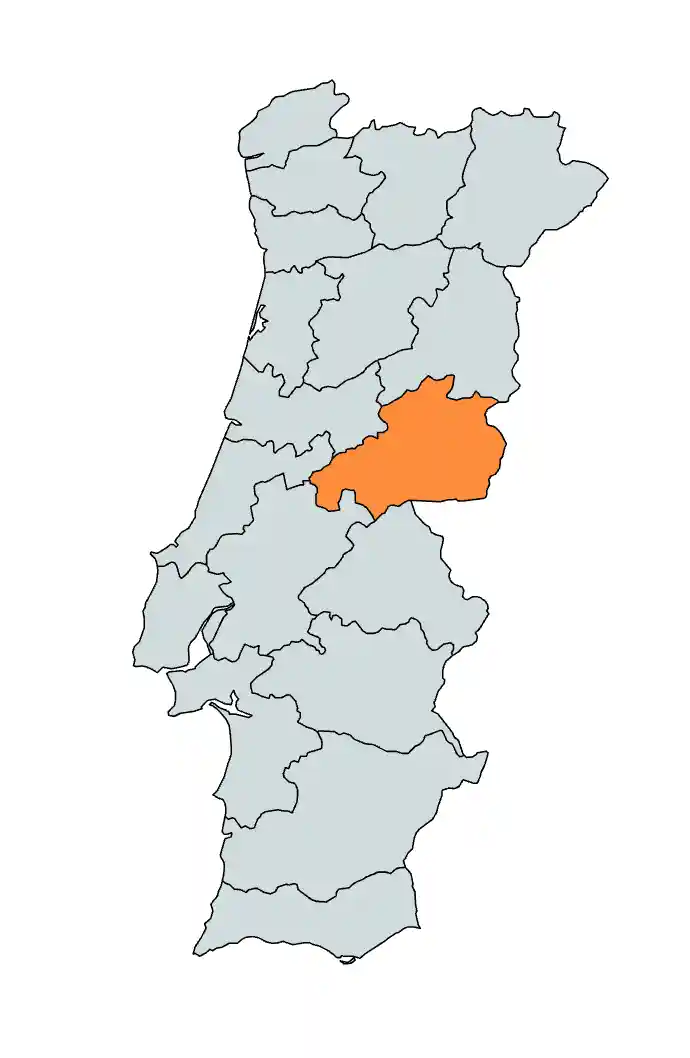
Castelo Branco is the land of stone and shadows. It is the rocky heart of the Beira Baixa. This is where the mountains meet the Spanish border. For a road trip, it is a journey through deep time. The roads go through silver olive groves and towering granite massifs.
Start in the city of Castelo Branco. Visit the Bishop’s Palace Garden. It has majestic Baroque statues and ornamental pools. It feels like a royal sanctuary in the middle of a desert. Drive north to Monsanto. This is the "most Portuguese village in Portugal." The houses are squeezed between giant boulders. Some boulders even serve as roofs. It is a prehistoric masterpiece. Climb to the ruined Templar castle and discover the views of the entire central plain.
Head west toward Vila Velha de Ródão. The road drops into the Tagus River valley. Here you will find the Portas de Ródão. It is a prime spot for bird watching. Look for griffon vultures circling the peaks. Continue to Idanha-a-Velha. This is one of the oldest villages in the country. It sits on the site of a Roman city. You can walk among ancient stone ruins and Visigothic cathedrals that feel completely untouched by tourism.
Castelo Branco is a district for the slow traveler. It is the home of the Schist Villages. These are hidden hamlets built entirely from dark flaky stone. Stop in Álvaro or Sarzedas for a quiet afternoon. Eat the local goat cheese and Maranho. It is a unique savory haggis-style dish from the mountains. This is a land of Templar legends and geological wonders. It is the deep soul of the Portuguese heartland.
Castelo Branco (district) highlights
- Monsanto Village Drive to this "boulder village" where tiny stone houses are wedged under massive 200-ton granite rocks. Climb the steep path to the Templar fortress for a 360-degree view of the vast plains stretching toward Spain.
- Portas de Ródão Witness the Tagus River carving through two giant cliffs that form a natural gateway in the landscape. It is a premier spot for road trippers to park and watch rare griffon vultures soaring above the deep canyon.
- Bishop’s Palace Garden Explore a stunning Baroque garden in the city of Castelo Branco filled with intricate statues of kings and apostles. The terraced hedges and ornamental pools provide a peaceful, royal atmosphere in the middle of your journey.
- Idanha-a-Velha Walk through one of the oldest villages in Portugal, built on the ruins of a Roman city and a Visigothic capital. This quiet, stone-walled settlement feels like a living museum with ancient towers and an eerie, atmospheric cathedral.
- Sortelha Step back into the Middle Ages in this perfectly preserved granite village surrounded by a massive defensive wall. Its narrow alleys and jagged stone architecture make it one of the most cinematic stops in the entire Beira Baixa region.
- Geopark Naturtejo Drive across a landscape that holds millions of years of history, including fossilized trilobite trails. This vast territory offers rugged backcountry roads that lead to hidden waterfalls and prehistoric rock formations.
- Aldeia de Álvaro Visit this "Schist Village" perched on a ridge overlooking the winding Zêzere River as it snakes through the valley. It is part of the white-painted schist network, providing a bright contrast to the dark stone typically found in the area.
- Fratel Dam Viewpoint. Stop at the high overlooks near the Fratel Dam to see the Tagus River widen into a mirror-like expanse between the hills. The surrounding cliffs are decorated with prehistoric rock art that is only visible by boat or from specific cliffside paths.
- Penha Garcia Follow the "Fossils Trail" through this mountain village to see 480-million-year-old trilobite tracks embedded in the vertical rock walls. The path leads down to a hidden river gorge and a natural swimming pool at the base of a castle.
- Oleiros Schist Route Navigate the twisting forest roads to discover the dark, flaky stone houses of the Isna and Sobral hamlets. These tiny villages are famous for their local firewater, medronho, and traditional mountain honey produced in the surrounding peaks.
The local Four
History of Castelo Branco (district)
Castelo Branco is a landscape forged by holy war and ancient geology. Its history is written in the hard granite and dark schist of the frontier. Long before kings, prehistoric tribes carved symbols into the Tagus Valley rocks that are still visible today. When the Romans arrived, they built cities like Idanha-a-Velha, turning this rocky terrain into a vital crossroads for the empire.
In the 12th century, the region became the front line of the Reconquista. To protect the young nation, the Templar Knights were granted these lands. They built a chain of fortresses along the border to repel invaders. The ruins of their castles still crown the peaks of Monsanto and Penha Garcia. These warrior-monks turned the mountains into a shield, ensuring the kingdom’s survival from their headquarters in the city of Castelo Branco.
Driving here is a journey into a medieval stronghold. You will pass through "Schist Villages" that survived centuries of isolation by blending into the dark stone hills. From the power of the Templars to the symmetry of Baroque bishop gardens, the district tells a story of resilience. It is a land where the echoes of history still linger in every mountain pass.