

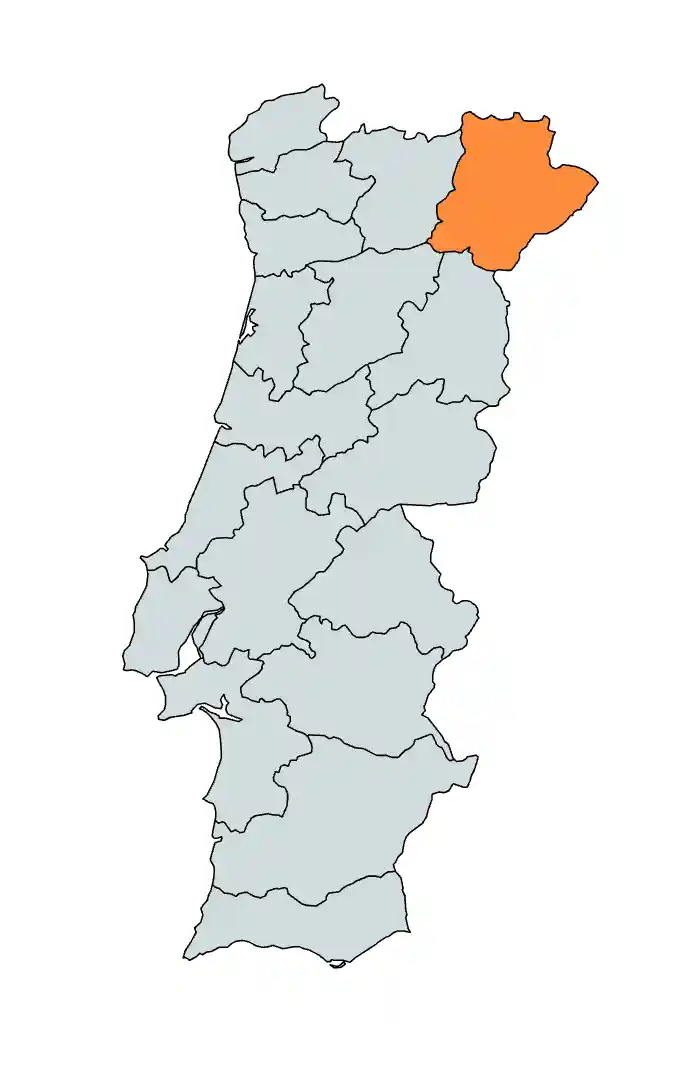
Bragança is the wild northeast. It is a land of wolves and granite. This is the "Terra Fria" or the cold land. It is the most remote corner of Portugal. For a road trip user, this is the ultimate escape. The roads are empty. They curve through ancient chestnut forests and jagged mountains.
Start in the city of Bragança. The medieval citadel sits on a hill. It is perfectly preserved. A massive castle tower dominates the skyline. Walk the ramparts at sunset. The stone glows orange. From here, drive into the Montesinho Natural Park. This is a landscape of slate-roof villages and hidden river valleys. Time has stopped here. You will see communal ovens and stone houses huddled against the wind. Drive to Rio de Onor. This village is split in two by the Spanish border. People here speak a unique dialect.
Head south toward the Douro International Natural Park. The road hugs deep canyons carved by the Douro River. The cliffs are sheer and black. This is the home of the Egyptian vulture and the golden eagle. Visit Miranda do Douro. This is the land of the Pauliteiros stick dancers. The locals speak Mirandese. It is the only other official language of Portugal. The views over the river into Spain are dizzying.
Bragança is a district of raw traditions. It is famous for the Caretos. These are masked men in fringed suits who haunt the villages during winter. Eat Posta Mirandesa. It is a thick steak from local long-horned cattle. It is grilled over hot coals with nothing but sea salt. Pair it with a heavy red wine from the Planalto Mirandês. This is a journey to the edge of the world. It is quiet and honest. It is the Portugal you never knew existed.
Bragança (district) highlights
- Montesinho Village Follow the winding mountain roads to this iconic stone village located deep within the Montesinho Natural Park. It is a world of slate roofs and granite walls where the traditional way of life remains untouched by time.
- Domus Municipalis Visit the only surviving example of Romanesque civic architecture in the Iberian Peninsula, located right next to Bragança’s castle. This pentagonal stone hall served as the medieval seat of government and features a unique underground cistern.
- Rio de Onor Park your car at the edge of this unique "communal village" that is literally split in half by the border with Spain. The residents share farmland and a common dialect, moving freely between the two countries as if the border didn't exist.
- Miranda do Douro Cliffs Take a cruise through the deep river canyons where the Douro River carves a massive gorge between Portugal and Spain. The sheer black cliffs are a sanctuary for rare birds like the Egyptian vulture and the golden eagle.
- Sanctuário de São Bartolomeu Navigate the steep climb to this hilltop lookout for the most breathtaking panoramic view of the Bragança district. On a clear day, the horizon stretches across the vast "Terra Fria" all the way into the Spanish interior.
- Fraga do Puio Viewpoint Drive to the village of Picote to stand on a glass-bottomed platform suspended over a dizzying 200-meter drop. It offers an incredible view of the "elbow of the Douro," where the river makes a dramatic U-turn through the rock.
- Iberian Mask and Costume Museum Stop in the Citadel to see the colorful and terrifying costumes used by the Caretos during ancient winter solstice rituals. It is the best place to understand the pagan roots and mysterious legends that still haunt the villages of the northeast.
- Albufeira do Azibo Detour to this massive reservoir for a swim at one of the best river beaches in Europe, hidden among the rolling hills. It is a protected landscape where you can switch the rugged mountain driving for a quiet afternoon of paddleboarding.
- Castro de Avelãs Monastery Discover the unique brickwork of this 12th-century ruined monastery, featuring circular apses that are rare in Portuguese architecture. It is a quiet, atmospheric roadside stop that showcases the deep religious history of the Trás-os-Montes region.
The local Four
History of Bragança (district)
Bragança is the story of a fortress at the edge of the world. For centuries, this district was the "Terra Fria," a frozen frontier that guarded the Portuguese kingdom from its Spanish neighbors. The history began with the Celts and Romans who built hillforts on the granite ridges to control the mountain passes. In the 12th century, the city of Bragança rose as a medieval powerhouse. Its stone citadel remains one of the most complete in Europe. It served as the seat of the House of Bragança, the royal dynasty that would eventually rule Portugal for three hundred years.
While the rest of Portugal looked toward the sea, Bragança looked toward the land. During the winter solstice, masked Caretos run through the streets in a ritual that is thousands of years old. In places like Miranda do Douro, the locals even kept their own language, Mirandese. It survived through the centuries because the deep canyons of the Douro River acted as a natural shield against the outside world.
Driving through the district is a journey into a living past. You will see communal villages where neighbors still share ovens and pastures just as they did in the Middle Ages. You can drive from Romanesque monasteries to the high slate peaks of Montesinho. Bragança is a land that never surrendered its identity to modern times. It remains a place of kings, wolves and silent stone walls that have stood guard over the northeast for nearly a millennium.