

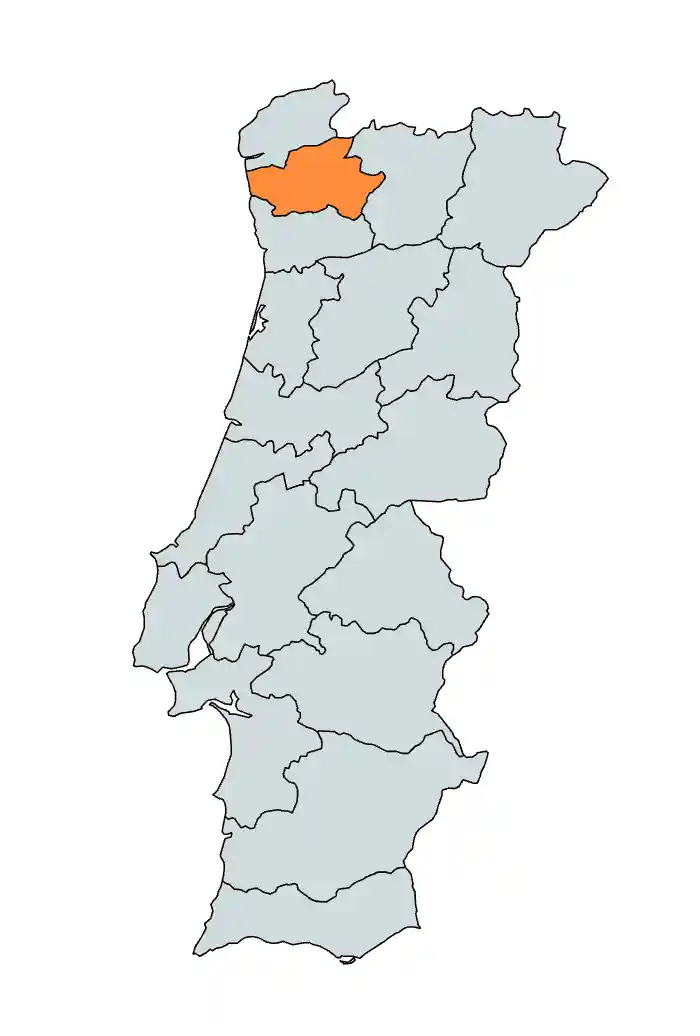
Braga is the green soul of Portugal. It is a district where ancient granite peaks collide with deep spiritual roots. For a road trip user, this is a journey into the vertical. The roads here climb through thick oak forests and mist-covered valleys. This is the birthplace of the Portuguese nation. The air smells of damp stone and mountain herbs. It feels old and powerful.
Start in the city of Braga. It is the oldest city in the country. It is a maze of Baroque gardens and hidden plazas. Drive to Bom Jesus do Monte. This is a massive sanctuary with a zigzagging granite staircase. You can drive to the top or take the world’s oldest water-powered funicular. It is spectacular at sunset. From here, go north toward Guimarães. This is where the first king of Portugal was born. The castle stands on a hill like a jagged crown.
The real adventure begins as you head east. The terrain rises sharply into the Peneda-Gerês National Park. The roads turn into tight coils that hug the mountainside. You will share the asphalt with wild Garrano horses and long-horned cattle. Stop the car at Vila do Gerês. Hike to the Tahiti Waterfalls. The water is crystal clear and freezing cold. Drive the old Roman road known as Geira. You can still see the original stone milestones from two thousand years ago.
It has the youngest population in Europe and the oldest traditions. You will find craft breweries next to 12th-century cathedrals. Eat Bacalhau à Braga in a roadside tavern. It is fried cod topped with mountains of onions and thinly sliced potatoes. Pair it with a cold glass of Vinho Verde. This is the only place in the world where the wine is young, crisp and slightly sparkling. Keep your tires checked for the steep climbs. Braga is the heart of the north. It is rugged, holy and wild.
Braga (district) highlights
- Bom Jesus do Monte Drive up the winding road to this hilltop sanctuary and walk the famous zigzagging Baroque staircase. You can also ride the world’s oldest water-powered funicular to reach the summit for a stunning view of the city.
- Peneda-Gerês National Park Cruise through the only national park in Portugal along mountain roads that pass wild horses and deep river canyons. Stop at the Pedra Bela viewpoint for a bird’s-eye view of the Cávado river winding through the peaks.
- Guimarães Castle Park at the foot of the "Cradle of Liberty" where the first king of Portugal began his quest to build a nation. This 10th-century stone fortress stands as a rocky symbol of the country’s medieval birth and military power.
- Mata de Albergaria Follow the ancient Roman Geira road through an enchanted forest of oak trees and giant moss-covered granite boulders. This protected woodland is one of the most serene drives in the north with crystal-clear streams at every turn.
- Citânia de Briteiros Explore the sprawling ruins of an Iron Age hill fort where the stone foundations of circular homes reveal a 2,000-year-old civilization. It is a quiet archaeological site that provides an eerie and fascinating look into the pre-Roman past.
- 7 Lagoas do Xertelo Hike from the mountain village of Xertelo to find a chain of seven natural emerald pools carved into the rock. These hidden swimming holes are fed by cold mountain springs and provide a perfect escape from the summer heat.
- Mosteiro de Tibães Visit this massive former headquarters of the Benedictine Order located just outside the main city. The crumbling stone corridors and lush walled gardens feel like a secret world frozen in the 18th century.
- Tahiti Waterfalls Navigate the steep roads to reach these multi-tiered cascades that drop into clear lagoons deep in the Gerês valley. The surrounding granite cliffs and pine trees make it one of the most photogenic natural spots in the district.
- Barcelos Weekly Market Plan your trip for a Thursday to witness one of the largest and oldest open-air markets in all of Europe. You can buy traditional pottery, local cheeses, and the iconic colorful roosters that have become a symbol of Portugal.
- Misarela Bridge Walk across the "Devil’s Bridge," a medieval stone arch that spans a deep gorge at the bottom of a steep canyon. It is hidden at the edge of the district and is steeped in local legends of dark magic and miraculous escapes.
The local Four
History of Braga (district)
Braga is the place where Portugal began. Long before the first kings, the Romans founded Bracara Augusta as a capital for the empire’s wild northern frontier. You can drive over the stone bridges and follow the Geira, a 2000 year old road that connected the city to Rome. Walking through the city center feels like traveling through time. You will find Roman baths hidden beneath modern buildings and 12th-century cathedral walls that have survived every war in Portuguese history.
In the Middle Ages, Braga became the spiritual center of the peninsula. It was a city of bishops who competed to build the most grand monuments. This led to the creation of the Bom Jesus sanctuary, a mountain-top masterpiece that took centuries to finish. While the priests ruled the city, the knights ruled the hills. In the nearby town of Guimarães, a young nobleman named Afonso Henriques fought for independence. His victory on these granite hills turned a small county into the Kingdom of Portugal.
The history of the district is not just in its cities but in its rocky mountains. The Peneda-Gerês highlands were a place of survival for the "Garrano" mountain tribes who resisted invaders for generations. They built stone villages like Soajo with granaries that look like tiny temples. Driving through Braga is a journey through a thousand years of architecture and legend. It is a land of holy stairs and mountain forts that tells the story of how a small corner of Iberia became a global nation.