
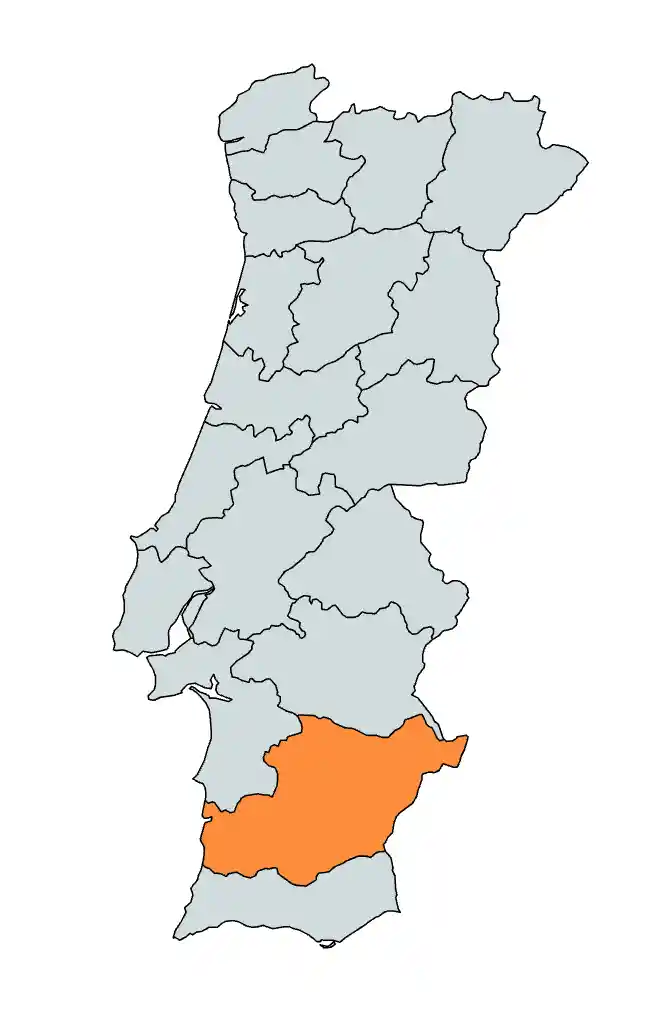
Beja is a land of sun-scorched earth and endless horizons. The Atlantic heat bakes the rolling plains until the wheat turns the color of hammered gold. This is the silent heart of the Lower Alentejo. For a road trip, it is the ultimate frontier. The roads are long and straight. They cut through silver olive groves and gnarled cork forests.
Start in the city of Beja. The castle tower is a masterpiece of white marble and granite. It rises 40 meters above the plains like a giant watchman. Climb to the top for a view that stretches into Spain. The air here smells of dry grass and woodsmoke. Head south toward Mértola. This town clings to a craggy cliff above the Guadiana River. It feels like a piece of North Africa. You will find ancient mosques turned into churches and narrow stone alleys that trap the cool shade.
Turn your car west as the sun peaks. The landscape breaks into the rocky Atlantic coast. This is the Costa Vicentina. You will find towering dark cliffs and hidden secret coves like Zambujeira do Mar. The waves are wild and cold. It is a sharp contrast to the silent interior. Stop in Serpa for the cheese. It is strong and creamy. Eat it with heavy crusty bread and a glass of dark red wine.
Beja is a district of extremes. It is the hottest and quietest place in Portugal. You can drive for kilometers without seeing another soul. Just hawks circling above and whitewashed villages shimmering in the fog. Keep your spirit open to the slow pace. This is the Portugal that time forgot.
Beja (district) highlights
- Castle of Beja Climb the tallest medieval tower in Portugal for a panoramic view of the golden Alentejo plains. The marble structure stands 40 meters high and serves as a silent watchman over the district’s vast horizon.
- Mértola Village Explore this "museum-village" that clings to a rocky spur above the Guadiana River. It is a rare place where a medieval mosque was converted into a church but kept its original Islamic arches and spirit.
- Pulo do Lobo Waterfall Drive deep into the Guadiana Valley to see the river boil through a narrow stone gorge. According to legend, the gap is so tight that a wolf can leap across the crashing water in a single bound.
- Zambujeira do Mar Visit this whitewashed village perched on dark jagged cliffs overlooking the wild Atlantic. It is the gateway to secret coves and some of the most dramatic coastal hiking trails in Europe.
- Serpa’s Medieval Walls Walk the ancient battlements where a massive 17th-century aqueduct still rests on top of the city gates. The town is famous for its narrow cobbled streets and strong creamy sheep’s cheese.
- Roman Villa of Pisões Step back in time at this hidden archaeological site featuring well-preserved mosaics and an ancient heating system. It offers a raw look at the luxury of rural Roman life on the Lusitanian frontier.
- Alqueva Dark Sky Reserve Park your car after dark to witness one of the clearest night skies on the planet. The lack of light pollution near the great reservoir reveals a dense carpet of stars invisible in most of Europe.
- Vila de Frades Wine Talhas Visit local cellars to taste wine fermented in massive clay amphorae using techniques dating back to the Romans. This ancient tradition produces a bold earthy flavor unique to the Beja interior.
- São Jacinto River Beach Cool off at this peaceful freshwater retreat tucked away in the sun-baked countryside near Beja. It is a perfect spot to escape the midday heat before heading back onto the long desert-like roads.
- Dunes of Almograve Discover a rugged beach where giant sand dunes meet black schist rocks and crashing surf. It is a wilder, less crowded alternative to the main tourist beaches further north on the coast.
The local Four
History of Beja (district)
Beja is a land where history is etched into the stone and soil. For thousands of years this district served as the gateway between the heart of Iberia and the Mediterranean. It was the Romans who first transformed it into a powerhouse. They named the capital Pax Julia to celebrate a peace treaty signed by Julius Caesar. They turned the rolling plains into a massive breadbasket. These golden wheat fields still feed Portugal today. You can still drive over Roman bridges that have held firm for twenty centuries.
The story shifted when the Moors crossed from North Africa. They brought new irrigation and a love for walled cities. For five hundred years Beja was a center of Islamic science and poetry. You see this legacy in the narrow white streets of Mértola. It feels more like a desert citadel than a European town. The reconquest by Portuguese kings was slow and bloody. It turned the district into a frontier of massive castles. Every hilltop became a fortress designed to watch the Spanish border.
In the 17th century Beja became famous for a different kind of drama. A nun named Mariana Alcoforado allegedly wrote the "Portuguese Letters" from her convent window. They were passionate and tragic. They made Beja a symbol of romantic longing across Europe. Today the district feels like a giant open-air museum. It is a place where Roman mosaics sit under olive trees and medieval towers guard silent plains. Driving through Beja is not just a road trip. It is a journey through layers of empires that refused to be forgotten.