

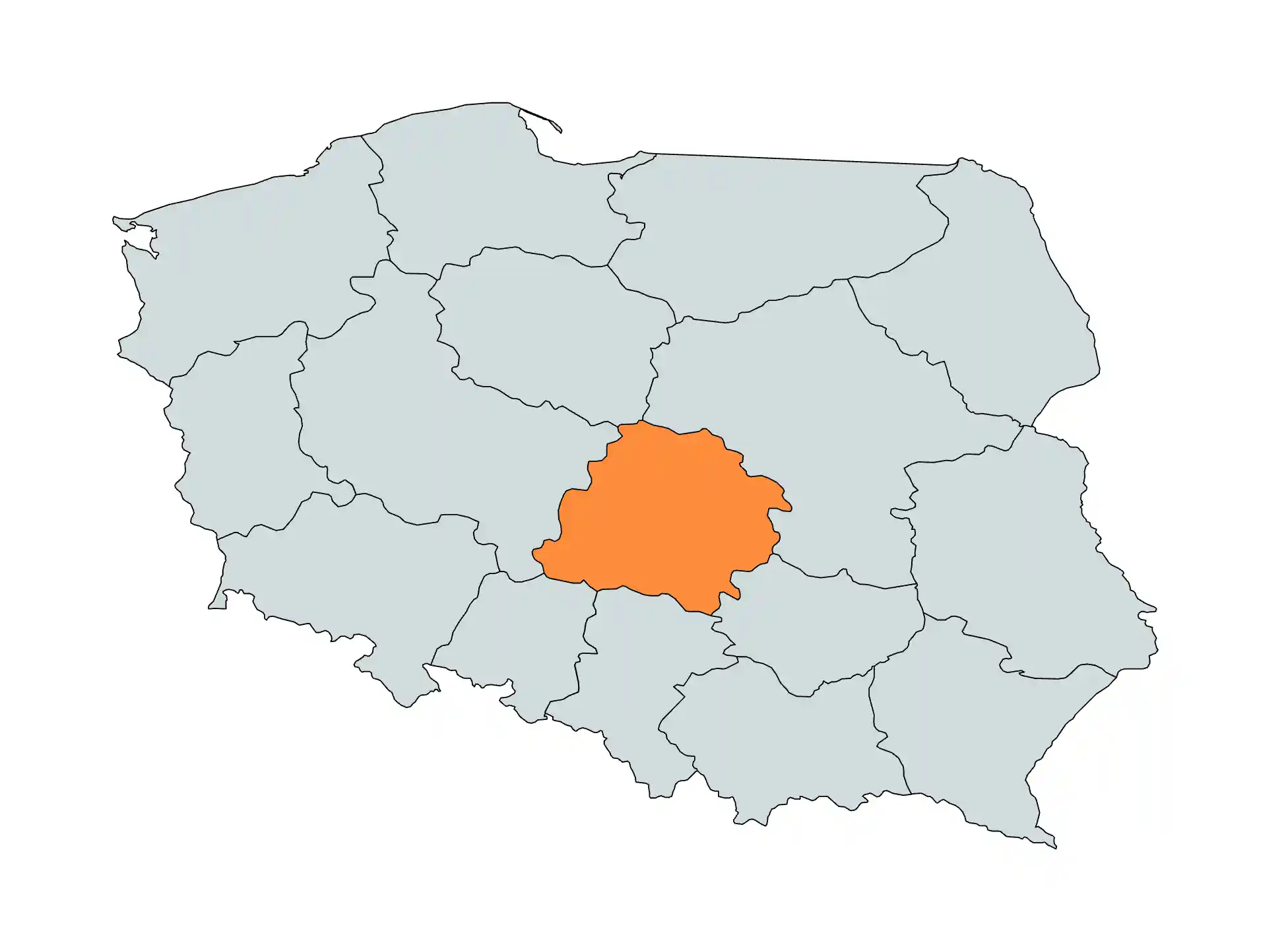
The Łódź region is the center of the land where massive red brick factories and grand palaces rise from the plains. This area is the perfect hub for an industrial heritage road trip that shows the power of the nineteenth century steam age. You can find the ruins of giant textile mills in small towns where the brick walls still hold the echo of the busy looms.
Drive to the town of Nieborów to see a baroque palace with a garden that has been kept in its original style for centuries. The roads through the region are lined with long rows of poplars and fruit trees that lead to quiet manors hidden behind iron gates. It is a landscape of contrast where the rough stone of the factory meets the soft silk of the noble house.
Nearby the town of Łowicz offers a burst of color with its famous folk art and traditional paper cutouts. You can visit the open air museum at Maurzyce to see the first welded bridge in the world and walk through blue painted farmhouses. This region is a treat for those who want to see how the modern world was built from the soil and the sweat of the old masters.
Łódź (region) highlights
- Arkadia Romantic Garden Walk through a park of ruins and stone temples built by a princess to look like a lost Greek world. The quiet stream and old oaks make it a perfect place for a slow walk.
- Nieborów Palace Tour a grand home with a red roof that has stayed exactly the same for over two hundred years. The library inside is filled with giant globes and rare books from the age of enlightenment.
- Blue Springs Reserve See water that glows with a bright blue color because of the white sand at the bottom of the pools. It is a hidden natural wonder tucked away in a quiet forest near the road.
- Nagórzyckie Grottoes Explore a maze of white sand caves that were dug out by people many years ago to build houses. The tunnels are cool and lit with soft light to show the strange patterns in the walls.
- Maurzyce Open Air Museum Step into a world of blue painted farmhouses and old barns to see how the local people lived on the plains. You can also see the first welded bridge in the world just a short drive away.
- Uniejów Thermal Spa Soak in hot water that comes from deep under the ground in a pool right next to a medieval castle. It is a great place to relax your muscles after a long day of driving.
- Łowicz Town Square Visit the center of folk art to see the colorful dress and paper art that this region is famous for. The town has a bright and happy feel with its many flowers and markets.
- Kolej Rogowska Ride an old narrow train that chugs through the fields and woods at a pace that lets you see every tree. It is a fun way to see the heart of the country from an old wooden seat.
- Besiekier Castle Walk the ruins of a small brick fort that is surrounded by a moat full of green reeds and frogs. It is a quiet and lonely spot that most travelers miss on their way through.
- Tum Romanesque Church See a thick stone church with small windows that was built like a fort to keep people safe from raids. It is one of the oldest and strongest stone buildings in the central plains.
The local Four
History of Łódź (region)
The Łódź region was a quiet land of manors until the steam engine turned it into a "Promised Land" in the 1820s. Within just a few decades, it grew from a tiny village into a massive hub of red brick factories and black smoke. This era is the focus of an industrial heritage road trip where you can see the Poznański Palace, built around 1900, next to massive looms.
Great fortunes were made in a flash as the region became the center of the world for cotton and wool. The kings of cloth built grand estates, like the Scheibler manor, to show off their wealth to the world. You can walk through the factory gates of Manufaktura, where the red walls still hum with the memory of the thousand worker shifts that built the modern world.
The land around the brick cities remained a place of deep folk art and bright colors. Women in Łowicz spent their winters since the 1800s cutting fine patterns out of paper and weaving wool into heavy striped skirts. This mix of heavy 19th century iron machines and soft handmade art defines a region where the industrial spirit and the soul of the farm live together.