

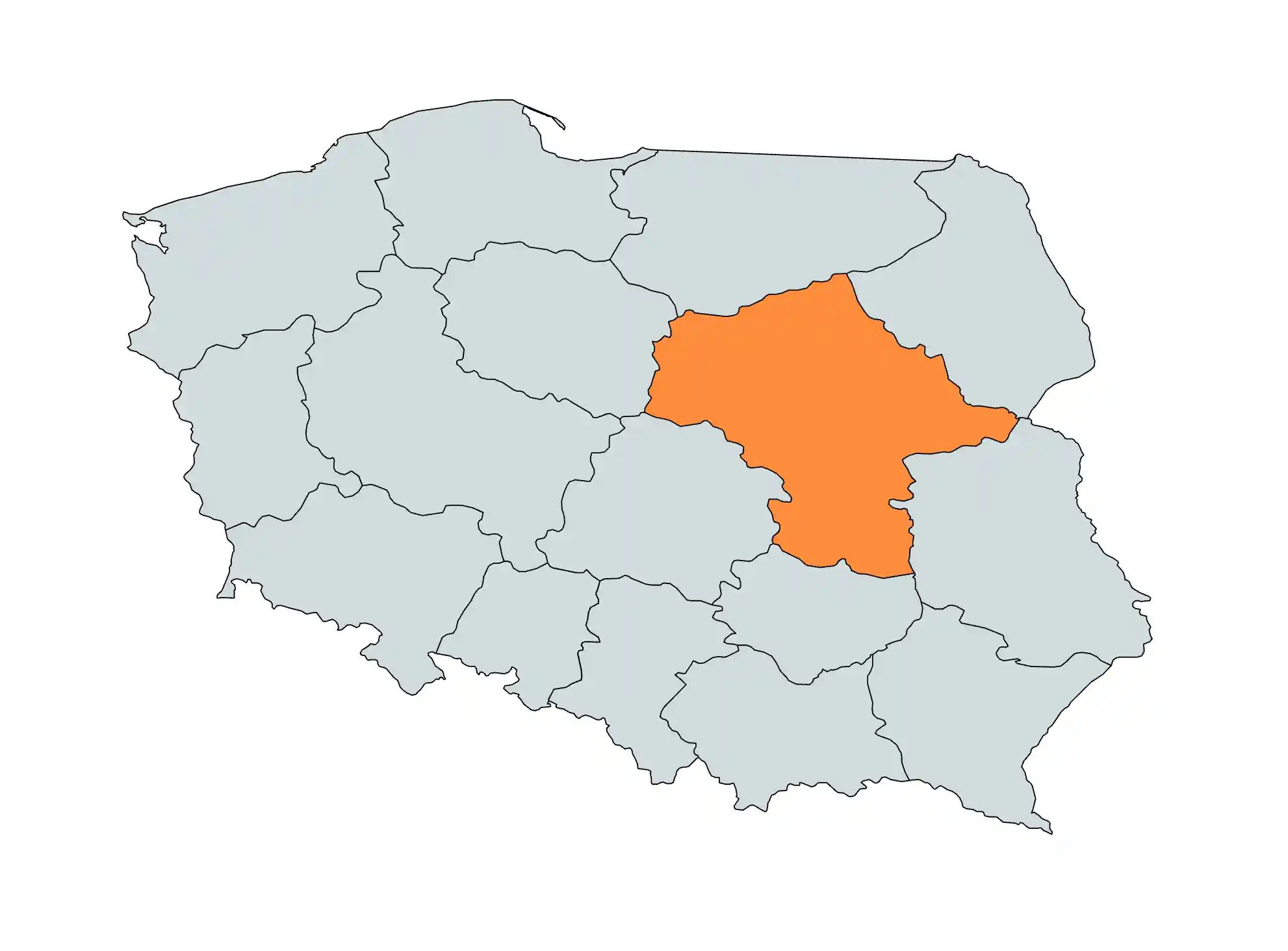
Masovian is the wide heart of the country where the long horizon is broken only by the silver birch trees and the winding river banks. This region is a prime spot for a central Poland scenic drive through the land that inspired the music of Chopin. You can visit his birthplace at Żelazowa Wola to walk in the park and hear his piano works played among the flowers.
The road leads you to the Kampinos Forest where the sand dunes are hidden under a thick cover of pine and oak. This vast park is a haven for moose and black storks offering a wild escape just a short drive from the capital. You can explore the ruins of the Modlin Fortress which stands at the meeting point of two great rivers with its massive brick walls.
Further out the town of Pułtusk boasts the longest market square in Europe and a castle that sits on a quiet river island. The landscape is a mix of traditional farms and grand estates that show the wealth of the old Masovian nobles. Whether you are watching the sun set over the Vistula or exploring the open air museum at Sierpc this region is the soul of the Polish plains.
Masovian highlights
- Kampinos Forest Dunes Hike over giant sand hills that are hidden deep in a thick forest of pine and oak. You might see a moose or a black stork if you stay quiet on the narrow forest paths.
- Żelazowa Wola Park Visit the small white house where the composer Chopin was born in a park full of rare flowers. You can hear his piano music playing softly from the trees while you walk.
- Modlin Fortress Walk along the longest building in Europe which is a massive brick fort built to guard the river meeting. The walls are thick and the old gates still show the marks of the war.
- Sierpc Village Museum Step into a world of wooden farmhouses painted in bright blue to keep the flies away from the milk. You can see how people made honey and carved wood in the old days.
- Nieborów Palace Garden Wander through a park with a long canal and stone statues that look like they belong in a royal dream. The palace nearby is a red brick gem with rooms full of old art.
- Płock River View Stop on the high bank of the Vistula to look down at the wide river and the white cathedral towers. It is one of the oldest cities in the land and was once home to the kings.
- Czersk Castle Towers Climb the high brick towers of a ruin that sits on a hill overlooking the wide river valley. The towers stand tall against the sky and offer a great view of the fruit trees below.
- Pułtusk Market Square Walk across the longest town square in the world which is paved with old stones and lined with low houses. The castle at the end of the square sits on a quiet river island.
- Liw Armoury Castle See a small brick fort that holds a huge collection of old swords and guns from the time of the knights. It sits on a marshy river and has a dark and strong feel.
- Opinogóra Romanticism Visit a small white palace that looks like a castle built for a poet in a park full of old trees. It is a quiet and pretty spot that feels very far from the busy modern world.
The local Four
History of Masovian
Masovian is the vast flat heart of the nation where the winding Vistula river dictated the flow of life and trade. For centuries, this land was the home of a proud nobility who built wooden manors on the plains. This landscape is the soul of a central Poland scenic drive through the fields of Żelazowa Wola, where the great Frédéric Chopin was born in 1810.
The region became the seat of the crown in 1596 when King Sigismund III moved the capital to Warsaw. Great forts like Modlin were built later, in the 1800s, at the meeting point of the Vistula and Narew rivers, with a barracks building over 2 kilometers long. You can still see the high towers of Czersk, built in the 14th century, rising over the fruit trees.
During the wars, the vast woods of Kampinos became a secret base for the underground army. In 1944, they used the sand dunes and bogs as a shield against invaders, hiding in the thick brush and old pines. Today the plains are a place of wide horizons where the song of the birds and the rustle of the leaves tell a story of a nation that never gave up.