

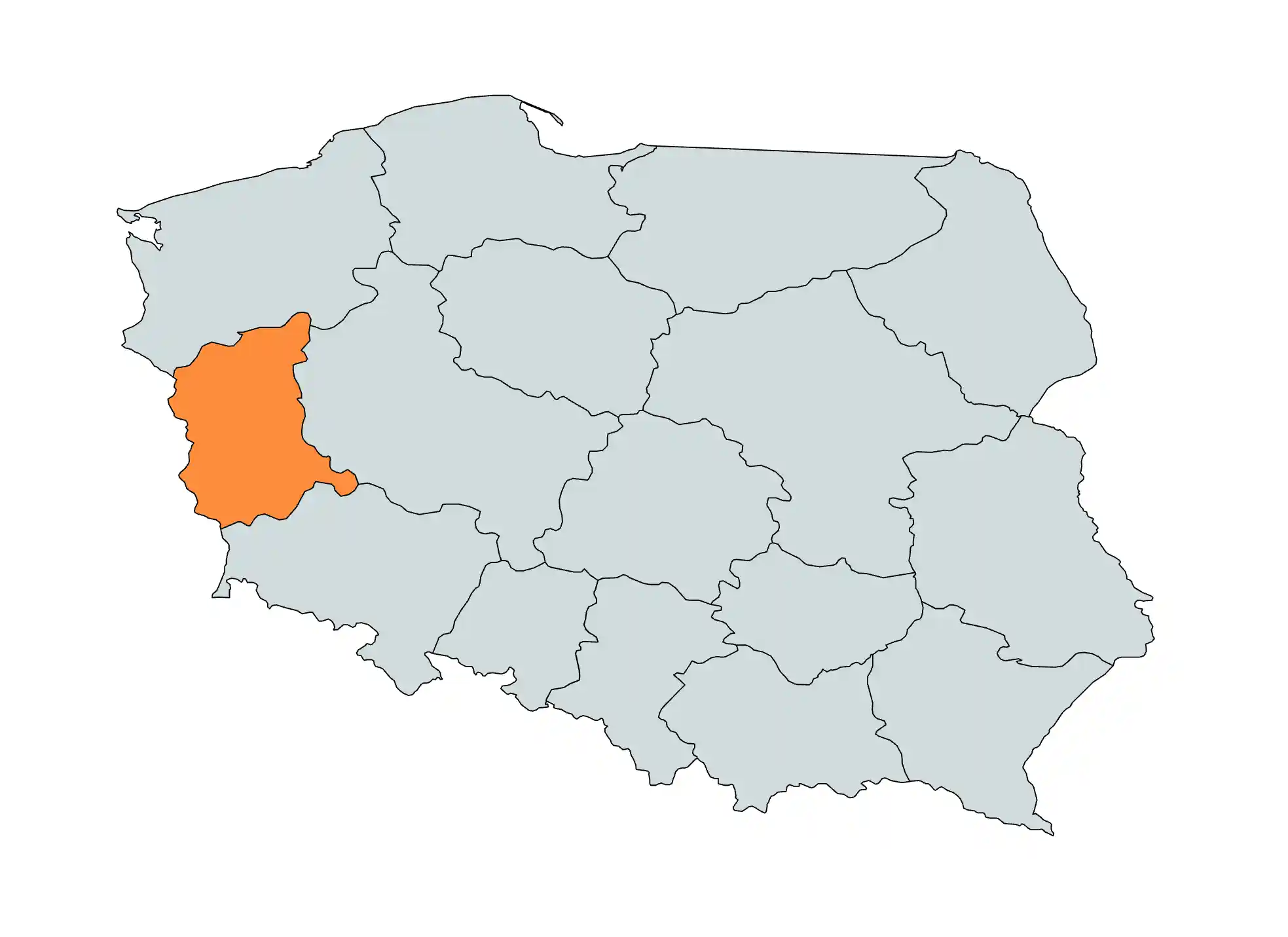
Lubusz is a land of thick pine forests and over five hundred lakes that sparkle in the green landscape. This region is the core of a Lubusz lake district road trip where the road is often just a narrow path through a tunnel of trees. You can find the Międzyrzecz Fortified Region where a massive network of underground tunnels and bunkers was built to guard the border.
The region is also the home of the northernmost vineyards where the rolling hills are covered in rows of green grapes. You can stop at local farms to taste the wine and see the old stone cellars that have been used for hundreds of years. The many lakes offer quiet spots to park your car and jump into the clear water for a swim far away from any crowds.
Your trip leads you to the Muskau Park where a grand landscape was created across the river border with huge trees and stone bridges. You can walk through the woods to find the Crooked Forest where every pine tree grows in a strange curve toward the north. This region is a hidden gem for those who want to lose themselves in the deep woods and the quiet blue of the water.
Lubusz highlights
- Międzyrzecz Bunkers Enter a secret world of thirty kilometers of tunnels and bunkers built under the ground to guard the border. You can see the heavy steel doors and the rooms where thousands of soldiers lived.
- Łagów Castle Stay in a stone fort that sits on a thin strip of land between two deep blue lakes in the woods. You can climb the high tower to see the green forest reaching to the horizon.
- Muskau Park Walk through a giant garden that was built by a prince to look like a perfect painting made of trees. The stone bridges and wide lawns cross the river into the next land.
- Crooked Forest See a group of pine trees that all grow with a strange curve at the bottom like a giant hook. No one knows why they grow this way but they look like they are from a fairy tale.
- Lubusz Vineyards Stop at a local farm to taste wine grown in the northern sun on the rolling green hills. This region is the center of wine in the north and has many old cellars to visit.
- Kostrzyn Pompeii Walk through the ruins of a town that was destroyed in the war and left exactly as it fell. The streets and the foundations of the houses are now covered in wild grass and trees.
- Drawieński River Take a kayak down a fast river that flows through a wild forest with giant fallen trees in the water. It is a great way to see the raw side of the nature in the west.
- Lubniewice Lakes Rent a house by the water to watch the sun set over the quiet blue lakes of the region. The woods around the water are full of berries and quiet paths for a walk.
- Sulechów Pine Visit one of the thickest and oldest pine trees in the land which has stood in this spot for centuries. It is so big that several people must hold hands to go all the way around.
- Gościkowo Monastery See a grand red brick abbey that was built by monks in the middle of a quiet green valley. The halls are wide and cold and the history of the place is full of peace.
The local Four
History of Lubusz
Lubusz is a land of thick pine forests and over 500 lakes that once served as the iron gate to the central plains. Over 10,000 years ago, moving ice formed these deep blue pools in a sea of green. This wild landscape is the heart of a Lubusz lake district road trip where you can drive through the Muskau Park, a giant landscape garden created in 1815.
In the 1930s, the region was turned into a massive wall of steel and concrete known as the Międzyrzecz Fortified Region. Soldiers built over 30 kilometers of tunnels and bunkers deep under the moss to stop any march from the west. Today these cold dark halls are quiet and house thousands of bats while the woods above have reclaimed the stone walls and heavy iron doors.
The hills of the region also became the home of the northernmost vineyards, where the sun warms the sandy soil. Monks in Zielona Góra grew grapes here as early as the 1300s, and the tradition is still celebrated today with local wine festivals. Between the secret war tunnels and the quiet rows of grapes, this region is a place of contrast where the forest guards the past.