

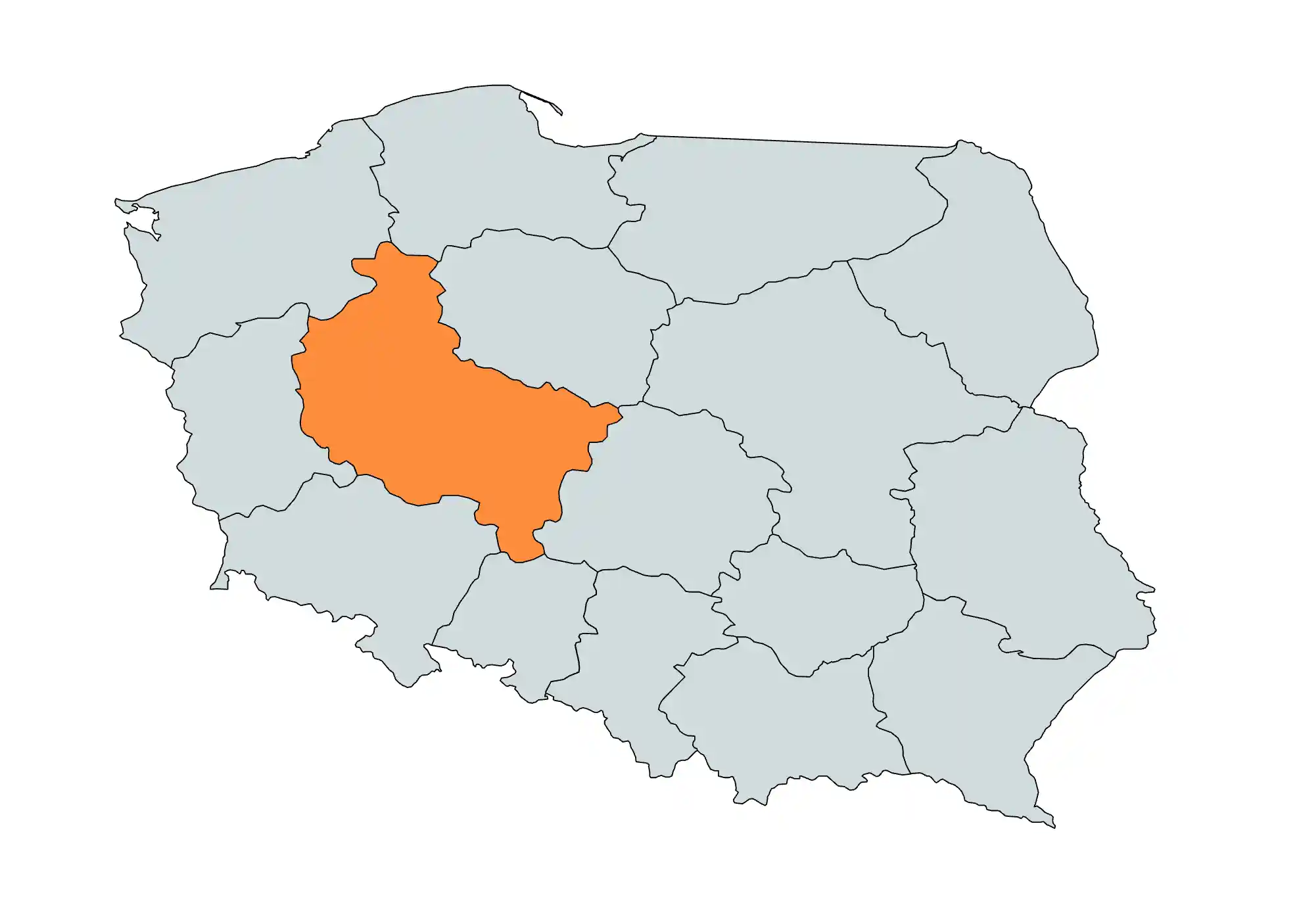
Greater Poland is the cradle of the Polish state where the first kings were crowned amidst deep lakes and dense woods. This region is the heart of a Poland historic route drive that takes you back over a thousand years to the very start of the nation. You can walk the stone ruins of Ostrów Lednicki where the first palace stood on a quiet island surrounded by clear water.
Follow the road to the town of Gniezno to see the giant bronze doors of the cathedral that tell the life story of Saint Adalbert. The landscape here is flat and easy to navigate with long stretches of golden fields and small clusters of old oaks. It is a land of myths where you can visit the Biskupin lake fort to see a real wooden village from the Iron Age that was found perfectly kept in the mud.
Your journey through this region ends at the Rogalin Palace where hundreds of ancient oak trees stand like silent giants in the park. These trees are some of the oldest in Europe and have seen the rise and fall of many royal dynasties. Whether you are exploring the steam engine museum at Wolsztyn or the white stone walls of the Poznań fortress this region offers a deep dive into the roots of the land.
Greater Poland highlights
- Ostrów Lednicki Island Visit the silent ruins of the first royal palace where the first kings of Poland walked over a thousand years ago. It sits on a quiet island reached by a ferry ride across the glassy lake water.
- Rogalin Palace Oaks Walk among the massive three brothers trees which are giant oaks that have stood in this park for many centuries. The baroque palace nearby houses a fine art gallery filled with master paintings from across the globe.
- Biskupin Lake Fort Step inside a real wooden village from the iron age that was found perfectly kept in the wet lake mud. You can see how people lived in round timber huts and walk the narrow wooden streets.
- Gniezno Royal Doors See the famous bronze doors of the cathedral that tell the life story of a saint in tiny carved details. This city was the first capital of the land and feels like a holy site for travelers.
- Wolsztyn Steam Depot Visit the only place in Europe where old steam trains still run on a regular daily schedule for the public. You can watch the giant iron machines hiss and move through the clouds of white smoke.
- Gołuchów Castle Tour a grand residence that looks like a French chateau with high gray towers and a park full of wild bison. The inside is a treasure chest of ancient vases and fine art collected by a noble lady.
- Pyzdry Mural Stop in this small town to see a giant mural on a brick wall that tells the long history of the river port. It is a colorful and quiet spot to stretch your feet during a long drive.
- Kórnik Castle Explore a dark brick castle that is said to be haunted by a lady in white who steps out of a painting. The library inside holds thousands of old books and maps that are hundreds of years old.
- Antonín Hunting Lodge Find this wooden palace built for a prince where the great composer Chopin once played his piano for the guests. The round central hall is made entirely of wood and has a warm golden glow.
- Ląd Abbey Visit a massive baroque monastery by the river that has a hall so grand it feels like a royal palace. The quiet gardens are perfect for a calm break away from the main road.
The local Four
History of Greater Poland
Greater Poland is the site where the first Polish kings carved a nation out of thick wild woods. In the year 966, Duke Mieszko I chose a hidden island on Lake Lednica to accept baptism and build a stone palace. This silent island remains the heart of the Poland historic route drive where you can still touch the rough 10th century foundations of the first royal walls and limestone fonts.
The region became a fortress of the crown as the Piast dynasty built a ring of heavy timber forts to guard the plains. Legend says three brothers—Lech, Czech, and Rus—met here under three giant oak trees to found the Slavic nations. You can find these ancient trees still standing in Rogalin as living witnesses to the birth of the state; scientists estimate they are nearly 800 years old.
War and fire often swept these flat lands as empires fought to own the rich black soil. Local farmers during the Iron Age (around 747 BC) moved into a lake to build the Biskupin fort, hiding from invaders behind a massive 6 meter high wooden rampart. Today the region tells a story of grit where the Wolsztyn depot still runs the only scheduled steam trains in Europe.