

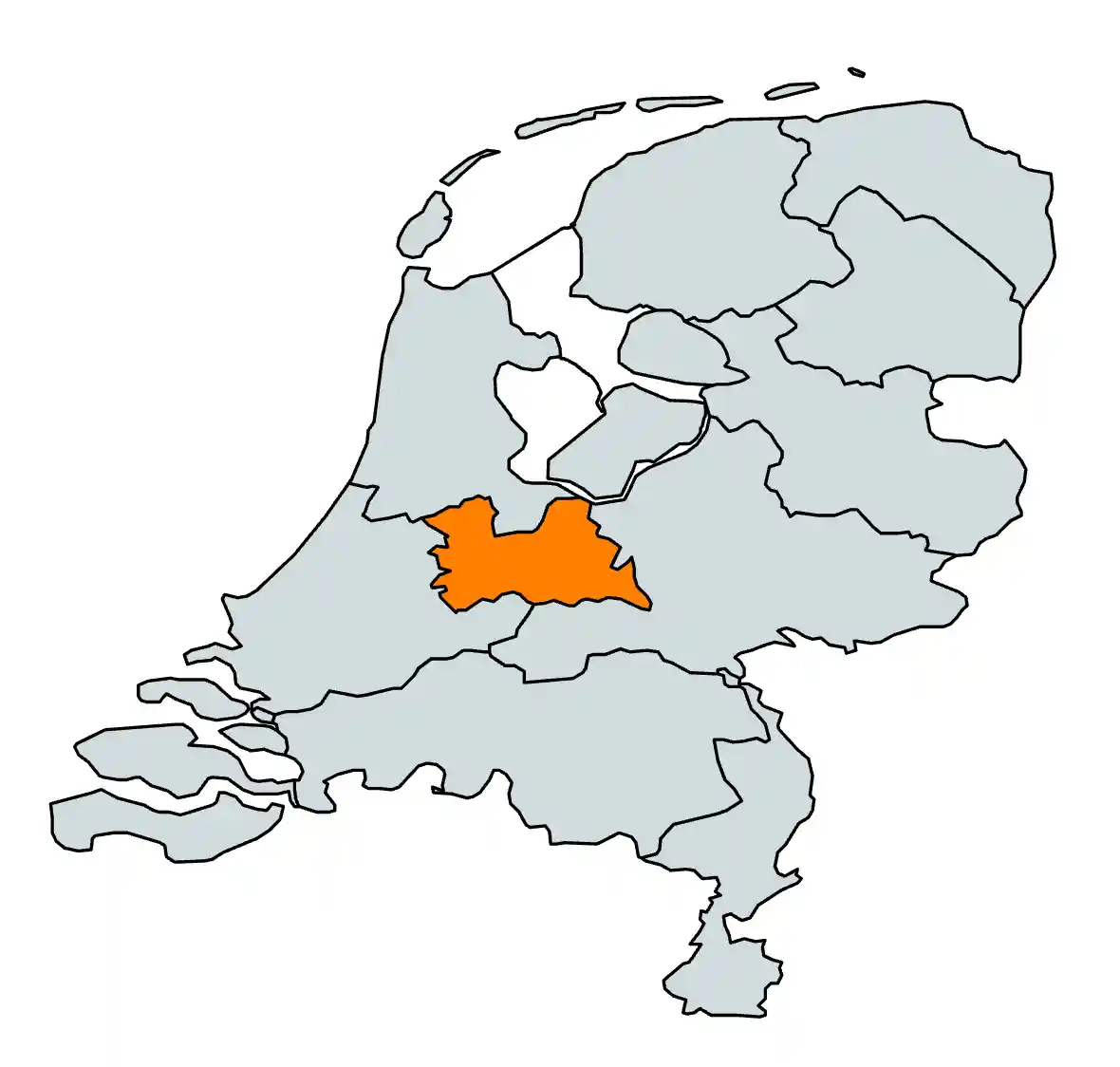
Utrecht may be one of the Netherlands’ smallest provinces, but it packs more character, culture and landscapes into its borders than many regions twice its size. At its heart is the city of Utrecht itself, a lively medieval hub where sunken canals, centuries-old wharf cellars and a towering cathedral create an atmosphere you won’t find anywhere else in the country. But just beyond the city, the province opens up into peaceful forests, farmland, castles and fortified towns that feel like a completely different world.
You can spend your morning exploring royal estates, your afternoon cycling through quiet countryside and your evening dining along historic waterways. All without ever driving far. The Utrechtse Heuvelrug offers rolling woodland perfect for long walks and scenic drives. Towns like Amersfoort and Oudewater blend charming streets with rich stories from the past. Utrecht provides an easy, compact and incredibly rewarding region to explore by car.
Utrecht (province) highlights
- Dom Tower & Utrecht City Centre Climb the tallest church tower in the Netherlands for amazing views, then wander the split-level canals and wharf cellars that make Utrecht unlike any other Dutch city.
- Utrechtse Heuvelrug National Park An oasis of forests, drifting sands, wildlife and panoramic viewpoints. Perfect for hiking, cycling or just escaping city life for an hour.
- Kasteel de Haar A fairy-tale castle rebuilt in the late 19th century with lavish interiors, huge gardens, and a moated design that feels straight out of a film set. One of Europe’s most photogenic castles.
- Amersfoort Centre A compact old town full of charm with the iconic Koppelpoort city gate, canals and lively squares. Ideal for a slow afternoon/evening of wandering and café hopping.
- Soestdijk Palace Once the royal residence of Queen Juliana, this estate mixes history, architecture and lovely parklands that make for a relaxing stroll.
- Fort bij Rijnauwen & the New Dutch Waterline Explore military history inside an atmospheric fort surrounded by nature. Guided tours reveal tunnels, old bunkers and the clever water-based defense system that once protected the country.
The local Four
History of Utrecht (province)
Positioned on the River Rhine, it became one of the most important military posts in the region. After the Romans withdrew around the 3rd century, the area slowly transformed into a Christian stronghold; by the early Middle Ages, Utrecht had become the religious heart of the northern Low Countries. Ruled by powerful prince-bishops who shaped politics for centuries.
In the 12th and 13th centuries, Utrecht grew into a wealthy trading city with strong guilds, canals designed for storing and loading goods at water level. It included impressive architecture like the foundations of the iconic Dom Church. By the 17th century, the city was influential enough to host one of Europe’s most important diplomatic events: the Treaty of Utrecht in 1713, which helped end the War of the Spanish Succession and redraw Europe’s political map.
Wealthy merchants built country retreats along the Utrechtse Heuvelrug, while engineers constructed the Dutch Waterline, a defensive system designed to flood the land in case of invasion. An ingenious strategy used well into the 20th century.
Medieval streets and Roman ruins sit minutes from forests, fortress towns and royal estates. This gives you a province where every detour reveals another layer of its past.