

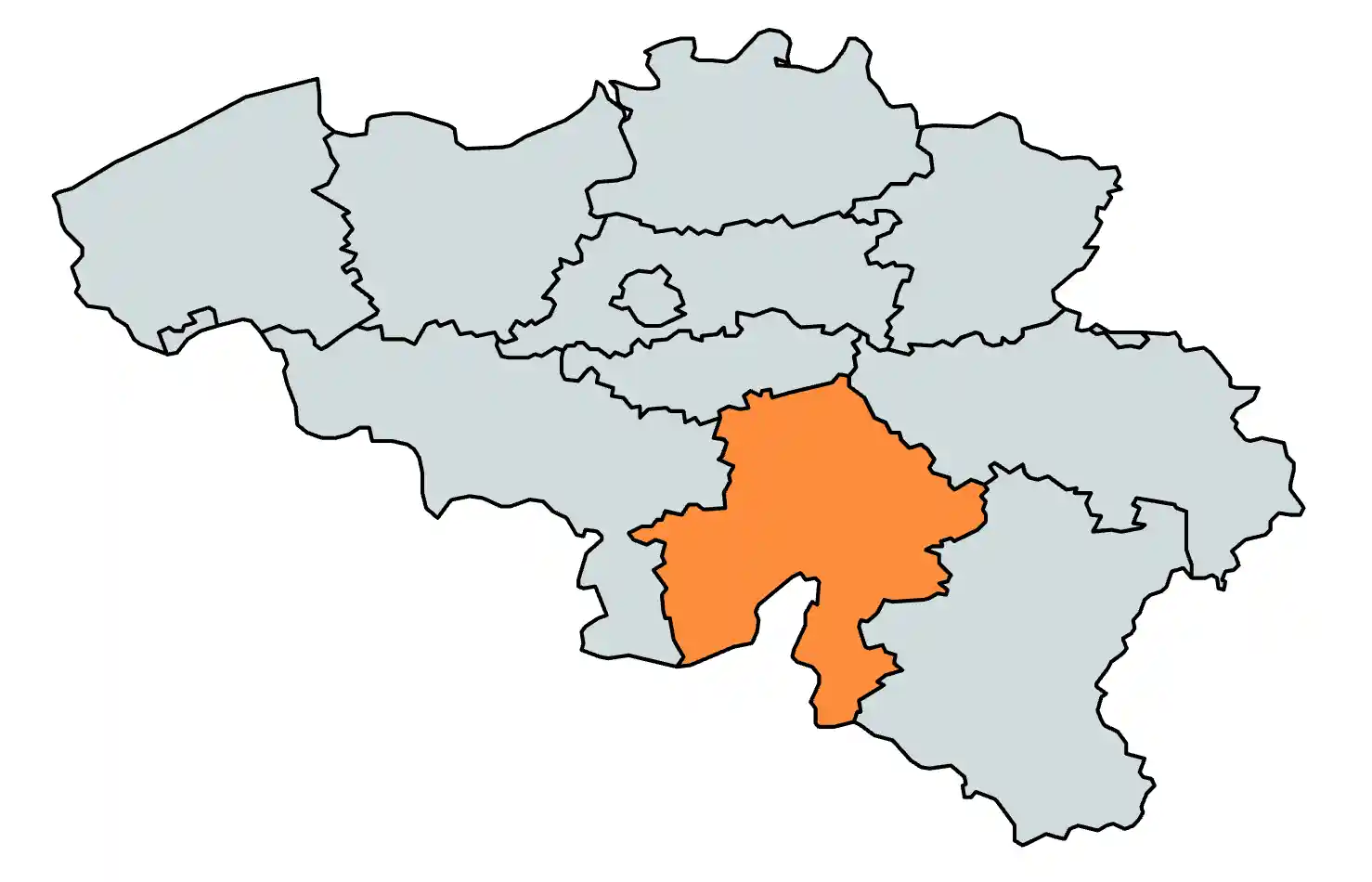
Namur feels like the quiet heart of Wallonia. The province centers around the city of Namur, where the Meuse and Sambre rivers meet beneath a vast citadel that has watched over the region for centuries.
Beyond the city, the landscape opens into the hills of the Condroz and the wild beauty of the Ardennes. Villages like Dinant with its dramatic cliffs and riverside setting, feel almost carved into the scenery. Castles such as Vêves and Freÿr rise above forests and farmland, adding storybook charm to the region.
Food and drinks also play a big role here. Namur is home to famous abbeys that brew traditional beers and cheesemakers who create local specialties. Markets and restaurants highlight regional dishes that give you a real taste of Wallonia. Namur fits perfectly into a road trip through southern Belgium.
Namur highlights
- Citadel of Namur Explore one of Europe’s largest citadels, rising high above the Meuse and Sambre rivers. Walk through ancient tunnels, take the panoramic cable car and enjoy gorgeous views over the capital of Wallonia.
- Dinant and the Meuse Valley Visit the dramatic cliffside town of Dinant, known for its striking collegiate church and towering fortress Take a boat trip on the Meuse or hike along limestone cliffs.
- Maredsous Abbey This Benedictine abbey is famous for its cheese and beer. You can visit the basilica, taste traditional products or walk through the quiet countryside that surrounds the monastery.
- Caves of Han-sur-Lesse A natural wonder and one of Belgium’s most impressive cave systems. Take a guided underground tour, see vast chambers with towering formations, and explore the nearby wildlife reserve.
- Gardens of Annevoie These 18th-century water gardens are unique because their fountains and water features work entirely without pumps. Wander through elegant ponds, pools, and pathways surrounded by forest and fields.
- Molignée Railbikes Pedal along a former railway line through forests, valleys and old stone tunnels. Great for railway fans! It is one of the most unique outdoor activities in the region. Great for couples, families or friends.
The local Four
History of Namur
The region sits where the Meuse and Sambre rivers meet, a strategic crossroads that attracted settlers.They turned the area into an important link between northern Europe and the Roman world.
By the early Middle Ages, Namur grew into a powerful county. Its counts controlled river trade and fortified the rocky hill that now holds the famous citadel. Through the 10th to 15th centuries, the county passed between local rulers, Burgundy, and later the Habsburgs.
The Citadel of Namur became one of Europe’s most contested strongholds. It was attacked, rebuilt, expanded, and modernized through centuries of conflict. Vauban, Louis XIV’s military engineer, redesigned it in the 1600s. Later battles during the War of the Spanish Succession, the French Revolution and the World Wars turned Namur into a strategic prize once again.
Abbeys like Maredsous and Floreffe shaped spiritual and agricultural life. River towns thrived on trade. The Meuse Valley became known for crafts, stonework and early industry. After Belgium’s independence in 1830, Namur became a peaceful provincial capital.