

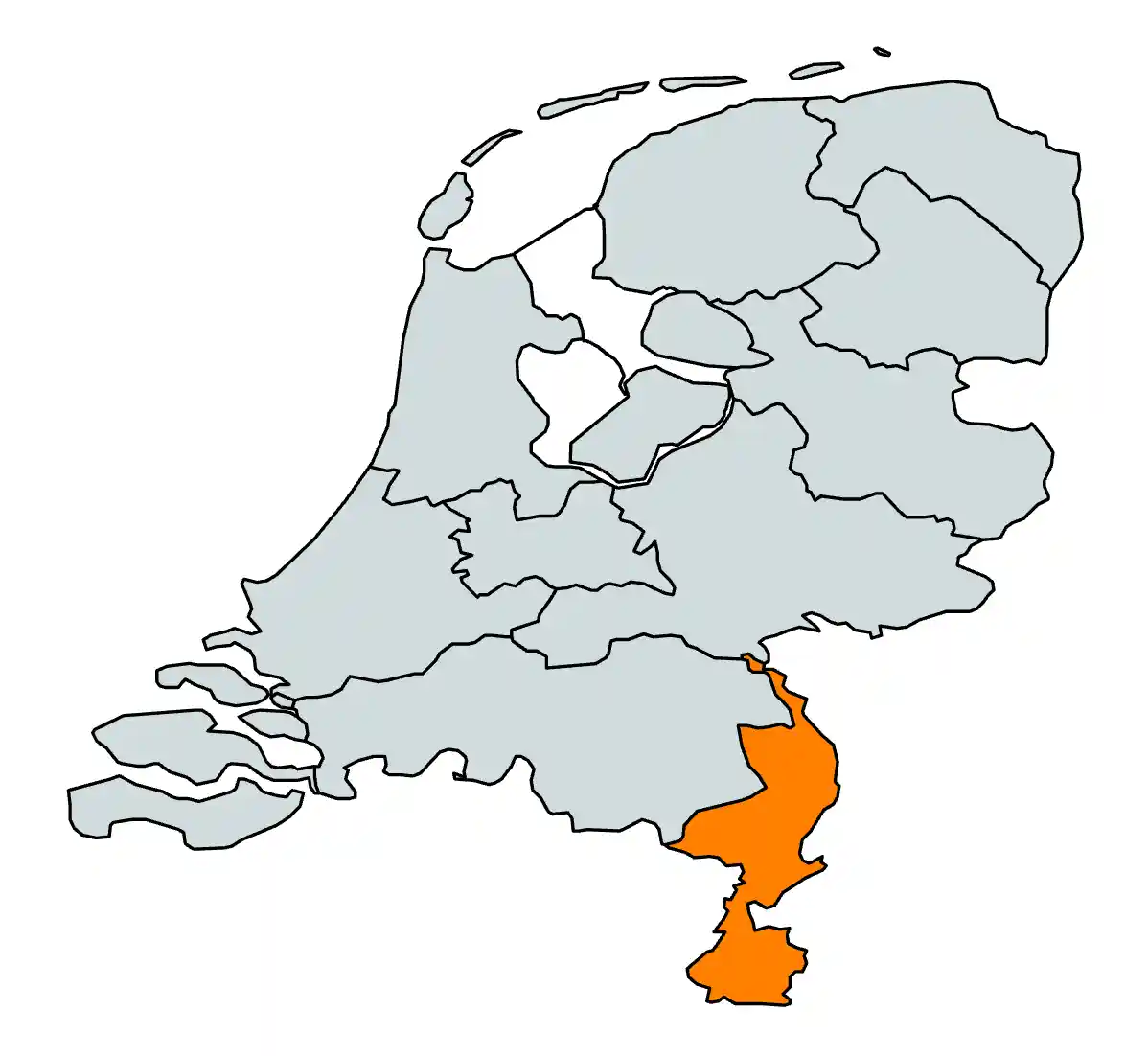
Limburg feels like a different world within the Netherlands, a region where rolling hills, winding rivers and centuries old towns create a landscape unlike anywhere else in the country. As you drive through its green valleys and vineyard dotted slopes, you immediately notice the warm Burgundian character that Limburg is famous for. Here, many locals speak Limburgish alongside Dutch. Its capital, Maastricht, is a beautiful city filled with historic gems.
Explore impressive castles like Hoensbroek and Valkenburg, wander through De Meinweg National Park or sample local beers unique to the region. With attractions ranging from the GaiaZOO to the Overloon War Museum, Limburg offers a cultural blend for everyone.
The province stretches from the lively university city of Maastricht in the south to the historic trade town of Venlo in the north. You'll find culinary traditions shaped by Dutch, Belgian and German influences.
Charming villages sit on hilltops, Roman ruins appear along country roads and panoramic viewpoints such as the Vaalserberg show you landscapes that seem more Alpine than Dutch. Every part of Limburg feels like a small discovery.
Limburg highlights
- Maastricht See where Roman ruins, medieval walls and lively squares blend into a laid-back southern atmosphere. Must-sees include the Vrijthof, the Basilica of Saint Servatius, Wyck district and the city’s incredible underground caves.
- Valkenburg Valkenburg has unique spa culture, cave systems, cycling routes and the only hilltop castle ruins in the country. In winter, its sandstone caves become Europe’s most atmospheric underground Christmas markets.
- South Limburg Hills Green hills, panoramic roads and charming villages like Epen, Mechelen and Vijlen make this region perfect for scenic drives. It’s beloved by hikers, cyclists and anyone seeking the country’s most picturesque landscapes.
- Three-Country Point At the highest point of the Netherlands near Vaals, you can place one foot in the Netherlands, Belgium and Germany. The area also has a maze, viewpoints and forest trails.
- Geuldal One of the country’s prettiest valleys. Follow the Geul River through meadows, water mills, orchards and quiet hamlets. It’s an ideal slow-travel area for walking or photography.
- Castle Hoensbroek A fairytale fortress. One of the largest and best-preserved castles in the Netherlands. With towers, courtyards and more than 40 rooms staged with medieval and baroque life.
The local Four
History of Limburg
Limburg, the southernmost province of the Netherlands, has a fascinating history shaped by its unique location along the Maas river. People have lived here for thousands of years, with evidence of ancient settlements dating back to Neanderthal times.
Limburg became an important region with towns like Maastricht and Heerlen built along major Roman roads. In the Middle Ages, Limburg was divided among various rulers and often caught in conflicts, including the Eighty Years' War. Its strategic position made it a crossroads of cultures and powers throughout history.
The modern province of Limburg was officially formed in 1839 after Belgium separated from the Netherlands, splitting the region between the two countries. For a while, it was even part of the German Confederation under the Duchy of Limburg. In the 20th century, Limburg faced challenges during World War II but is remembered for the courage of its people who helped protect those in danger.