

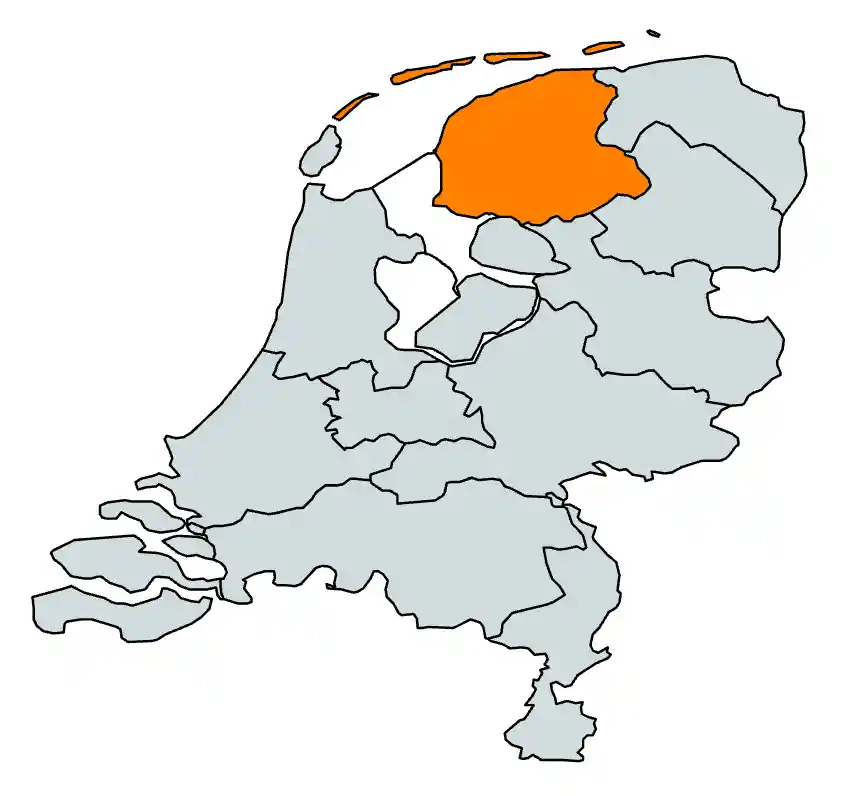
Friesland is a province of lakes and open skies. Famous for its waterways and sailing routes, it’s a paradise for boating enthusiasts, cyclists and those who love exploring nature. The Frisian landscape features vast lakes, meadows with traditional farms and charming villages with historic architecture.
Leeuwarden, the provincial capital, has cultural attractions with cozy streets and canals. The province is also home to the Frisian Islands, a string of islands in the Wadden Sea perfect for beach walks and seaside relaxation. Friesland’s villages and towns show a distinct culture including the Frisian language, traditional festivals and centuries-old windmills.
Discover the historic town of Dokkum, sail the Frisian Lakes or visit the oldest working planetarium in the world. Whether you're interested in exploring charming cities, enjoying the outdoors or enjoy the freedom of wide horizons and endless lakes. Friesland has its own unique character like no other.
Friesland highlights
- Leeuwarden Explore the capital of Friesland, known for its beautiful city center with canals, townhouses, and cobbled streets. With over 600 national monuments, visit impressive sights like Grote of Jacobijnerkerk and the Fries Museum to learn about the region's history and culture.
- Sneek Visit Sneek, known as the water sporting capital of Friesland, particularly if you enjoy sailing. The town was founded in the 10th century and has many old buildings and historical landmarks, such as the Waterpoort, which serves as the symbol of the city.
- Eise Eisinga Planetarium (Franeker) Visit the world's oldest working planetarium, now a UNESCO World Heritage site. The city of Franeker, founded in the 800s, offers a laid-back vibe with beautiful old brick buildings, canals, bridges, and parks.
- Wadden Islands Explore the Frisian Wadden Islands, such as Terschelling, Vlieland, Ameland, and Schiermonnikoog.
- IJsselmeer Coast Scenic towns along the IJsselmeer like Hindeloopen and Workum offer colorful harbors, maritime history and traditional Frisian culture.
The local Four
History of Friesland
Friesland has always followed its own path. Long before the Netherlands existed, the Frisians lived along the coast and marshlands. They built terpen and artificial hills to survive floods. Many of these still rise above the landscape today. The Frisians resisted outside rule for centuries. Romans traded here but never fully controlled the region. In the Middle Ages, Friesland became known for Frisian Freedom. There was no feudal system. Local communities ruled themselves. This independence shaped the Frisian identity.
Trade grew through the Wadden Sea and inland waterways. Towns like Leeuwarden, Harlingen and Sneek developed as ports and market centres. Shipbuilding, fishing and dairy farming supported the economy. The Frisian language remained dominant in daily life.
In the 16th century, Friesland joined the Dutch Republic. It kept strong local traditions and laws. During the Golden Age, Frisian sailors, merchants and farmers played a key role in regional trade. The 19th century brought canals and land reclamation. Lakes were drained. Farmland expanded. Villages stayed small and close to nature. Industrial growth remained limited, preserving the rural character.
Today, Friesland’s history lives on in its language, landscape and customs. Terpen fill the fields. Canals connect towns. Sailing, farming and water management still define daily life. Friesland stands apart shaped by water and independence.