

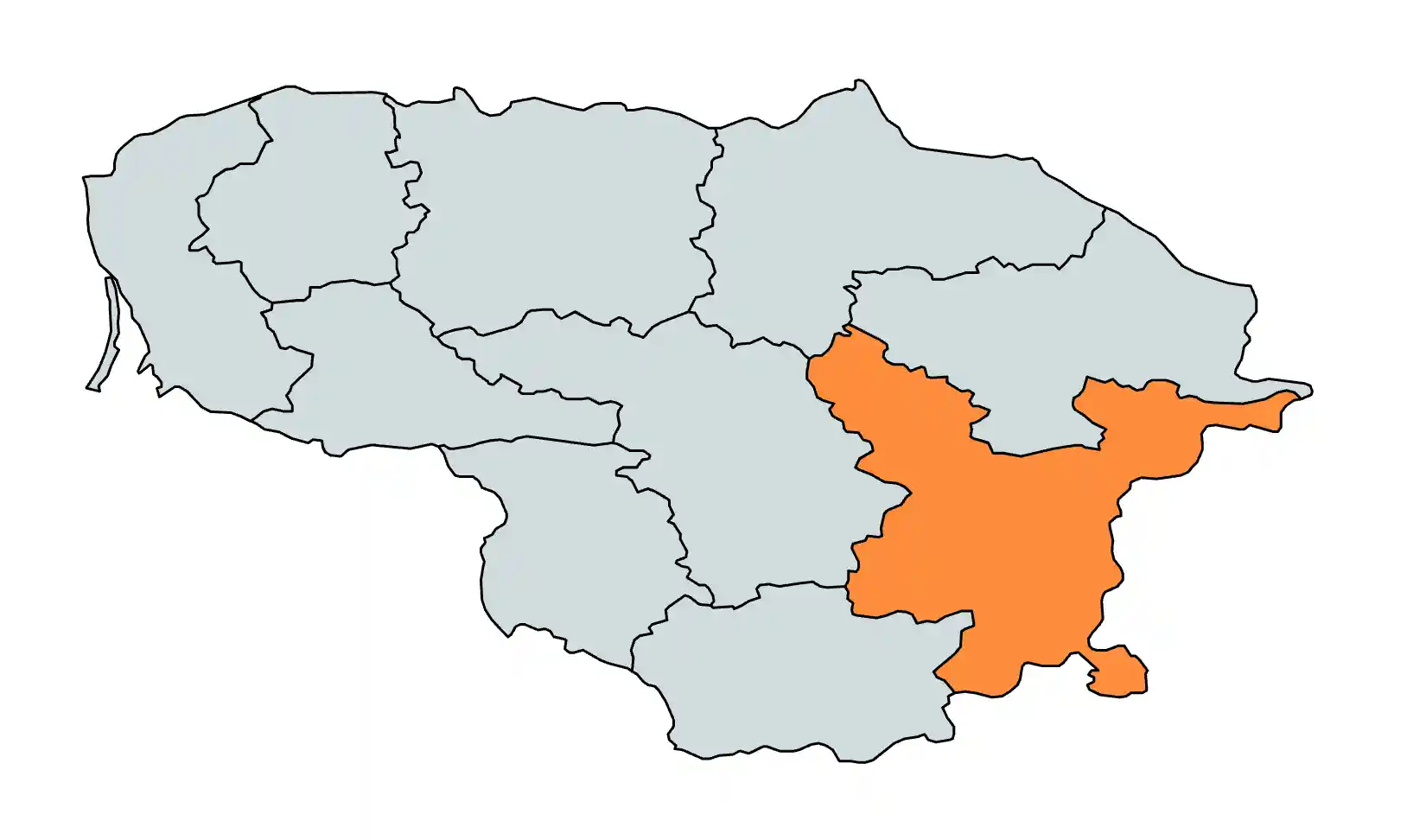
Vilnius County is the prestigious center of the nation where emerald hills hide the ruins of a medieval empire. Trakai is the highlight of any road trip with its red brick castle sitting on an island in the middle of Lake Galvė. Here the wooden houses of the Karaim people line the shore offering a taste of history and the famous kibinai pastries.
The county is home to the geographic center of Europe marked by a stone monument and a park filled with massive art installations. In Kernavė you can climb five hillforts that overlook the Neris River valley where the first capital of the country once stood. The landscape is a mix of deep historical forests and rolling meadows that change color with the seasons.
Beyond the historic sites you find modern manor estates and quiet regional parks where the river has carved high cliffs and stone outcrops. You can watch the sunrise from a hot air balloon or explore the quiet paths of the Europa Park art reserve. This is the heart of the country where the royal legacy of the grand dukes meets the wild beauty of the northern woods.
Vilnius (county) highlights
- Trakai Island Castle This red brick fortress sits on an island in a lake and looks like something out of a fairytale. You can take a boat around the castle or try the traditional meat pastries called kibinai in the town nearby.
- Kernavė Hillfort Climb five massive green mounds that were once the site of the first capital of the nation. The views over the Neris river valley are spectacular and the site is a quiet place for a sunset walk.
- The Geographic Center of Europe Visit the exact midpoint of the continent marked by a white monument and the flags of every European nation. It is a symbolic and unique stop for any road trip enthusiast.
- Europa Park Explore a massive outdoor art museum where giant sculptures are scattered throughout a wild forest. It is a place where nature and modern art collide in a fun and unexpected way.
- Medininkai Castle Visit one of the largest enclosure type castles in the region which once guarded the road to the east. The tall stone tower has been restored and houses a museum of medieval weaponry.
- Neris Regional Park Drive along the river to find massive rock outcrops and ancient oak groves. The hiking trails here lead to hidden hillforts and quiet spots where the river flows through deep valleys.
- Dūkštos Oak Grove Walk through one of the oldest and largest oak forests in the country. The air here is incredibly fresh and the massive trees create a natural cathedral of green leaves and thick trunks.
- The Liubavas Manor Watermill Discover this beautifully restored stone mill which now serves as a museum of technology. It is a hidden gem tucked away in a quiet valley near a small stream.
- Aukštadvaris Regional Park Find the Devils Pit a massive and mysterious circular hole in the ground that is 40 meters deep. The park also features high hills and clear lakes for a perfect day of exploring.
- The Bareikiškės Manor Visit the former home of a famous poet and explorer which now serves as a library and a museum. The quiet garden and the old wooden house offer a peaceful break on the road south.
The local Four
History of Vilnius (county)
Vilnius County is the imperial heartland where the Grand Duchy of Lithuania was established as the largest state in Europe in the 1300s. The Trakai Island Castle completed in 1409 served as the high security residence of the dukes and was the only island fortress in Eastern Europe. The region became a global center for the Karaite community who were brought from Crimea in 1398 to serve as the royal guard.
In the 1500s the Statutes of Lithuania were written here establishing a legal system that influenced the entire region for three centuries. The county also holds the Kernavė Valley where five massive hillforts mark the site of the nation’s first pagan capital from the 1200s. These archaeological treasures provide a window into the transition from tribal society to a centralized European power.
During the 17th century wars the region’s grand manors like Liubavas were centers for high tech industrial experiments including early water powered metalwork. The nobility here were patrons of the arts and sciences creating a sophisticated cultural landscape of baroque churches and manicured estates. The history of the county is a narrative of grand imperial visions and cultural endurance.