

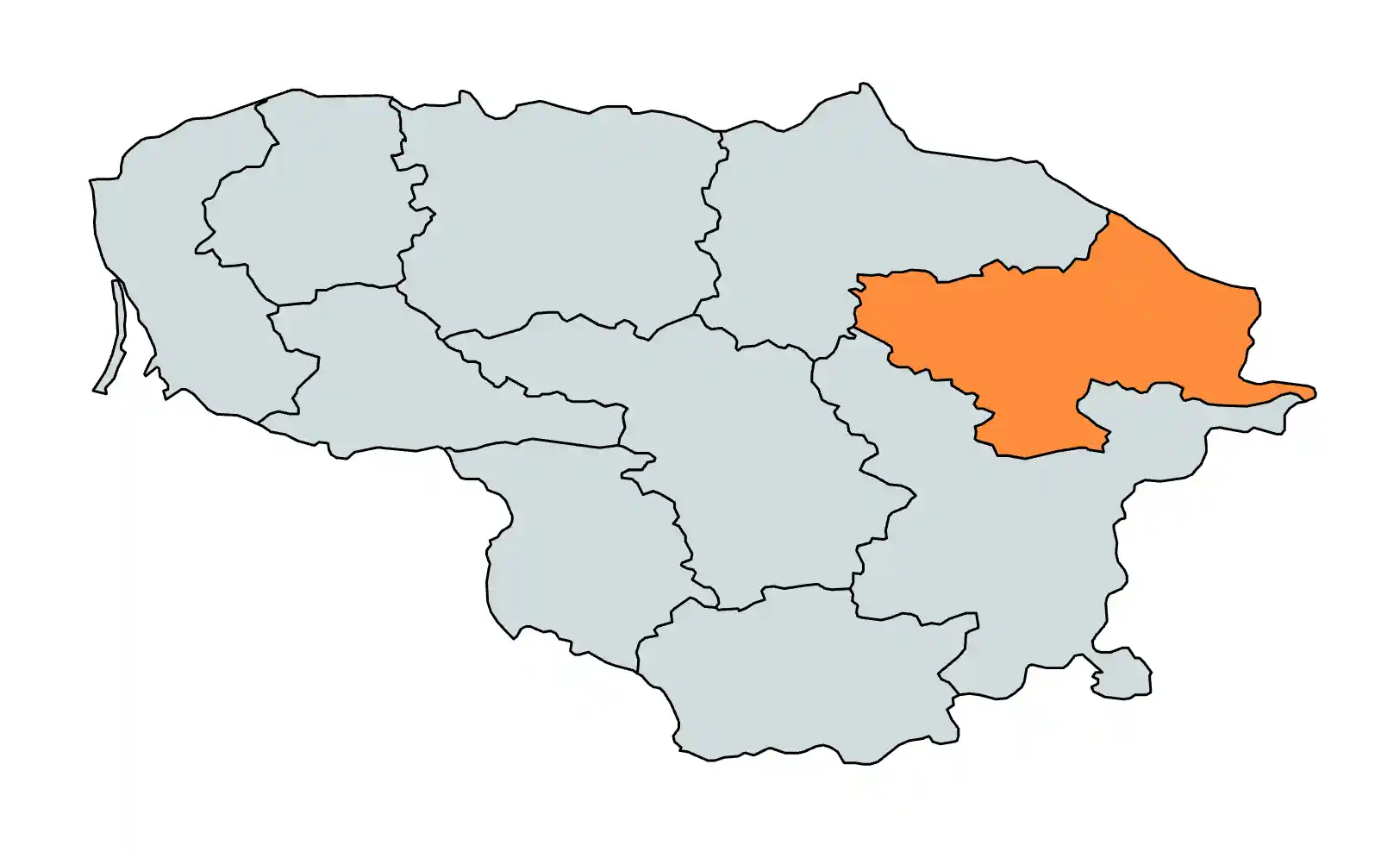
Utena County is the spectacular lake district of the east where the water seems to be around every corner. Aukštaitija National Park is the crown jewel of the region featuring hundreds of interconnected lakes and ancient forests. You can climb the Ladakalnis hill to see six different lakes at once a view that has inspired poets for centuries.
The treetop walkway in Anykščiai allows you to walk through the canopy of the forest high above the ground. Nearby the Space Museum offers a chance to look at the stars through massive telescopes in the dark heart of the woods. The county is filled with wooden watermills and hexagonal churches that look like they belong in a fairytale.
Small towns like Zarasai are built on hills surrounded by water with modern observation circles that let you walk over the lake. You can explore the Labanoras forest to find secret bogs and rare birds or visit the Beekeeping Museum to learn about the ancient craft of honey. It is a land of outdoor adventure and quiet reflection where the water is always the star.
Utena (county) highlights
- Aukštaitija National Park This is the oldest national park in the country a maze of over a hundred lakes and ancient forests. You can kayak between the lakes or climb the hills for a panoramic view of the blue water.
- Anykščiai Treetop Walkway Walk among the tops of the trees on this high steel path that offers views over the Šventoji river. It is a unique way to experience the forest and see the scale of the valley.
- Ladakalnis Hill Hike to the top of this ancient mound to see six different lakes at the same time. It is considered one of the most beautiful spots in the country and was once a sacred pagan site.
- Ginučiai Watermill Stop at this old wooden mill to see the machinery in action and have a picnic by the dam. You can even take a refreshing dip in the rushing water under the old bridge.
- The Space Museum in Molėtai Visit this unique observatory and museum to see how the ancients viewed the stars. The modern telescopes and interactive displays make it a great stop for a clear night.
- Zarasai Observation Circle Walk on this high wooden wheel that hangs over the edge of the lake. It provides a 360 degree view of the water and the surrounding islands without ever leaving the shore.
- Stelmužė Manor See the oldest wooden church in the country built without a single iron nail. The nearby oak tree is the oldest in the Baltics and a massive living monument of history.
- Palūšė Wooden Church This iconic church is so famous it was once featured on the national currency. Its simple wooden architecture and lakeside location make it a peaceful and photogenic stop.
- Labanoras Forest Drive through the largest forest in the country to find secret bogs and tiny fishing villages. The forest is so vast that you can drive for miles without seeing another car.
- Antalieptė Reservoir Explore this massive man made lake which is filled with islands and narrow channels. It is a quiet alternative to the more popular parks and perfect for off the grid camping.
The local Four
History of Utena (county)
Utena County is an ancient glacial landscape where the history of the Aukštaitija tribes is intertwined with thousands of lakes and oak forests. The Stelmužė Oak a living witness to over 1,500 years of history saw the transition from pagan rituals to Christian statehood. In the 1300s the region was a royal retreat for Grand Duke Vytautas who used the high mounds of Ladakalnis for state ceremonies.
The 1800s saw the region become a center for the 1831 November Uprising where the female officer Emilija Pliaterytė led rebel troops through the dense forests of Zarasai. This era of rebellion defined the local spirit and led to the creation of many songs and legends about forest heroes. The region’s interconnected lakes were also vital for medieval trade and communication between remote forest settlements.
In 1974 the creation of the nation’s first national park preserved medieval water management systems including the Ginučiai Watermill. Modern history in the county is defined by the Ignalina Nuclear Power Plant built in the 1970s which featured the world’s most powerful reactors before its decommissioning. The history here is a story of a natural paradise meeting the giants of industrial engineering.